

Did you know that hoarding now constitutes a mental health emergency?
According to the BBC reports, a significant portion of the UK population is overwhelmed by possessions, leading to blocked exits, property damage, social isolation, and even physical danger. These consequences show how retaining too many items, especially for emotional reasons, can gradually erode quality of life.
With increasing media attention on the issue, it becomes crucial to distinguish between clutter and essential belongings/collectables as a first step to organising your life. Several criteria can help identify value in everyday possessions, including resale potential, durability, long-term usefulness, aesthetic appeal, and overall condition. For example, the average value of UK household possessions is now over £58,000, and many household items hold appreciable monetary value or deliver lasting benefits in comfort, efficiency, or health.
Therefore, learning to differentiate between emotionally driven hoarding and the practical retention of valuable or rare items empowers you to make more informed choices.
This article will help you identify the true value and difference between your belongings and collectables so you are empowered to decide which items to keep and which to declutter.
- What Defines a Personal Belonging?
- Characteristics of a True Collectable
- Why Decluttering Matters: Making Space with Purpose
- How to Categorise Your Items: Belongings, Collectables, or Clutter?
- 5 Tips for Organising Belongings and Collectables with MyAssets
- Use the MyAssets App to Categorise your Belongings and Collectables
- Create a Digital Inventory of all Your Possessions in MyAssets
- Add Comprehensive Records to Your Digital Inventory in MyAssets
- Schedule Regular Asset Reviews and Updates in MyAssets
- Organise Items According to Type and Use Frequency in MyAssets
- Digital Organisation: Using MyAssets to Track Your Items
- When to Let Go: Questions to Ask Before Keeping a Collectable or Belonging
What Defines a Personal Belonging?
Personal belongings are tangible, movable items that an individual owns for everyday use, comfort, or personal value. This can include furniture, clothing, electronics, and appliances. They differ from real property in that they can be carried, replaced, or moved. The value of personal belongings may be sentimental, functional, or monetary, and not every item must be rare or expensive to qualify.
In the MyAssets platform, you can use MyBelongings to manage these types of items. You can create detailed entries for each belonging, recording attributes such as purchase price, brand, date bought, location, model, and more. Using tools like this can help you understand what you own, how it all adds up, and make decisions about preservation, insurance, or letting go.
Characteristics of a True Collectable
On the other hand, a true collectable is an item whose value far exceeds its original sale price, due to factors such as rarity, popularity, condition, and demand. According to Investopedia, collectables are often objects like fine art, coins, stamps, antiques, comic books, or toys that appreciate in value because few similar items remain.
Several key criteria make a collectable rare and valuable:
- Scarcity: The fewer in existence or the fewer in good condition, the more valuable an item tends to be.
- Condition: Items preserved in near‑pristine, original, or low‑damage state fetch a higher value than those degraded.
- Popularity and demand: What people value (i.e. historical importance, cultural significance, nostalgia) strongly influences demand.
- Authenticity and provenance: Verified origin, documentation, or history can significantly boost value. While not always explicitly listed, this is implicit in how collectors value condition and demand.
True collectables are not about sentimental value alone, but a confluence of rarity, condition, demand, and certainty of authenticity.
Why Decluttering Matters: Making Space with Purpose
Decluttering is more than just organising physical space. It’s also about creating space for living more fully. Holding on to too many sentimental items can weigh on your mental space, limit your ability to enjoy the present, and even increase maintenance costs and stress. Decluttering sentimental items isn’t about forgetting the past but rather allowing yourself to make new memories and live more intentionally.
Purposeful decluttering includes reflecting honestly on each item: how it makes you feel now, whether it brings joy or stress, and whether you’d buy it today if you saw it in a store. Acknowledging these emotions fully, such as nostalgia, guilt, or affection, can help you make decisions with awareness.
Decluttering involves taking small, consistent steps rather than trying to tackle everything at once. This can mean digitising photos and letters so that memories can be preserved without clutter, or even turning sentimental items into functional or display pieces so they remain visible and meaningful.
By decluttering with intention – keeping what truly enriches life, letting go of what merely burdens – you can live in surroundings that reflect who you are now, make space for growth, and bring clarity, peace, and renewed purpose.
Learn more: How to Organise Your Life with Just ONE App
How to Categorise Your Items: Belongings, Collectables, or Clutter?
Knowing whether something is a belonging, a collectable, or clutter is key to managing your space, preserving value, and keeping life intentional.
Belongings are everyday items that serve a practical function. Collectables are those items kept for rarity, sentimental value, or investment. On the other hand, clutter includes items kept out of guilt, nostalgia, or indecision, which do not serve daily needs or possess collectable value.
Developing a clear system is essential in better categorising and organising your collectables and belongings:
- Define your goals: ask why you hold on to things. This helps you decide whether something is a collectable (i.e. for display, investment or preservation) or simply a belonging.
- Group similar items: sort collectables and belongings into categories and sub‑categories so you can manage them more precisely. Use tagging or labels to make retrieval easy.
- Use an inventory app or asset management tool to track essential data: acquisition date, condition, value, and location. For everyday belongings, similarly document key attributes: what the item is, its purchase date, its use, and its room or location; consider condition and whether you still use or love it.
Items that don’t fit into useful belongings or valued collectables are likely clutter: long stored, rarely touched, and with little value. Recognising this and organising your possessions with purpose lets you decide to donate, sell, recycle, or let go.
Read more: MyAssets: The Digital Asset Management App That Gets Things Done
5 Tips for Organising Belongings and Collectables with MyAssets
These are five steps you can take to manage your everyday belongings and rare collectables on the MyAssets platform.
1. Use the MyAssets App to Categorise your Belongings and Collectables
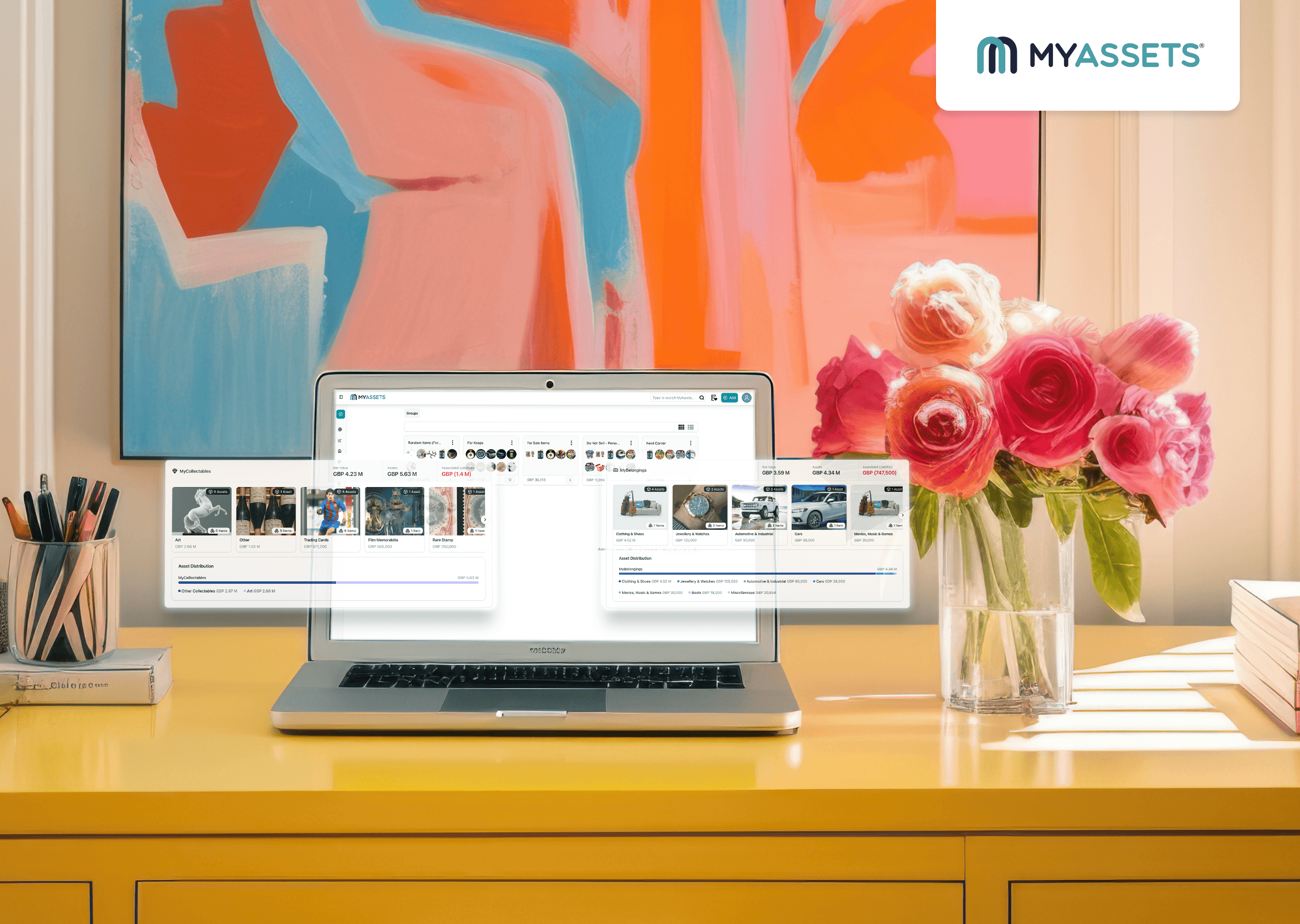
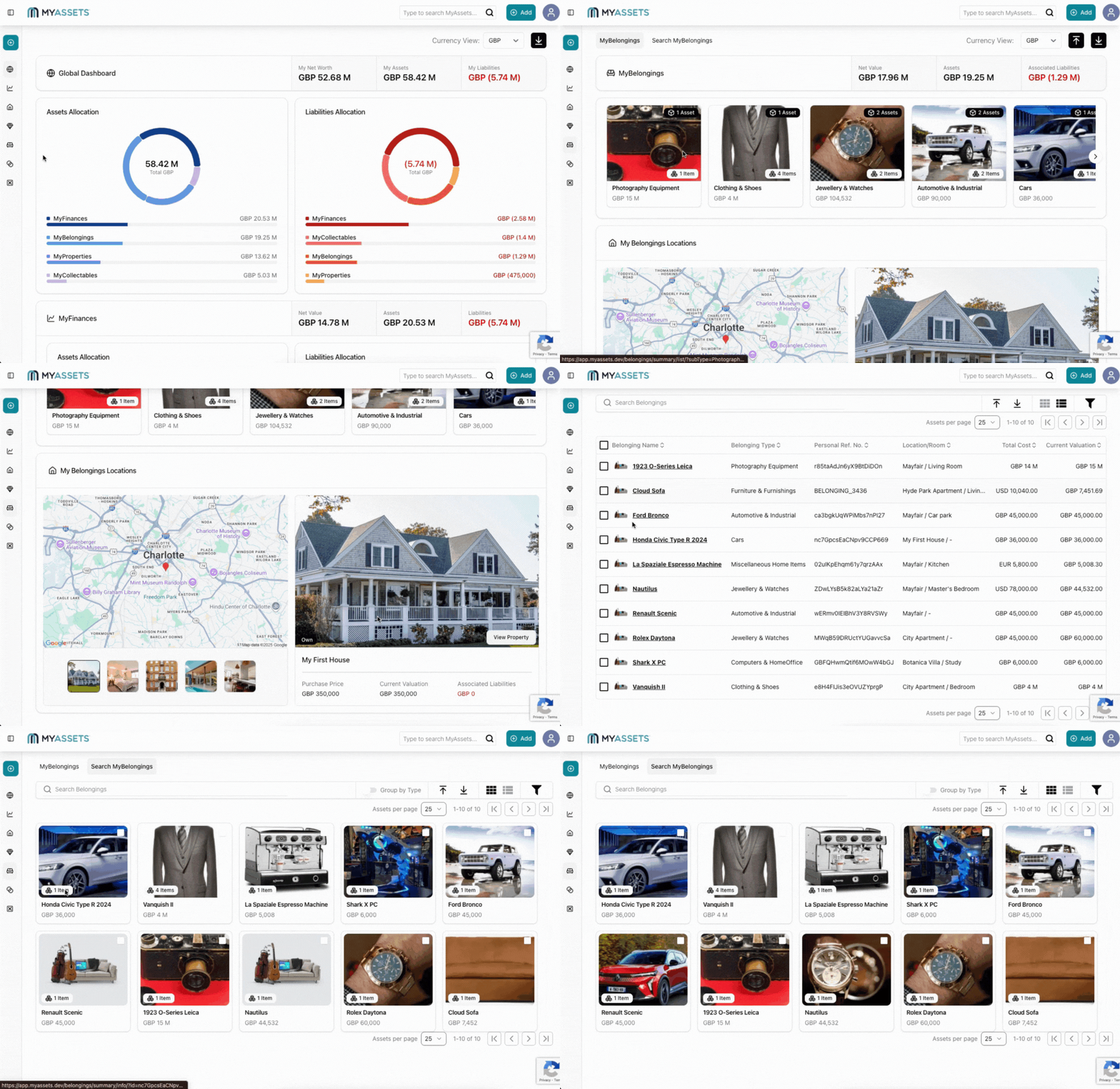
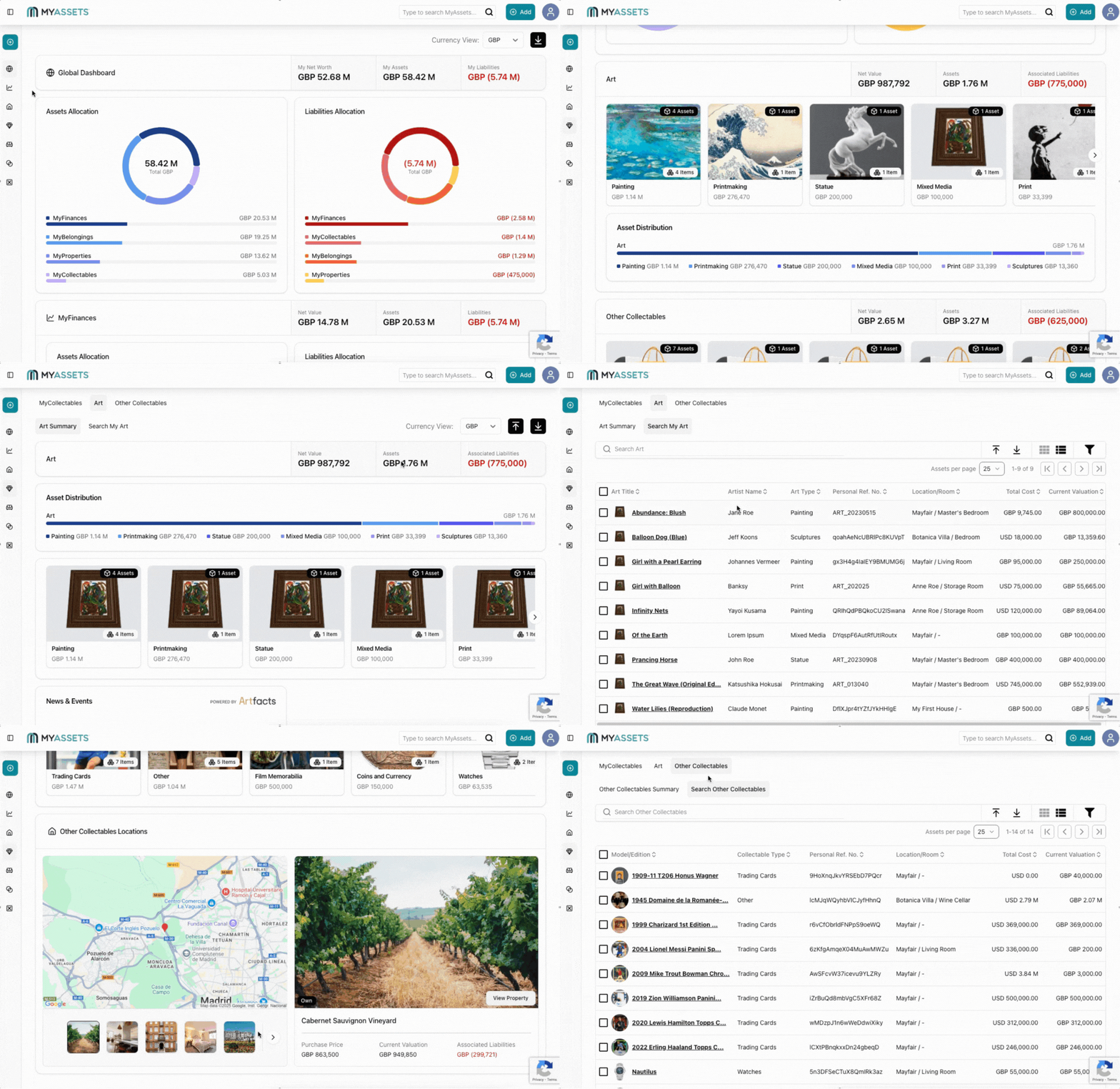
MyAssets' comprehensive asset categories gives you the framework to organise your items meaningfully by separating what you own into clearly defined asset labels. MyAssets allows you to organise your possessions into four major categories: MyFinances, MyProperties, MyCollectables, and MyBelongings.
To start, pick the appropriate category for each item. Real estate assets belong in MyProperties, while financial assets are best placed under MyFinances.
If it’s furniture or everyday household items, enter them under MyBelongings. Items that are rare, appreciated, or intended for collection go into MyCollectables. This can include artwork, vintage jewellery or limited‑edition memorabilia.
Using this system regularly lets you see what adds value, what is simply in the way, and what might deserve more care, display, or even letting go. It turns the chaotic pile of stuff into a well‑managed portfolio of what you own.
2. Create a Digital Inventory of all Your Possessions in MyAssets
Creating a home inventory of your possessions through MyAssets gives you clarity, control, and peace of mind. First, assess all your valuables, room by room, and enter them into MyBelongings or MyCollectables.
After categorisation in the MyAssets platform, record key details for each item: acquisition date, description, where the item is located (even room‑level), serial numbers or provenance, images, and relevant documents (warranties, receipts).
Then digitise and attach any supporting documents—receipts, warranties, insurance certificates—by uploading scans or photos into MyAssets’ Document Vault, linked to each item.
This helps track value, condition, and relevance. The platform also provides visual charts so you can monitor your collection or inventory over time, allowing you to see growth, depreciation, or redundancies in your belongings and collectables.
3. Add Comprehensive Records to Your Digital Inventory in MyAssets
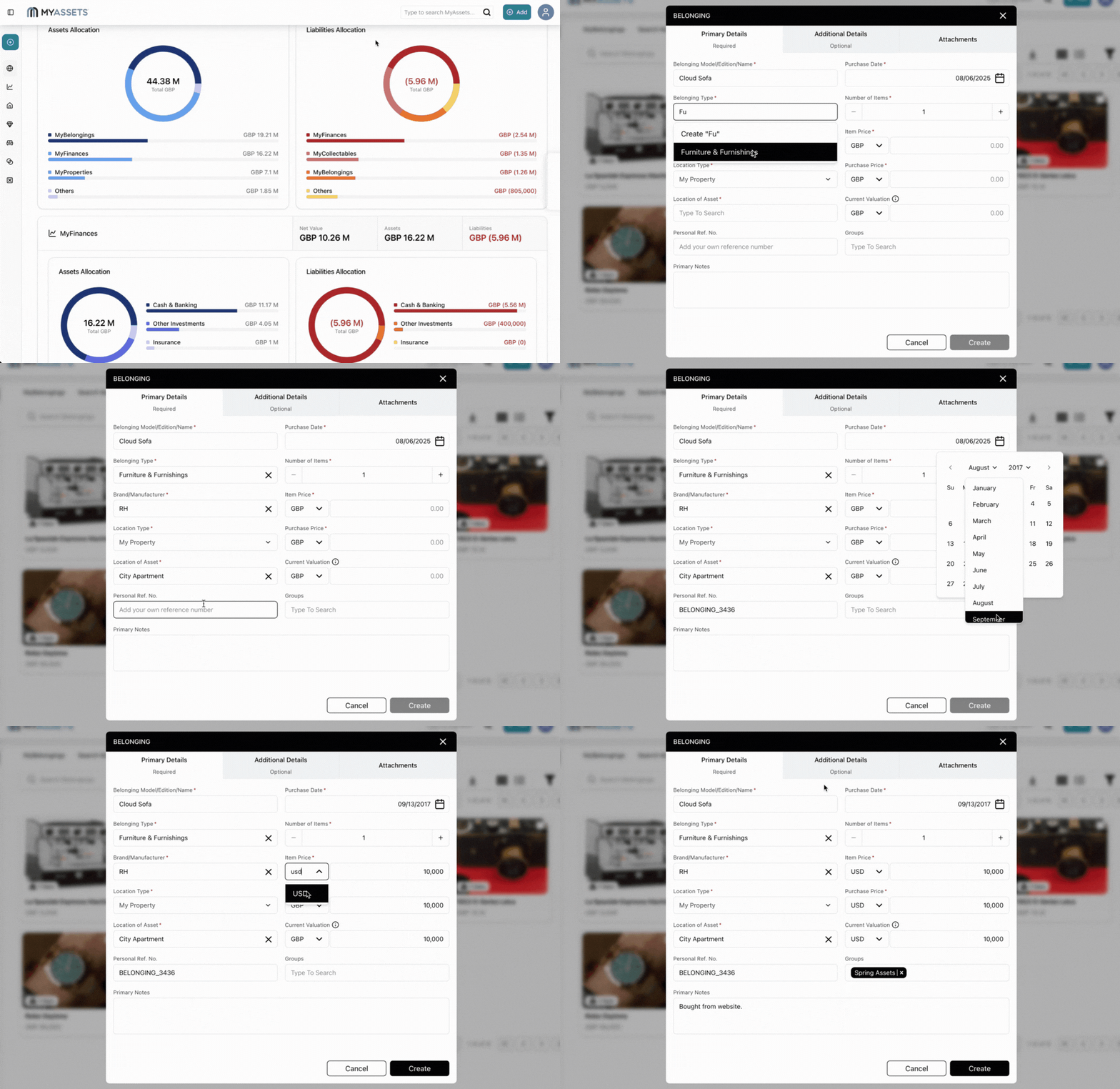
Maintaining comprehensive records in your MyAssets account is essential for accurate asset tracking, accountability, and long‑term planning. First, ensure each asset entry captures all critical identifying information. MyBelongings and MyCollectables allow you to include Primary Details and Additional Details such as:
- Asset name
- Asset type
- Purchase date
- Purchase price
- Current Valuation
- Attributes
- Location
- Ownership distribution (e.g. shareholders and beneficiaries)
Uploading photographs that showcase the full item and its key features can also help in future identification or insurance claims. Additionally, storing relevant documents, such as invoices, user manuals, warranty certificates, and service or repair histories, establishes a rich contextual backdrop for each item.
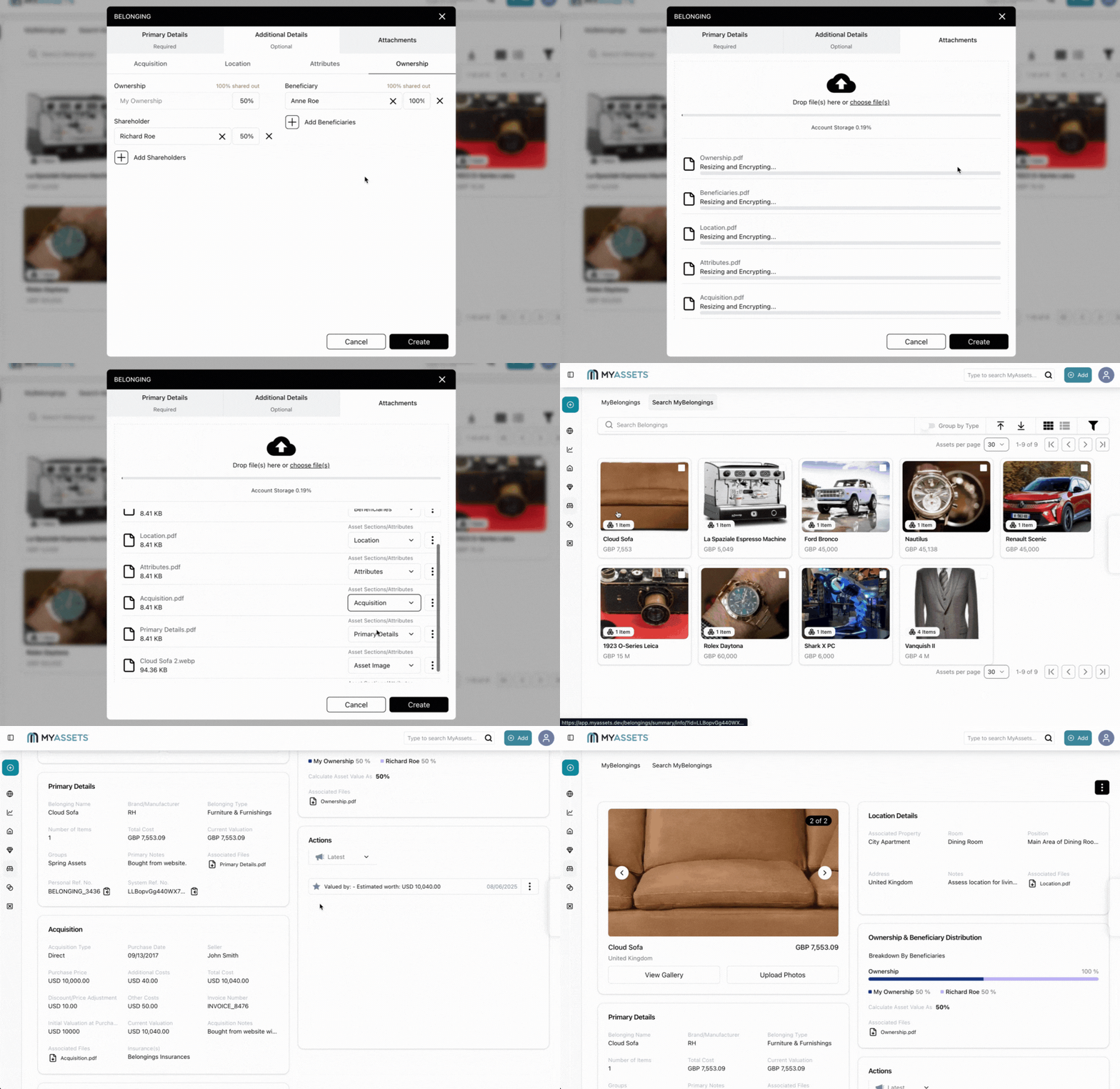
By integrating thorough documentation, structured classification, and ongoing review, your MyAssets account will become a reliable, dynamic resource that supports informed decisions and operational integrity of your collectables and belongings.
4. Schedule Regular Asset Reviews and Updates in MyAssets
Scheduling regular asset reviews and updates in MyAssets is critical for keeping your “life admin” burden manageable and your personal affairs in order. Life admin refers to the unseen managerial and organisational work required to keep your life running smoothly: tracking belongings, finances, documents, bills, and appointments.
With asset management, life admin tasks can include updating depreciation, ownership, location, and condition. When you regularly review your assets, you prevent your inventory from becoming outdated or cluttered. This reduces mental load; you’re less likely to scramble when a warranty expires or forget which asset is insured. It's similar to auditing your admin tasks – identifying gaps, duplicates, or outdated items – and then fixing them so tasks don’t pile up.
Routine updates also let you automate reminders, maintain accurate documentation, and ensure that what you see in your digital vault matches what you own. This helps avoid last‑minute stress, misplacing documents, or overlooked obligations. Regular asset reviews make your entire administrative system more reliable and far less draining.
5. Organise Items According to Type and Use Frequency in MyAssets
Organising your items in MyAssets by type and use frequency makes your possessions easier to manage, locate, and use, especially when juggling numerous daily tasks. One of the first steps to managing your assets at home is to categorise assets by type.
You can do this in MyAssets by utilising Groups, which allows you to create customised groups for your assets across different MyAssets categories. This allows you to organise your home items into the following Groups: electronics, furniture, collectables, tools, and appliances.
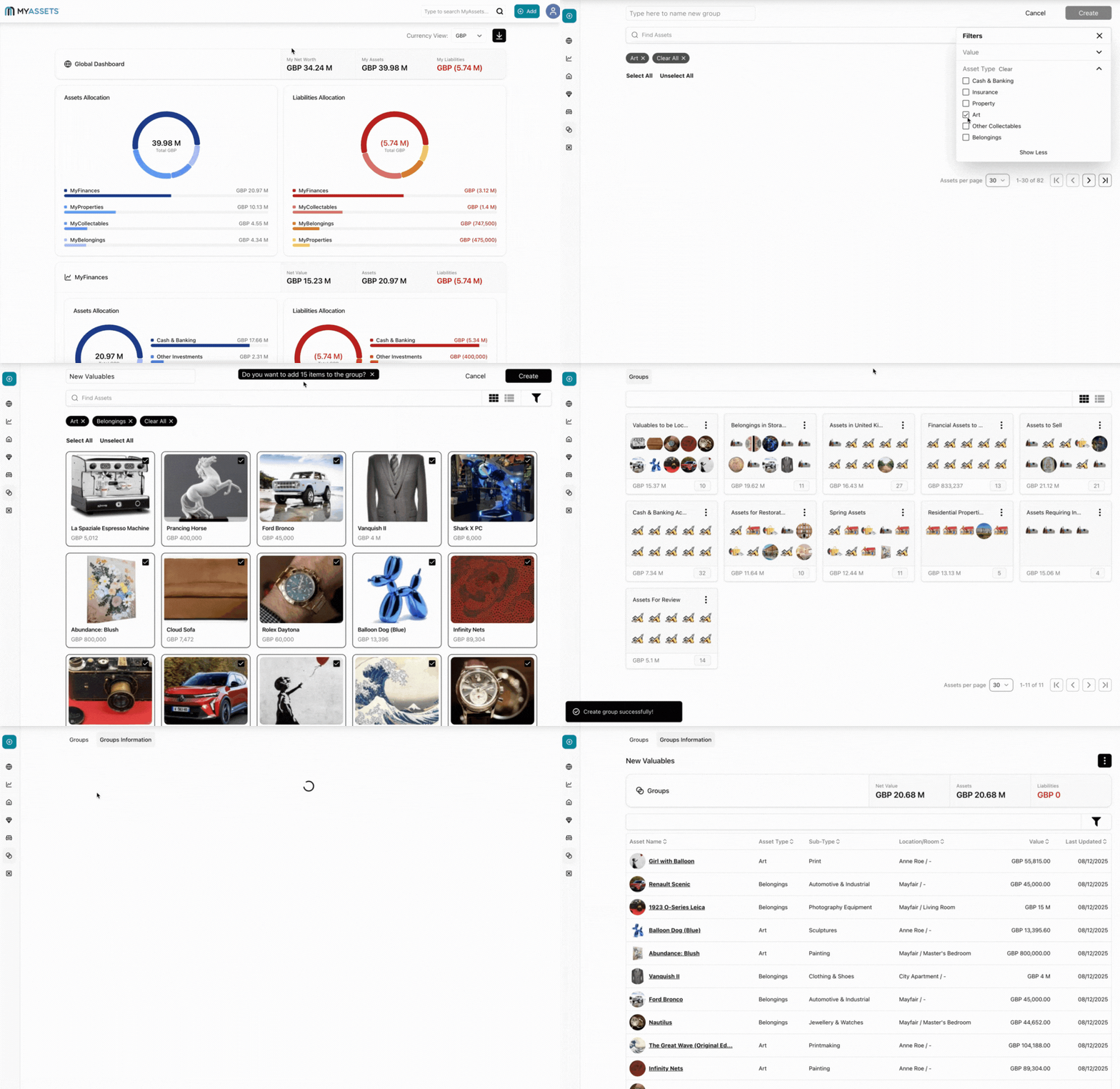
Once you’ve sorted by type, order the items by how often you use them: daily, weekly, or rarely. The more frequently an item is used, the more accessible it should be in your system. For example, everyday devices like your phone charger go in a “high‑use electronics” Group; seasonal or hobby goods might be grouped separately and stored with less prominence. This lets you streamline life admin work like maintenance, locating things, and updating records.
By combining “type” with “use frequency,” you reduce both physical and mental clutter. It helps avoid wasted time looking for something you use daily; it prevents rare items from being forgotten and helps you audit what you really need versus what’s just occupying space. Creating a structure to manage your assets supports better efficiency, reduces stress, and makes your life admin smoother.
Digital Organisation: Using MyAssets to Track Your Items
MyAssets simplifies organising and managing your everyday belongings and rare collectables by offering a secure, centralised digital asset management tool. You can log each item with detailed metadata: provenance, purchase price, appraisals, condition, location, and high-resolution photos.
Key features like document storage, mobile access, and audit trails ensure your collection is always up to date and easily verifiable. Whether you're managing fine art, limited-edition items, or family heirlooms, MyAssets turns asset tracking from scattered notes into a structured, searchable, and secure archive.
When to Let Go: Questions to Ask Before Keeping a Collectable or Belonging
1. What’s the biggest mindset shift to help let go of belongings?
Think in terms of value over volume: What serves your life today? Assess which items truly deserve space in your home and mind. Less isn’t lack – it’s clarity, freedom, and intentionality.
2. How often should I reassess my belongings?
Ideally, revisit your belongings:
- Seasonally (every 3–4 months)
- During life transitions (moves, loss, career changes)
- When you're feeling overwhelmed or stuck
Regular check-ins keep clutter from creeping back in.
3. How do I deal with items I inherited?
Use a platform like MyAssets to organise and categorise each item and research their sentimental or financial value. This will help you decide what to keep, sell, donate, or store. Managing inherited belongings digitally helps you stay organised, preserve important memories, and make informed decisions about your assets over time. It’s a practical way to honour and protect what you’ve inherited.
MyAssets: Where Your Collections and Belongings Live
MyAssets is the ultimate solution for effortlessly organising, managing, and tracking your belongings and collectables. MyAssets offers a secure and intuitive platform that brings peace of mind and control. With its powerful features, cloud access, and user-friendly design, MyAssets makes managing your possessions simple and stress-free.
Start your MyAssets 14-day free trial today, and experience the difference for yourself.



