


In the realm of collectable card games, the table transforms into a battlefield as you become a master summoner, calling forth legendary beasts, mustering mighty spells, and unleashing forces that defy imagination. Beyond thrilling gameplay, these top collectables offer an immersive journey that sharpens both cognitive and creative skills.
How so? To dominate the board, you must constantly exercise your mental agility. Each game operates within its own internal company, requiring planning and resource management to keep its momentum alive.
Think of Magic: The Gathering, which uses an energy or mana system in which players spend a specific resource to cast spells and summon creatures. Simpler economy models, by contrast, rely on specific spell cards or sacrifices to bring entities to play, with outcomes shaped by the quantity and strength of the cards available, as highlighted by Medium.
All in all, this trading card game is a masterclass in strategy, risk management, and deck-building synergy, which calls for collection tracking as deliberate as the matches themselves.
To maintain a competitive edge, you must treat your trading card inventory like a strategic reserve, ensuring every rare pull and technical choice is catalogued and ready for deployment. Without a clear log of your war chest, you risk burying your collectable investments under piles of bulk cards, turning a potential top-tier deck into a disorganised mess.
Luckily, you’ve come to the right place. This article is your ultimate guide to building a professional-grade card inventory, from recording the nitty-gritty details of your foil variants to organising these collectables into a streamlined, battle-ready archive.
Plus, discover a card collection app that lets you build a comprehensive database of your cards: sets, condition, rarity and beyond.
- What is a Collectable Card Game?
- Why is Trading Card Inventory Important?
- Spreadsheet vs Card Collection App: Which Method is Better?
- How to Build a Card Collection Catalogue with MyAssets
- Add the Primary Details of Your Trading Card
- Complete Your Card Records with Additional Details
- Include the Attributes of Your Card Collection
- Upload Photos and Relevant Documents
- Categorise Your Cards in Groups
- Update Your Card Database Regularly
- Backup Your Card Inventory
- From Physical to Digital: The Power of a Trading Card Collection Tracker
- Card Collection Tracker: Frequently Asked Questions
What is a Collectable Card Game?
A Collectable Card Game (CCG), frequently referred to as a Trading Card Game (TCG), is a strategy game that blends tactical deck construction with the hobby of card collecting. Originating in 1993 with the debut of Magic: The Gathering, these games use specialised cards that represent unique thematic elements, such as creatures, locations, or events.
Key Characteristics of Collectable Card Games
Every collectable card game shares defining characteristics that govern gameplay and collection value. Listed be:
- Design: All cards have identical backs for fair play, but their fronts showcase unique artwork, rules text, and flavour text that bring the game’s universe to life.
- Gameplay Mechanics: Players create customised decks from a selection of cards, each operating under defined rules and categories, such as resources or enhancements.
- Thematic Variety: Fantasy and science fiction remain the most common genres within CCGs; however, the category also incorporates sports, horror, and popular licensed media franchises.
Why is Trading Card Inventory Important?
Whether tracking market spikes or looking for a card purchased years ago, a card inventory transforms disorganised collections into a clear, searchable system. Here are the key benefits of having one.
Efficient Trading Card Search
Systematic digital archiving turns your collection into a searchable card database. By using a collector card app, you can log details including:
- Card name
- Condition
- Location / Storage
- Rarity
- Set / Series
- Value
In this way, you ensure your cards and collectables are easy to locate, protected from any possible damage, and always ready for trading, selling, or deck-building.
Easier Valuation and Resale Planning
Maintaining a real-time inventory allows you to monitor the shifting market trends of your card collectables, an absolute must for anyone treating their cards as investments. This high-level oversight pinpoints which sleepers are gaining value, while supporting informed resale timing and pricing decisions.
Better Insurance and Loss Protection
A detailed inventory is your primary defence against insurance sub-limits that often undervalue collectables as mere toys. By maintaining a digital record with photos and condition grades, you provide the official evidence needed to secure a payout based on true market value rather than a flat replacement cost.
This documentation turns your collection into a verified financial portfolio, ensuring you are fully compensated for your most valuable cards in the event of theft or disaster.
Spreadsheet vs Card Collection App: Which Method is Better?
Is your card collection a simple stack or a sprawling empire? Cataloguing different types of trading cards requires a system that can keep up with changing trading card values, growing inventories, and detailed records. Whether you use spreadsheets or a card collection app, each approach has its strengths and limitations.
To help you decide which method is best for you, here are the key differences and trade-offs of these methods.
Spreadsheets
A spreadsheet is a digital ledger that uses a grid of rows and columns to organise and analyse your data. Each cell acts as a data point where you can input text descriptions (like card names and sets), numeric values (like purchase prices and quantities), or complex formulas that automatically calculate your total war chest value and investment growth.
For collectors, it acts as a highly customisable ledger that can handle anything from basic lists to complex financial tracking.
Pros
- You have full control over which data points to track, without being constrained by pre-set app fields.
- Use formulas to calculate collection value, margins, and ROI instantly.
- Easily export, back up, and work offline.
Cons
- Entering every card detail by hand can slow down cataloguing, especially for large collections.
- Manual input also raises the risk of typos, duplicate records, and incorrect set identification.
Card Collection App
A card collection app is a dedicated tool for managing card collectables, allowing you to catalogue, value and track your collections.
Unlike spreadsheets, a card collection tracker app helps you build a true portfolio of your cards by not only recording essential details such as set, rarity, and condition, but also allowing you to upload images, categorise different types of trading cards in groups, and monitor changes in value over time.
Pros
- All card details, images, and documents are stored in one place, making it easy to manage your collection.
- Creates a highly visual portfolio that makes it easy to browse your collection or show off your grails to others without handling the physical cards.
- Facilitates reporting and insights for insurance, resale, or portfolio evaluation.
Cons
- You are stuck with the app’s preset categories. Meaning, you can’t create custom math formulas or unique data columns like you can in a spreadsheet.
- While many have free versions, advanced features like unlimited portfolio size or detailed price history often require a monthly fee.
Ultimately, the better method boils down to your goals as a collector. If you want a more visual experience with charts and images, a collector card app is your best companion.
However, if you are a data-driven investor who needs custom financial formulas and absolute ownership of your records, the classic spreadsheet remains the gold standard.
Learn more: The Best Software for Managing Art & Collectables
How to Build a Card Collection Catalogue with MyAssets
Managing a trading card collection involves more than simply stacking cards in binders. This step-by-step guide shows how to build a thorough inventory using a trading card collection tracker like MyAssets.
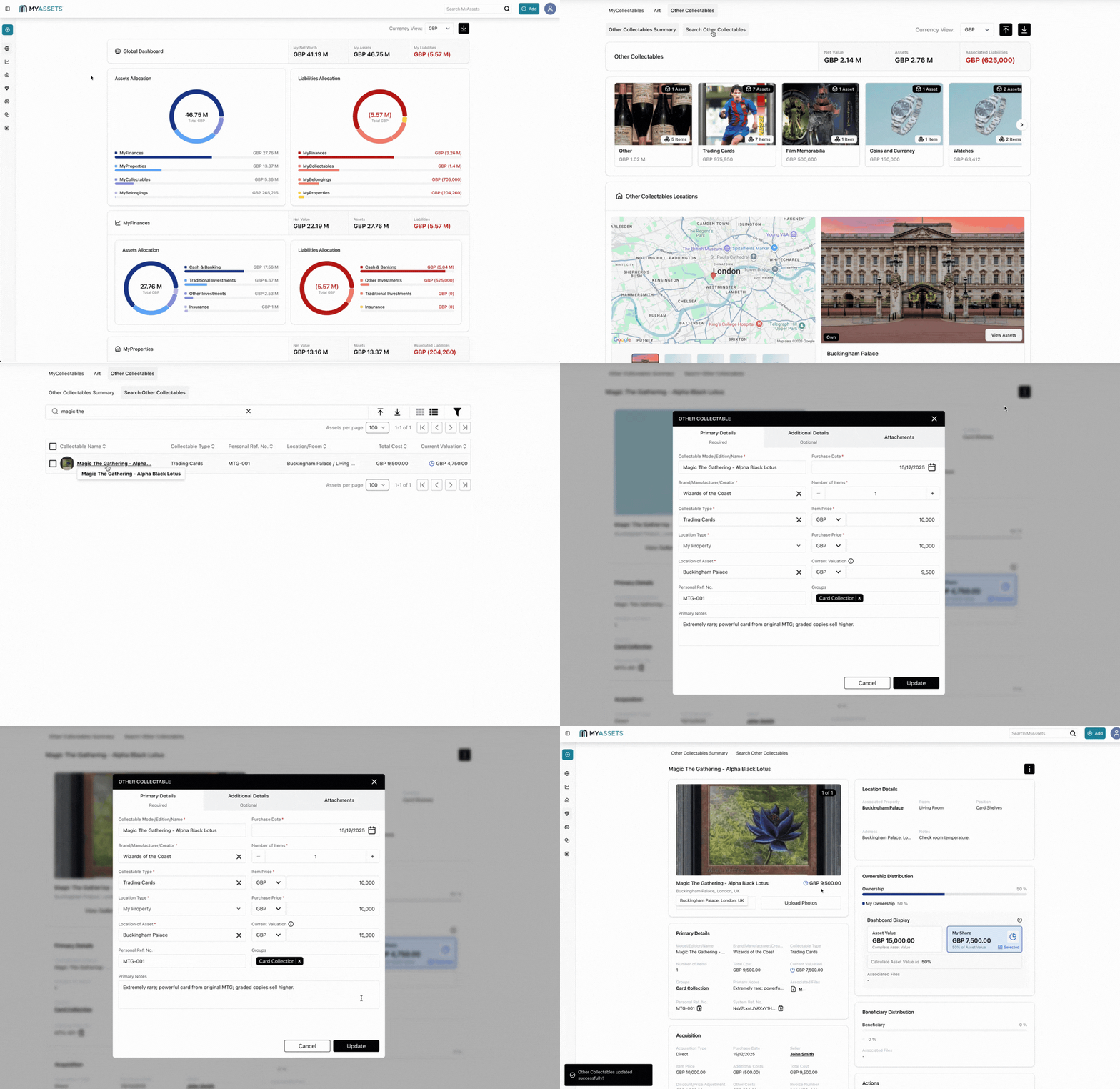
1. Add the Primary Details of Your Trading Card
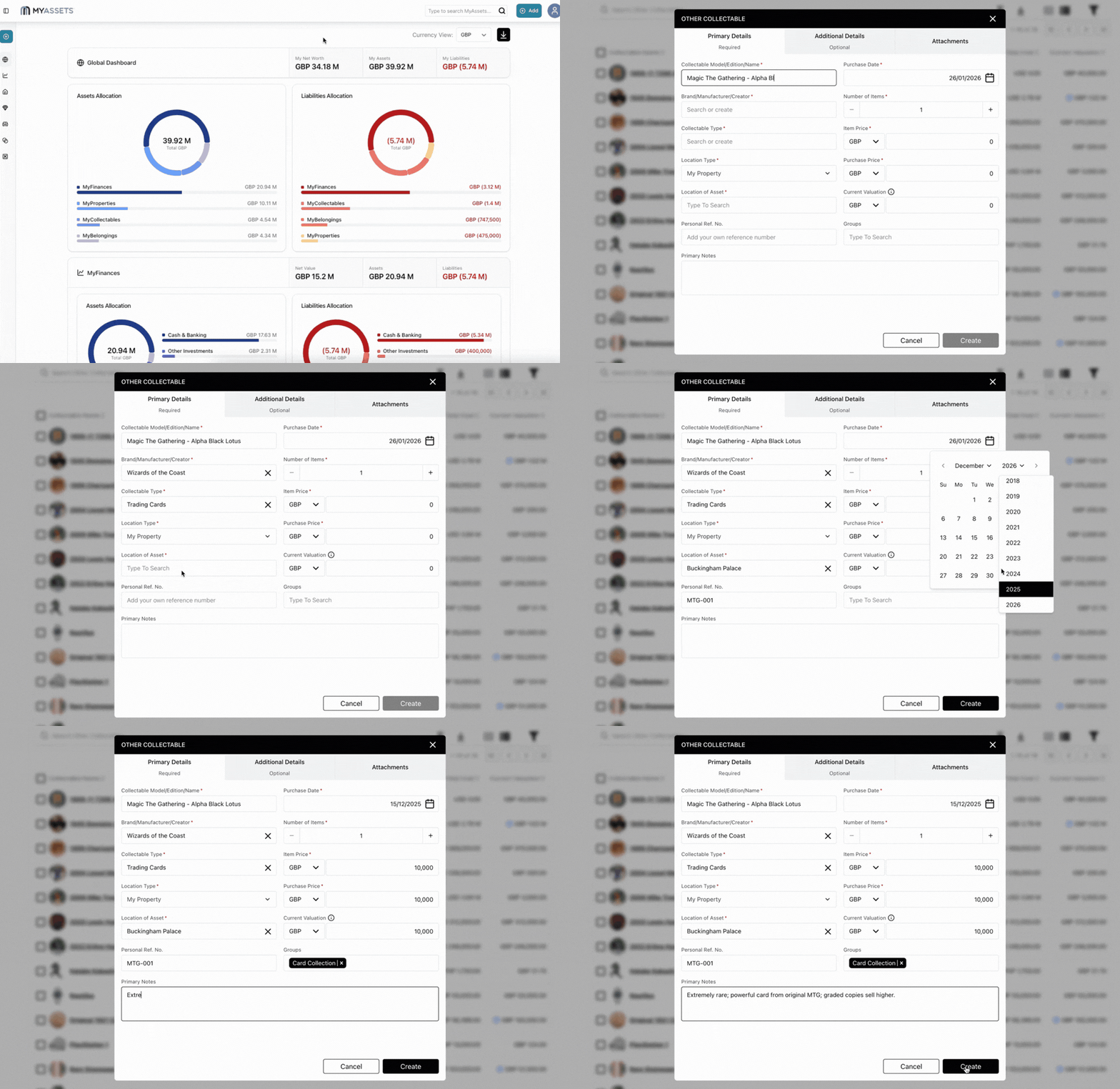
Adding collectables to MyAssets is very straightforward. Start by entering the primary details of each trading card to create a clear foundation for your inventory. This includes essential trading card information, such as:
- Collectable Model/Edition/Name
- Brand/Manufacturer/Creator
- Collectable Type
- Purchase Date
- Purchase Price
- Location
- Current valuation
- Notes (i.e. card condition, card rarity, historical context, etc.)
Primary details provide a consistent structure for organising collectables and uniquely identifying each item for tracking, insurance, or resale. You can add further details afterwards to complete the record.
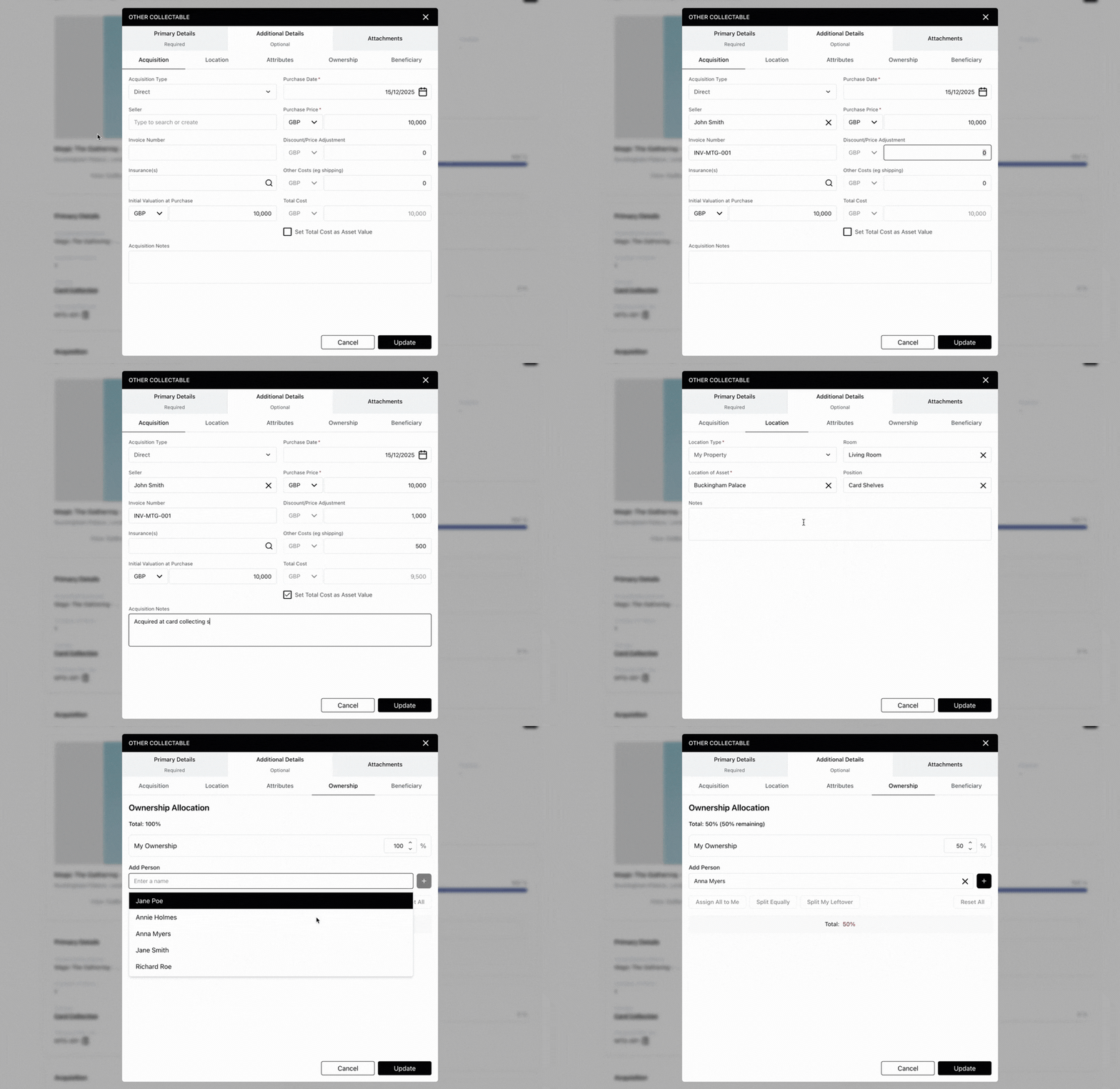
2. Complete Your Card Records with Additional Details
To keep more comprehensive trading card information, you should include additional details that go beyond basic identifiers. Among these include:
- Acquisition: Record how you acquired each card, including the purchase date, cost, and source (i.e., card collecting shops, online marketplace, trade, or gift). Keeping this information helps track the card’s value over time, supports insurance coverage, and provides a record for authenticity or provenance.
- Location: Record where each card is physically stored (i.e. which property or room), or with a friend or trading partner. With MyAssets, you can assign each card a location type, whether it’s in a property you own or a contact from your Address Book. This keeps your inventory precise and makes it easy to track cards across multiple storage spots or shared collections.
- Ownership: Document who holds each card, including whether it’s solely owned, co-owned, or part of a shared collection. MyAssets lets you assign ownership and beneficiary information, providing clarity for trades, shared collections, and long-term planning.
Adding these details to MyAssets helps collectors build a complete catalogue and maintain clarity for valuation, insurance, and future asset transfers.
3. Include the Attributes of Your Card Collection
In MyAssets, attributes of collectables capture detailed, descriptive traits that go beyond the basic Primary Details. These are the additional characteristics you can record for each item in your collection.
- Creation Year: The date when the collectable was created or completed.
- Provenance: The record of previous ownership of the collectable.
- Geography: The current location of the collectable.
- Medium: The primary material or substance used in creating the collectable.
- Inscription: The words inscribed onto the collectable, if applicable.
- Dimensions Summary: The measurement details of the collectable (i.e., height, length, width, depth, etc.).
- Description: A unique descriptor to identify the item (i.e. type of trading card).
- Edition: The specific version or format of the collectable.
- Catalogue Text: The documentation of the collectable’s attributes, function, etc.
- Notes: Card condition, condition history, rarity, and any identifiers that set your “hits” apart (i.e., signed, misprint, holographic, foil, etc.).
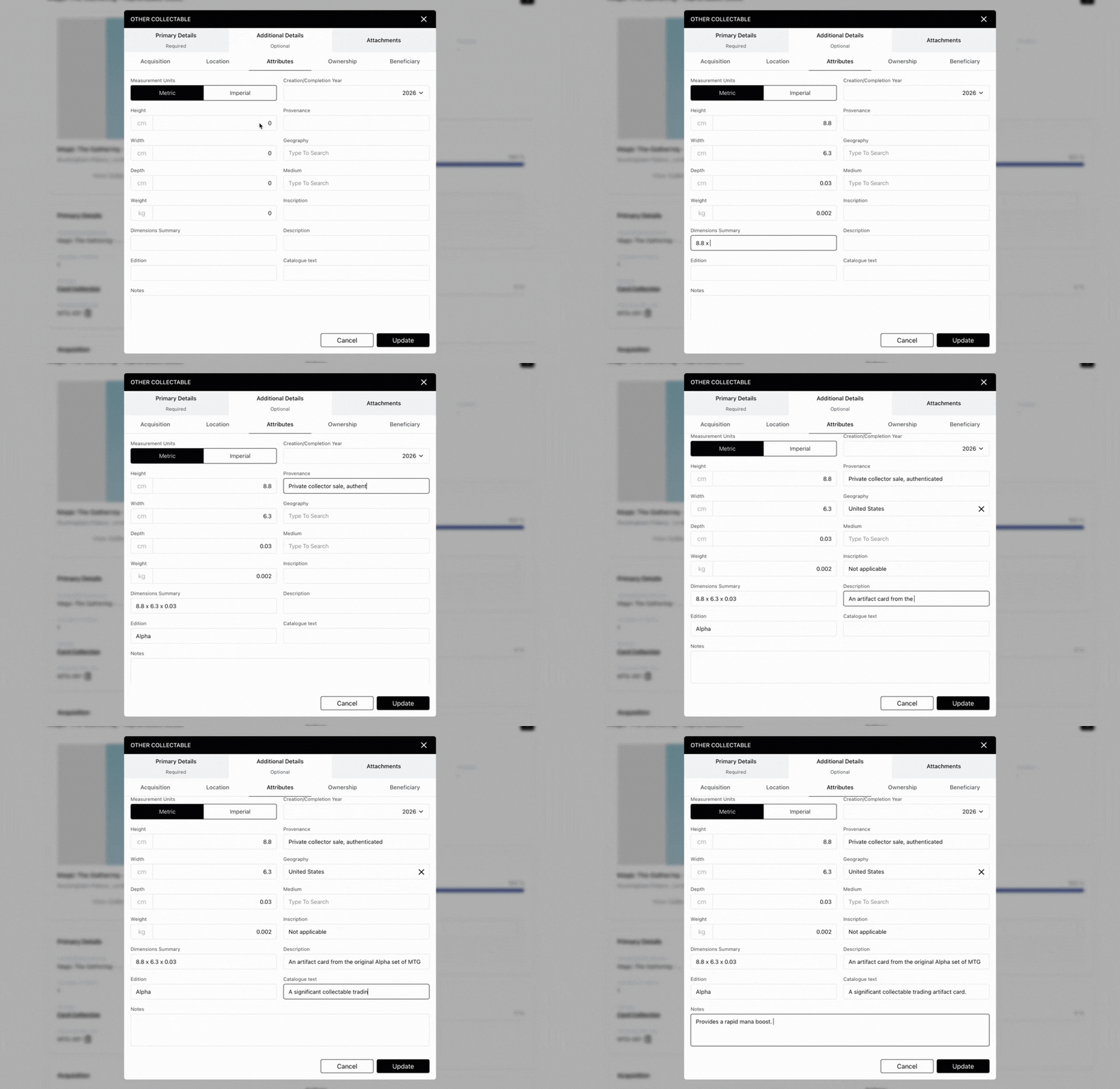
By logging comprehensive attributes in MyAssets, collectors build a more useful database, making it easier to:
- Compare items
- Confirm authenticity
- Prepare reports for insurance or resale
- Track traits
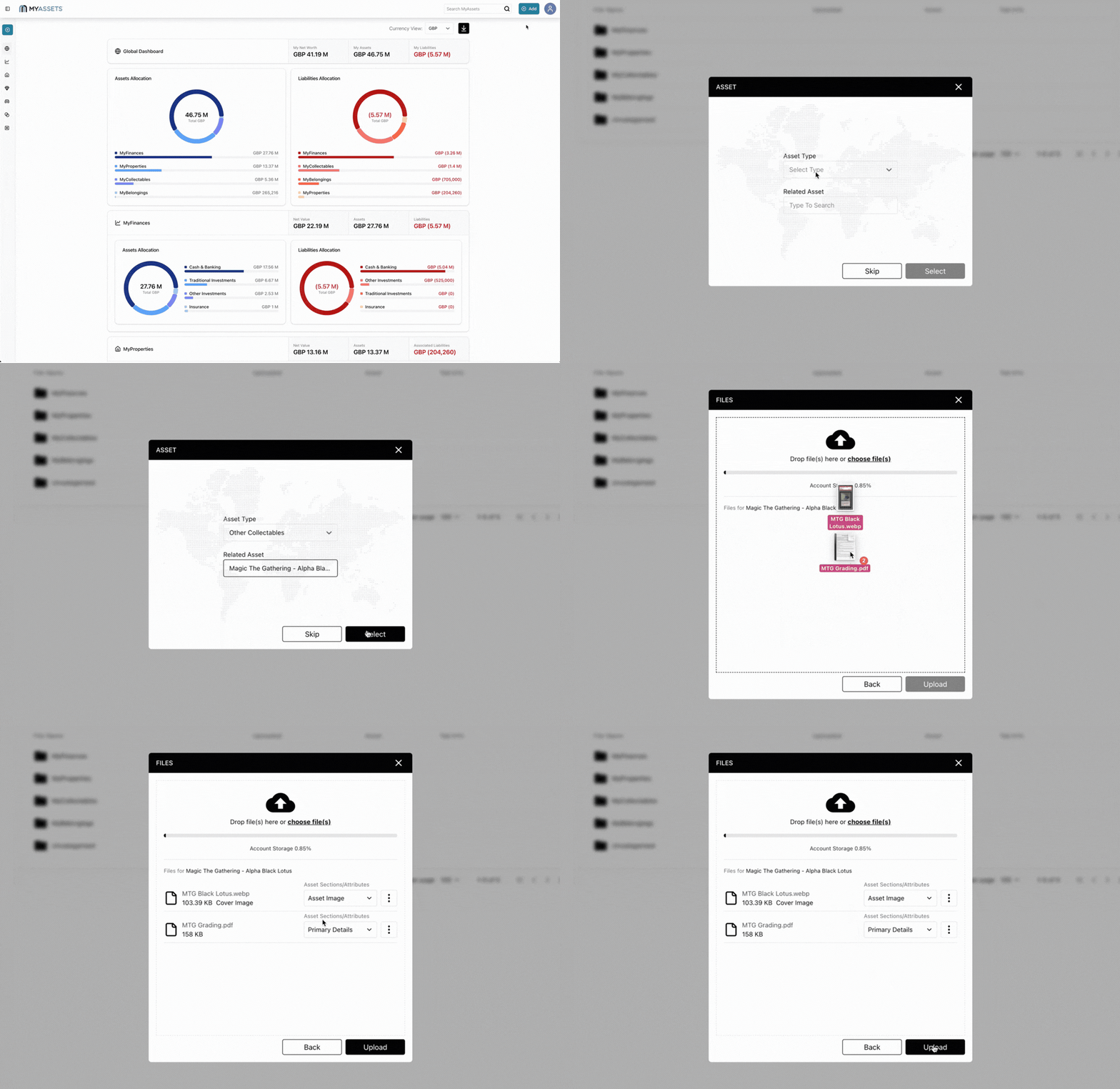
4. Upload Photos and Relevant Documents
Adding photos and documents to MyAssets enhances the accuracy and usability of your card database. High-quality images of each card help you:
- Identify items.
- Provide proof of authenticity for rare or valuable cards.
- Track condition changes.
Additionally, uploading supporting documents not only adds credibility to your collection but also makes insurance, resale, and trading more straightforward. Here are the essential files to include:
- Auction Records
- Authentication Reports
- Condition Reports
- Event or Tournament Records
- Grading Certificates
- Insurance Policies
- Provenance Records
- Purchase Receipts
- Sale Agreements
By keeping both images and documents in a document vault, you ensure your collection is not only organised but also fully verifiable.
5. Categorise Your Cards in Groups
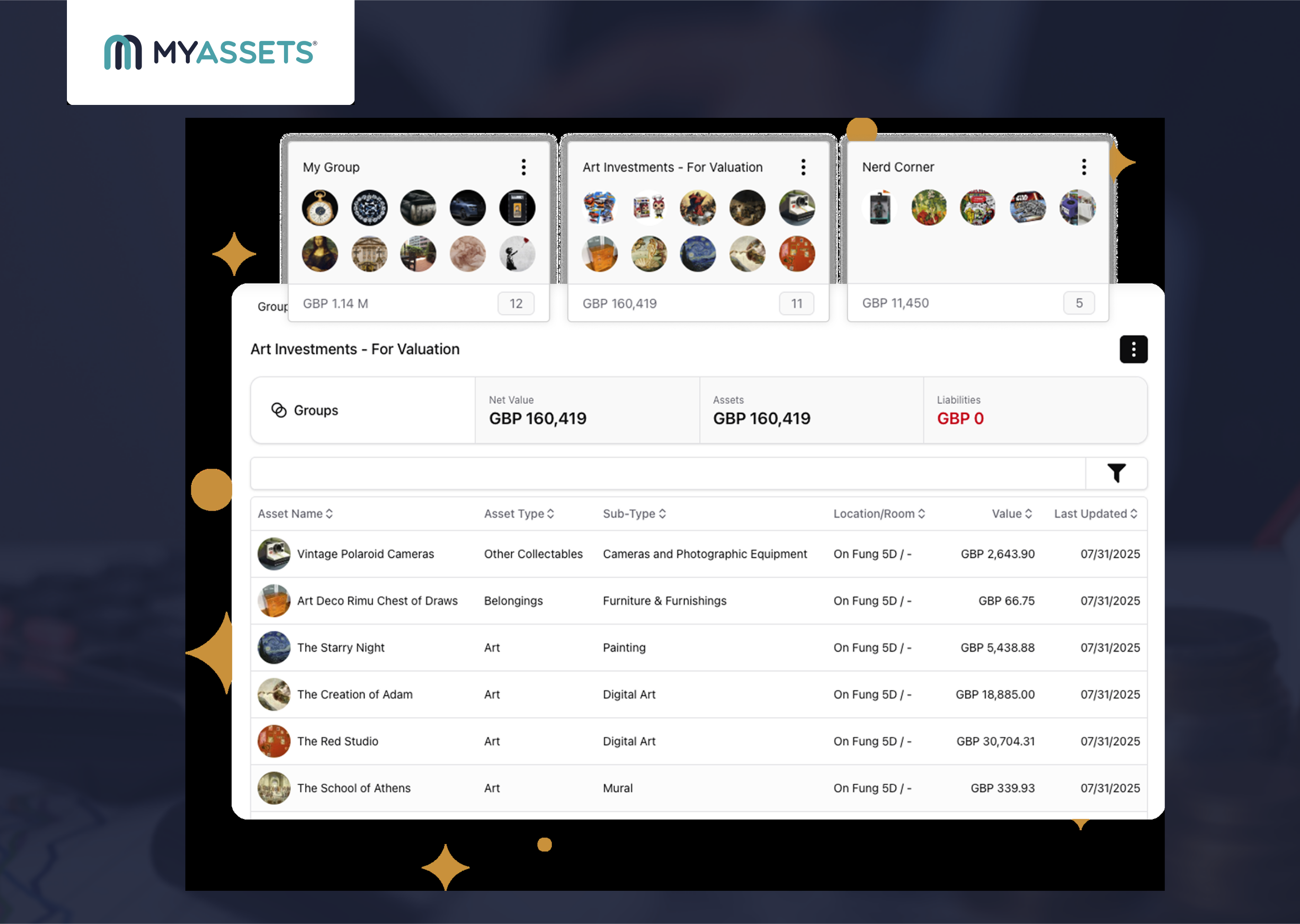
Are you struggling to organise different types of trading cards? MyAssets allows you to group your cards into logical, high-value categories. This ensures you can find any card in seconds and track your war chest with precision.
With MyAssets, you can create groups and categorise them into the following:
- Rarity and value
- Grail Cards: High-value, graded, or Reserved List cards for long-term investment.
- Super Rares/Holos: Foil or special-art cards that hold value but sit just below grail status.
- Commons and Playables: The meat of the collection, typically organised by set or colour for easy access.
- Collection Status
- Active Decks: Cards currently sleeved and in use for gameplay.
- Master Sets: Cards sorted by specific expansions (i.e., Scarlet & Violet or Lord of the Rings) to monitor progress toward 100% completion.
- Permanent Collection: Cards intended to be kept indefinitely, with no plans to sell or trade.
- The To-Be-Graded Pile: Raw cards believed to be in strong condition and suitable for submission to PSA, BGS, or CGC.
- Trade Binder: High-liquidity cards set aside for trading at local game stores, events, or conventions.
- Game Mechanics
- By Set/Expansion: The standard for "Master Set" collectors (i.e., Base Set, Modern Horizons 3).
- By Type/Colour: Organising by Mana colour (MTG), Energy type (Pokémon), or Position (Sports cards).
- By Artist: A growing trend for collectors who follow specific illustrators (e.g., Mitsuhiro Arita or Magali Villeneuve).
- Financial Monitoring
- Cost Basis: Grouping cards by purchase price (i.e., "Under £5," "£50-£100").
- Growth Potential: Labelling cards as Speculative (cards you think will spike) or Stable (established cards with steady long-term growth).
In this way, you transform a disorganised stack of cards into a structured digital portfolio, making it straightforward to manage your physical assets and plan your next big trade or purchase.
6. Update Your Card Database Regularly
MyAssets helps you eliminate outdated records by providing flexible editing tools tailored for your trading card inventory. Whether you need to log a new storage location, adjust market pricing, or attach updated photos and grading certificates, the platform ensures your card collectables remain precise and reflective of your collection’s current state.
To identify which details are most likely to require updates, here is a list:
- Collection Status (i.e., trade binder, active deck, or permanent collection)
- Condition Status
- Grading Status
- Market Value
- Notes or Attributes (new information, such as misprints, signatures, or provenance)
- Quantity
- Sale or Trade Status
- Storage Location
For optimal results, establish a regular update schedule, such as quarterly reviews or updates following each new acquisition.
7. Backup Your Card Inventory
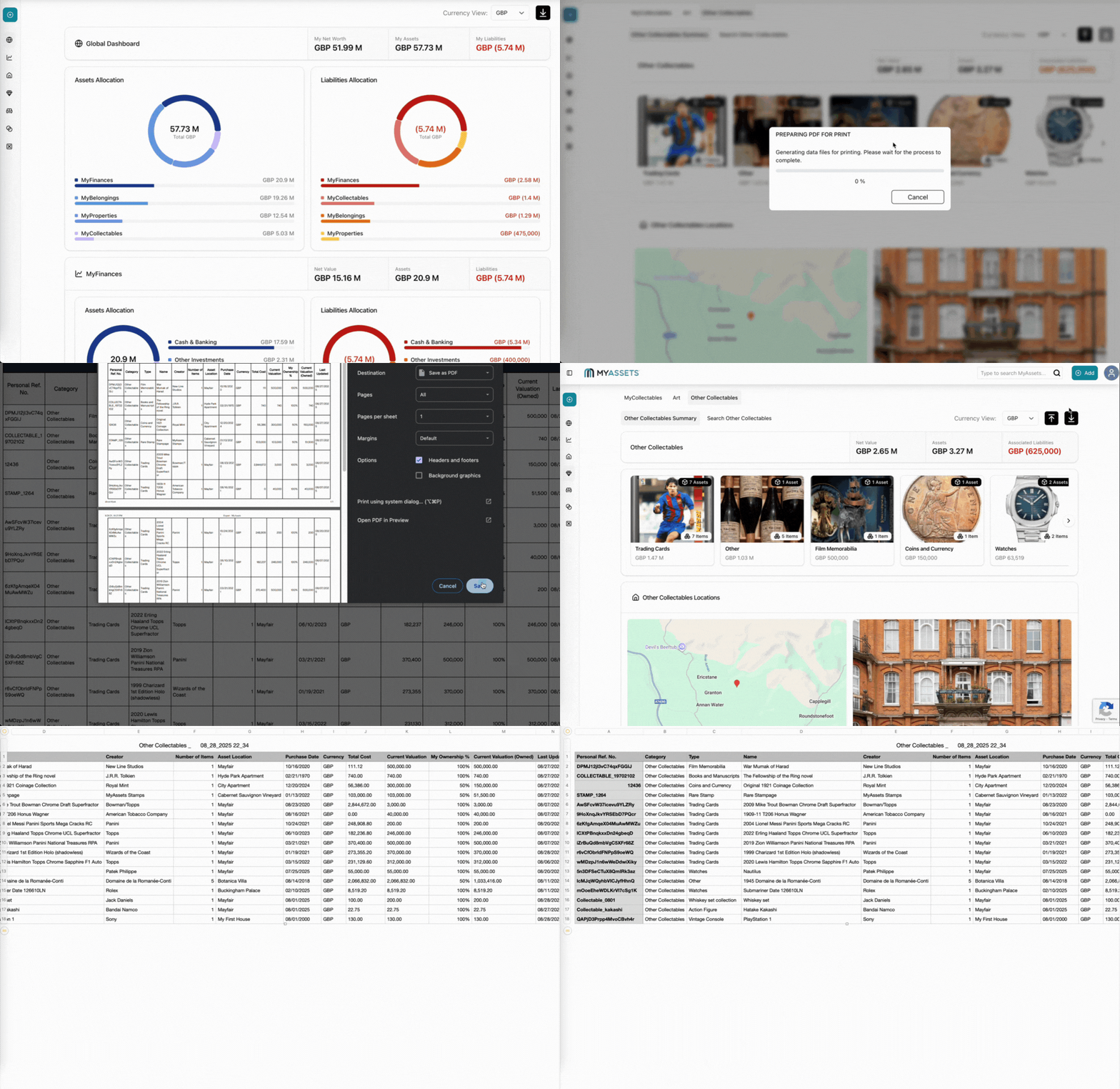
While keeping your collection on a digital platform is convenient, having a local backup is a vital safety net. By exporting your data from MyAssets, you create a hard copy of your trading card inventory that remains accessible even if you're offline
Follow these steps to secure your data:
a. Select the MyCollectables icon.
b. Select Other Collectables.
c. Select the file type you wish to export: CSV or PDF.
d. Select Save for exported CSV or PDF files.
In this approach, you take full ownership of your collection data, ensuring that your years of cataloguing and hard work are never lost.
From Physical to Digital: The Power of a Trading Card Collection Tracker
Cataloguing your collection is the transition from being someone who just owns cards to being a true curator of a card collection catalogue. By understanding the importance of inventory management, from efficient searching to insurance protection, you set the stage for long-term success in the hobby.
Whether you choose the granular control of a spreadsheet or the automated power of a card collection app, the goal remains the same: clarity and control.
By using MyAssets to build your card inventory, you can:
- Standardise your records with primary details and rich metadata.
- Enhance your portfolio with high-resolution photos and grading documentation.
- Group your assets logically to streamline trades and deck-building.
- Protect your hard work through regular updates and secure data backups.
In this way, you transform a chaotic physical stash into a professional, organised, and protected asset portfolio. With a complete card inventory at your fingertips, you are ready to navigate market trends, execute smarter trades, and enjoy the true value of your collection for years to come.
Card Collection Tracker: Frequently Asked Questions
1. How to prepare a card catalogue?
To prepare a card catalogue, start by sorting your collection into logical groups, such as by set, rarity, or game, and choosing a digital platform like MyAssets or a spreadsheet to log your data.
Record essential details for each card, including name, condition, and market value, and attach photos to document their physical state for insurance or resale.
2. How to store your card collection?
To protect the physical and financial value of your collection, store cards in acid-free penny sleeves and rigid toploaders or side-loading binders to prevent scratches and warping. For long-term preservation, keep your cards in a cool, dry, and dark environment.
3. What is the best app for organising cards?
To safeguard the physical condition and financial value of your collection, store cards in acid-free penny sleeves and sturdy toploaders or side-loading binders to prevent scratches, bending, or warping. For long-term preservation, keep your collection in a cool, dry, and dark environment, away from direct sunlight and humidity.
Your Card Collection, Organised and Tracked with MyAssets
Don't let your grails get lost in a sea of cardboard or buried in forgotten boxes. MyAssets empowers you to build a card inventory of your own, turning a scattered hobby into a high-performance digital portfolio.
A Digital Binder for Your Legendary Pulls
So, how does MyAssets work? As a premier asset management platform, MyAssets serves as a trading card inventory, allowing you to build a digital archive for your most legendary pieces, from a 1998 Pikachu Illustrator and a 1993 Alpha Black Lotus to a 1952 Topps Mickey Mantle. It centralises data, including:
- Acquisition costs
- Condition reports
- Physical locations
- Purchase dates
By consolidating these details, MyAssets provides the visibility needed to monitor appreciation, manage insurance requirements, and make informed decisions about future acquisitions or sales.
All Your Trading Cards in One Dashboard
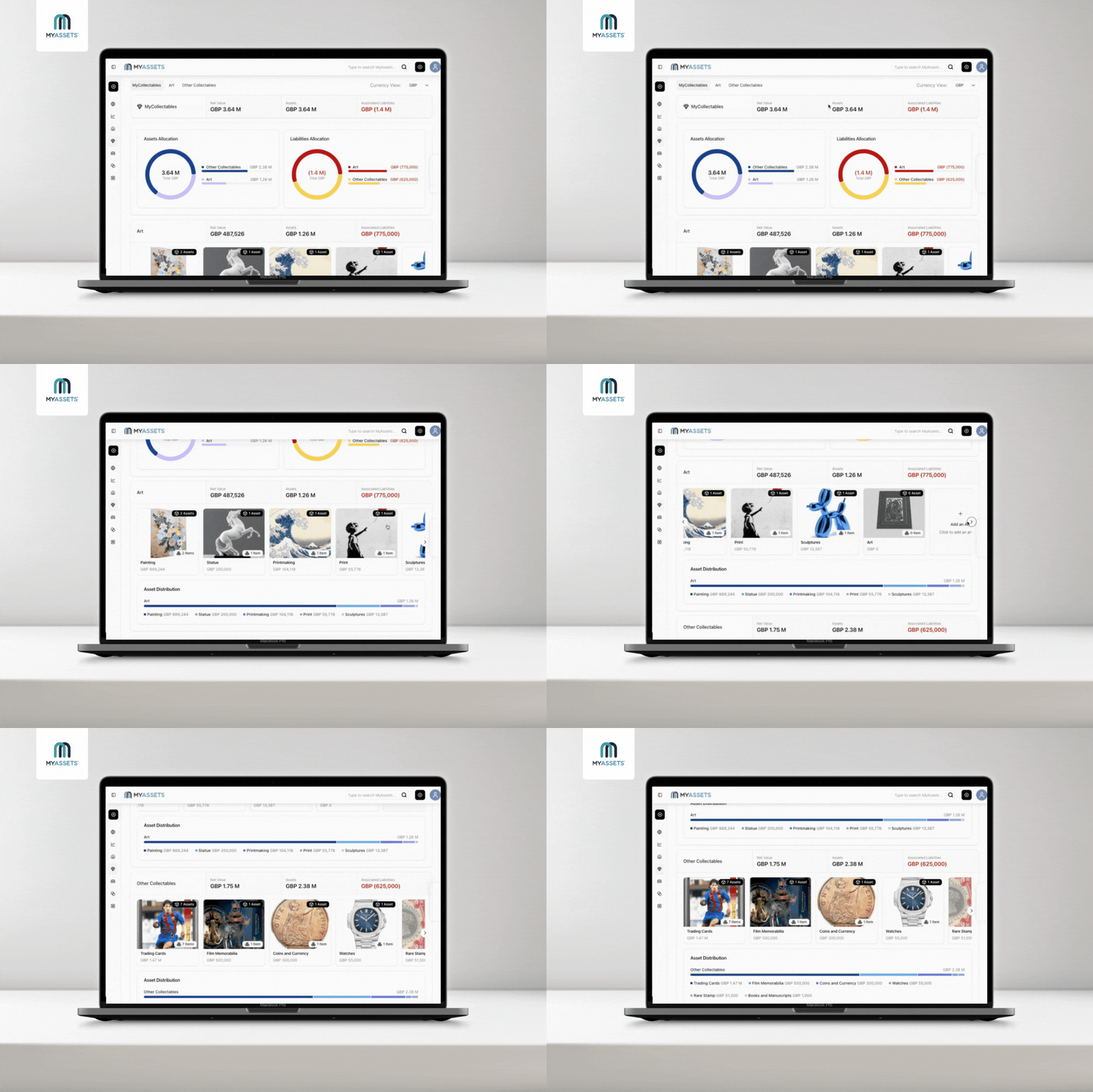
Transform the visual chaos of massive data into a clean, organised, and visually appealing dashboard. With MyAssets, all your collection information is summarised in a single view, highlighting the most crucial details.
This allows you to understand your collection at a glance, including insights such as the net value of your card collectables, associated liabilities, and category breakdowns, helping you make data-driven decisions.
A Platform that Supports Collaborative Collecting
Even better, MyAssets lets you collaborate on your card collection by adding delegates, a useful feature for business partners, collection managers, or assistants helping to maintain your inventory.
You can control their access by assigning specific roles:
- View: Delegates can browse your digital binders and market values but cannot change anything.
- Create/Edit: Delegates can add new hits to your inventory, update pricing, or upload new photos.
- Delete: You can grant this specifically if delegates are tasked with cleaning up your records or logging sold items.
With MyAssets, you can ensure that your trusted collaborators can contribute to your collection efficiently, while you maintain full control and oversight.
Digitise and organise your card collection with MyAssets, free for 14 days.



