


Did you know that a wealth tracker dates back over 7,000 years?
The earliest accounting records were discovered among the ruins of Ancient Mesopotamia. As Investopedia highlights, these early civilisations used clay tablets to record the flow of crops, animals, and livestock. Rather than just numbers on a page, these records often read like narratives, disclosing stories of trades made, services rendered, and debts owed.
What began as a way for Mesopotamians to record grain is now a tool for individuals to manage their financial futures. Today, monitoring wealth has become a daily personal habit. Powered by digital wealth management apps, individuals can now manage their wealth on the go, from tracking daily expenses to calculating net worth —shaping everyday financial decisions.
However, in an era of endless apps and overflowing data, the challenge is no longer just counting the grain; it is answering the question: What is the best wealth tracker?
To find the best way to track personal finances, individuals must choose between two primary methods: a net worth calculation sheet or a wealth platform app.
Each offers distinct advantages. Luckily, this article explores the trade-offs of both, helping you select the tool that best aligns with your financial complexity and financial management style.
- What is a Wealth Tracker?
- What is the Difference between a Spreadsheet and a Wealth App?
- Spreadsheets vs. Wealth Apps: A Comparison Table
- Choosing the Right Personal Wealth Tracker for You
- Wealth Monitor: Frequently Asked Questions
What is a Wealth Tracker?
A wealth tracker is a tool, typically digital, that consolidates an entire financial landscape into a single view. By balancing assets (such as investments, property, and cash) against liabilities (including debt and loans), it calculates an individual’s total net worth over time.
To put it simply, calculating net wealth indicates an individual’s financial health:
- A positive net worth signifies stability.
- A negative net worth suggests potential difficulties.
Unlike a standard budgeting app, which focuses on daily spending and granular transactions, a wealth tracker functions as a net worth aggregator. It provides a high-level perspective that allows individuals to manage their financial wealth as a whole, rather than a series of disconnected expenses.
This comprehensive view allows for:
- Accurate monitoring of wealth investment performance.
- Better financial goal-setting.
- Clearer understanding of long-term financial risk.
What is the Difference between a Spreadsheet and a Wealth App?
While a wealth tracking spreadsheet and a personal wealth app share the common goal of calculating net worth, each approach offers a distinct experience in how individuals interact with their data.
To learn more about their key differences, here is a detailed breakdown of the trade-offs to help you decide which tracker suits your needs.
Definition of Terms
To better evaluate net worth calculation sheets and wealth apps, it is useful to start with clear definitions of each and their roles in personal finance management.
What is a Spreadsheet?
As Microsoft defines, spreadsheets are digital tools that have transformed how data is organised, calculated, and analysed. Widely used across industries, they support everything from basic record-keeping to advanced financial modelling.
If utilised as a networth spreadsheet, this tool allows users to take a hands-on approach by entering asset values and respective liabilities manually. This granular control transforms a simple document into a personalised financial ledger, allowing for:
- Data input and formatting. Enter text, numbers, dates, and formulas into structured cells, with formatting options, such as currency, percentages, and date styles.
- Formulas and built-in functions. Perform calculations using formulas and predefined functions like SUM, AVERAGE, and VLOOKUP to automate repetitive tasks.
- Data analysis and visualisation. Sort and filter data, create charts and pivot tables, and apply conditional formatting to identify trends and highlight key insights.
Among the most commonly used spreadsheet tools are:
- Microsoft Excel
- Google Sheets
What is a Wealth App?
A wealth tracking app is a digital platform that consolidates an individual’s entire financial portfolio into a single dashboard. By inputting or linking various accounts, it aggregates data across multiple categories, including:
- Bank Accounts: Checking and savings balances.
- Cash: Physical currency and emergency funds.
- Cryptocurrencies: Digital assets and exchange balances.
- Loans: Mortgages, student debt, and personal lines of credit.
- Real Estate: Property values and home equity.
- Traditional Investments: Stocks, bonds, and retirement portfolios.
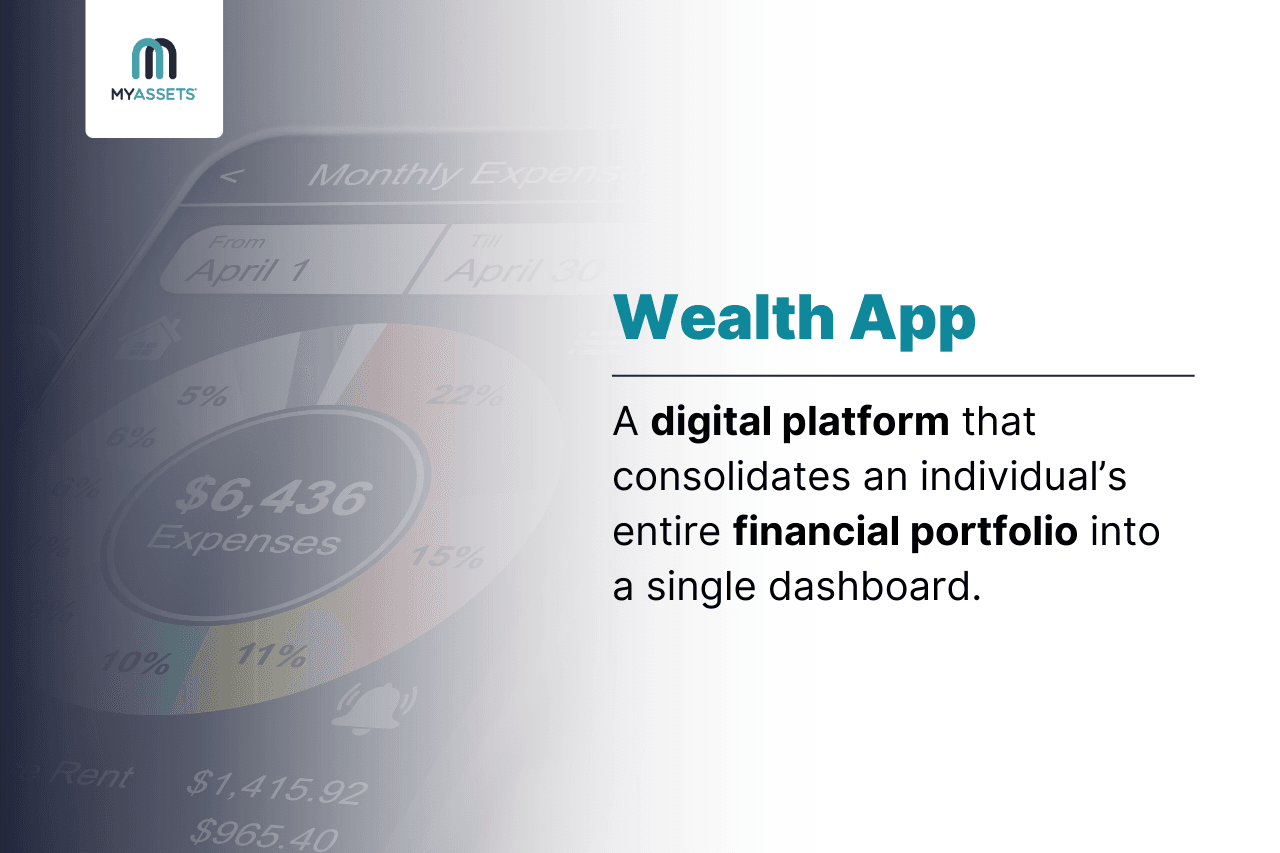
Its distinguishing features include:
- Net Worth Calculation: Aggregates assets (what you own) and liabilities (what you owe) to provide overall net worth.
- Financial Account Aggregation: Links multiple financial accounts and data sources into a single, unified platform.
- Visual Reporting: Uses charts, graphs, and other visual tools to turn complex financial data into clear, easy-to-understand reports.
Some of the best personal wealth apps worth checking out are as follows:
- Empower
- Kubera
- MyAssets
- Plum
- Quicken
Advantages and Disadvantages of Wealth Tracking Tools
For those seeking the best way to track net worth, this article compares the advantages and drawbacks of today’s two most widely used wealth tracker methods.
Advantages of Using a Wealth Tracking Spreadsheet
- Complete Customisation: Allows you to tailor categories, build custom formulas, and design layouts that match your financial situation.
- Encourages Financial Mindfulness: Entering account balances manually each month fosters a hands-on relationship with your finances, often leading to greater financial awareness and more intentional spending.
- Low to no cost: Tools like Google Sheets and Microsoft Excel are available for free use. While some net worth templates are paid, they typically involve a one-time fee, making this an affordable option.
Disadvantages of Using a Wealth Tracking Spreadsheet
- Manual Data Entry: Demands a significant amount of time to set up. You need to log into each bank, brokerage, and loan account to update balances, which can become tedious as your financial portfolio grows.
- Prone to Human Error: One small error, like deleting a formula or misplacing a decimal, can distort your net worth and give an inaccurate view of your financial situation.
- Requires Setup Knowledge: You need a strong understanding of Excel functions and data organisation if you want to make the most of features, such as automated charts or advanced trend analysis.
Learn more: Master Your Money, Unlock Personal Financial Success
Advantages of Using Wealth Platform App
- Consolidated Financial Overview: Offers a single dashboard for managing complex portfolios, allowing you to view your crypto, 401(k), mortgage, and checking accounts in one place, without needing to log into multiple websites.
- Predefined Structure: Utilises pre-set, expert-designed fields that enable you to track finances instantly without designing formulas or layouts from scratch.
- Time-Saving Automations: Transactions are typically synced, eliminating the need for manual bookkeeping.
Disadvantages of Using Wealth Platform App
- Learning Curve: Applications with extensive features can be daunting, demanding both time and effort to set up and master.
- Limited Customisation: Predefined categories and dashboards can be restrictive, especially if you are managing complex portfolios or assets that don’t fit standard financial classifications.
- Subscription Costs: While basic versions are often free, many of the best ad-free wealth trackers require a monthly or annual subscription. While this adds a recurring cost, the long-term benefits of improved financial organisation and oversight can outweigh the expense.
Use Cases
Choosing between a financial net worth spreadsheet and a digital wealth management app depends on how finances are managed. The following use cases highlight where each approach performs best.
Who Should Use a Wealth Tracking Spreadsheet?
Spreadsheets are well-suited for individuals who approach wealth management as a hands-on practice or have non-traditional financial structures. Among those individuals are:
- The Niche Investor. For those managing hard-to-track assets, such as gold, classic cars, private equity, or artwork, net worth spreadsheets allow manual valuation and custom categorisation that they see fit.
- The Scenario Builder. Perfect for users looking to create detailed “What If” scenarios. For example, if you want to see how retiring early or moving to a different tax bracket affects your net worth retirement, a spreadsheet lets you build custom formulas to model it.
- The Security-Minded. Designed for individuals who prefer not to share bank login details with third-party servers. Because spreadsheets are stored offline or in a private cloud, financial data remains secure.
Who Should Use a Wealth Monitor App?
Digital wealth management apps deliver a streamlined, real-time view of financial health, making them particularly useful for individuals such as:
- The Debt Crusher. Ideal for those paying off several loans, such as student loans, mortgages, or credit cards. With a wealth management app, users can see their total debt and track how each payment boosts their net worth.
- The Multi-Currency Expat. Useful for individuals holding accounts in different countries, as a personal wealth app enables balances to be logged in multiple local currencies and provides a consolidated home-currency total using real-time exchange rates.
- The Simplicity Seeker. Designed for users who struggle with spreadsheets on mobile can enjoy clear visuals and set fields while letting users control data updates with personal wealth tracker apps.
Spreadsheets vs. Wealth Apps: A Comparison Table
Choosing the best way to track net worth is a key part of wealth planning. Whether using a net worth calculation sheet or a personal wealth app, understanding their differences can help users manage their finances more efficiently. This comparison table highlights the features and ideal users for each approach.
| Category | Wealth Tracking Spreadsheet | Personal Wealth App |
|---|---|---|
| Best For | Those who want total control, high customisation, and no subscription fees. | Users looking for automation, ease of use, and quick, on-the-go access. |
| Primary Features | - Custom formula creation - Manual data entry cells - Static charts and tables |
- Automated financial calculation - Bank syncing - Interactive charts and tables |
| Customisation | Fully customisable categories, formulas, layouts, and reporting. | Limited to predefined categories and dashboards. |
| Ease of Use | Requires knowledge of spreadsheet functions; setup and maintenance can be time-consuming. | User-friendly and intuitive interfaces; easy to moderate setup required. |
| Automation and Insights | Limited; charts and analyses must be manually built. | Built-in charts, dashboards, alerts, and insights for net worth. |
| Cost | Free or one-time fee for templates; no ongoing subscription. | Typically offers a free basic version; premium features may require a monthly or annual subscription. |
See also: Net Worth vs Credit Score: What Tells the Real Story?
Choosing the Right Personal Wealth Tracker for You
Ultimately, there is no single best way to monitor wealth, only the right personal wealth tracker for the individual. Spreadsheets and wealth apps serve different purposes, and the effectiveness of each depends on how hands-on, complex, or automated one’s financial life is.
Spreadsheets excel at flexibility and control. They suit individuals who want to customise every detail, track non-standard assets, or model long-term scenarios with precision. Wealth apps, by contrast, prioritise automation and convenience, offering a snapshot of net worth with moderate effort through account aggregation and visual reporting.
Understanding the differences, advantages, and ideal use cases of each tool allows individuals to make a more informed choice —one that aligns with their wealth planning style, portfolio complexity, and comfort with technology.
Whether through a net worth calculation sheet or a wealth platform app, the most effective system is the one that reinforces consistency, clarity, and better financial decisions that lead to financial success.
Wealth Monitor: Frequently Asked Questions
1. What is the best way to track wealth?
All-in-one wealth tracking apps provide a centralised dashboard that brings together assets, liabilities, and investments for a clear picture of net worth.
2. How to measure personal wealth?
Personal wealth is measured through net worth, calculated by subtracting total liabilities (such as mortgages, loans, and other debts) from the total value of assets (including cash, investments, and property). This figure provides a clear snapshot of financial health.
3. What is the best app to track wealth?
The best app to track wealth varies depending on individual needs and financial complexity. Some notable options include Plum for saving and investing, MyAssets for tracking diverse asset types, and Quicken for budgeting and overall financial management.
Your Assets, Your Wealth — All in One App with MyAssets
Today, several investors view wealth through a broader lens, valuing assets like vehicles, fine art, and rare collectables just as much as their liquid capital. Finding a single solution that can consolidate these diverse, unique needs into one platform is a rare and formidable challenge.
Fortunately, MyAssets delivers that solution, offering a comprehensive wealth tracking platform that brings every asset, standard or unconventional, into one centralised, easy-to-manage dashboard.
All Your Assets in One Dashboard
It pulls in everything —from bank accounts (checking and savings), investment portfolios (stocks, bonds, and mutual funds), and properties (residential, rental, and commercial), to valuable assets like family heirlooms, collectable investments, and everyday belongings.
It gets better. MyAssets doesn’t just show one’s assets; it also incorporates their liabilities, such as mortgages, loans, and credit card debts, providing an accurate calculation of one’s net worth.
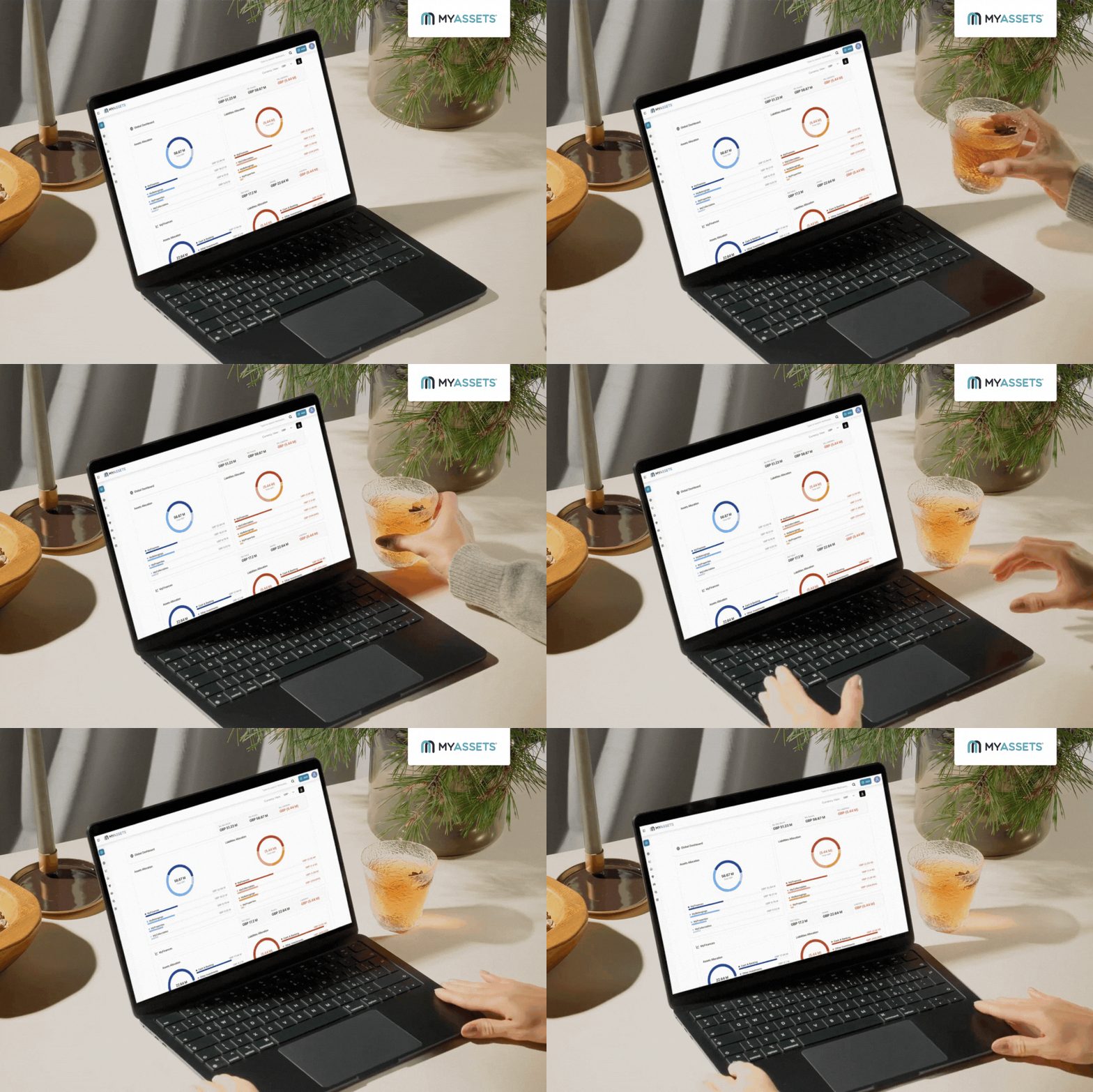
Imagine having all this information presented in a visually appealing dashboard. With MyAssets, monitoring wealth becomes straightforward as the platform transforms raw numbers into dynamic charts, offering a breakdown of how resources are distributed across finances, properties, collectables, and even belongings.
One System for Every Asset
It doesn’t stop there. MyAssets features smart asset linking, allowing users to integrate all assets – like collectables and personal belongings – with their property records. This creates a dynamic ecosystem where relationships between assets are easily managed, giving users a complete view of everything they own.
See every asset you own in one place with MyAssets, free for 14 days.



