


When people think of investing, their minds often go first to traditional assets like shares, bonds or mutual funds. But over the past decade, a growing number of investors have been exploring alternative investments, from precious metals and crypto to real estate and collectables. Understanding the difference between traditional investments versus alternative investments is vital to building a balanced, resilient portfolio.
In the United Kingdom, the shifting investment landscape provides a useful case study. According to a report by Unbiased, 23% of UK adults were actively investing in the stock market in 2024, up sharply from previous years, with roughly half of all adults (51%) having invested over the past five years. At the same time, younger generations from ages 18–34 are increasingly using digital platforms and investing tools, drawn to the accessibility and flexibility they offer.
Meanwhile, according to new research from The Royal Mint, alternative investments are becoming more mainstream among United Kingdom investors. Over half of respondents in their survey claimed to hold at least one alternative asset, and many plan to increase their investment. For many, these alternatives provide a hedge against inflation, diversification beyond traditional equities, and a sense of security in uncertain economic times.
As investment choices diversify, tracking and managing different asset types becomes more complex. That’s where tools like MyAssets come into play. MyAssets and similar wealth-tracking apps allow investors to centralise all their holdings in one platform. This holistic view makes it easier to assess net worth, monitor performance, and make informed decisions about allocation and risk.
These trends show that investing is no longer limited to traditional stocks and bonds. A growing appetite for variety, combined with powerful tools for tracking and managing complex investing portfolios, is shaping a financial landscape where informed, diversified investing can be within reach for many.
- What is the Difference between Traditional Investments vs Alternative Investments?
- What are Examples of Traditional Investments and Alternative Investments?
- How Asset Management Tools Like MyAssets Help You Track Your Investment Portfolios
- Centralised View of All Investments
- Real-Time Investment Portfolio Monitoring
- Improved Data Accuracy and Reduced Errors
- How to Use MyAssets for Traditional and Other Investments
- Add your Investments to MyFinances
- Include Information about Your Investments in MyAssets
- Monitor Your Investments' Performance in MyAssets
- Managing Traditional and Alternative Investments: Frequently Asked Questions
What is the Difference between Traditional Investments vs Alternative Investments?
Traditional investments form the building blocks many people use to grow wealth. These types of investments are generally liquid, closely regulated, and widely understood. Traditional investments are often considered more affordable and accessible for the average investor.
Alternative investments refer to any investable assets outside those traditional categories. They often offer different risk–return profiles and lower correlation to stock markets, but tend to be less liquid, more complex, and may require specialised knowledge or higher capital.
Because traditional and alternative assets behave so differently, understanding how they are valued becomes especially important. Valuation methods play a central role in assessing performance, risk, and overall portfolio balance. Methods vary by asset type and purpose, ranging from cost-based and income-based approaches to market comparisons and professional appraisals.
Using the right valuation method gives a credible, defensible snapshot of what your assets are worth; using the wrong method can lead to over- or under-valuation, which can distort your net worth, mislead planning, or lead to poor investment decisions.
Traditional investments are well-defined, liquid, and mainstream asset classes like stocks, bonds, and funds; alternative investments explore a broader, often more complex world of assets.
Learn more: Net Worth vs Credit Score: What Tells the Real Story?
What are Examples of Traditional Investments and Alternative Investments?
While traditional investments are more liquid and carry lower risk, alternative investments can offer valuable diversification and returns that don’t move in sync with the broader market. Utilising both types of investments can help lower the overall risk in your portfolio and create more stable long-term performance.
Examples of Traditional Investments
Traditional investments refer to well-known asset classes such as:
- Stocks (equities)
- Bonds
- Funds (mutual funds or ETFs)
- Cash or cash equivalents (money-market funds, certificates of deposit)
Examples of Alternative Investments
Alternative investments cover a wide variety of assets outside the traditional categories. These include:
- Commodities (like gold or oil)
- Private equity or venture capital
- Hedge funds
- Infrastructure
How different types of investments work together
Understanding what you own and how each asset contributes to your overall financial picture is key to building long-term financial success. Tracking your investments alongside savings, liabilities, and net worth helps you stay organised, assess performance, and manage risk.
Traditional assets such as stocks, bonds, funds, and cash are typically liquid and well understood, while alternative investments introduce greater complexity through real assets, private holdings, and tangible items. Managing both clearly allows for more informed allocation, diversification, and financial planning.
How Asset Management Tools Like MyAssets Help You Track Your Investment Portfolios
There are key benefits to using an asset management tool in organising and tracking your investment portfolios.
1. Centralised View of All Investments
A centralised view of one’s investments via a single, unified asset management tool is invaluable for sustainable financial success, which begins with clarity. Without a clear overview of your assets and liabilities attached to your investments, it’s difficult to set realistic goals, monitor progress, or make informed decisions.
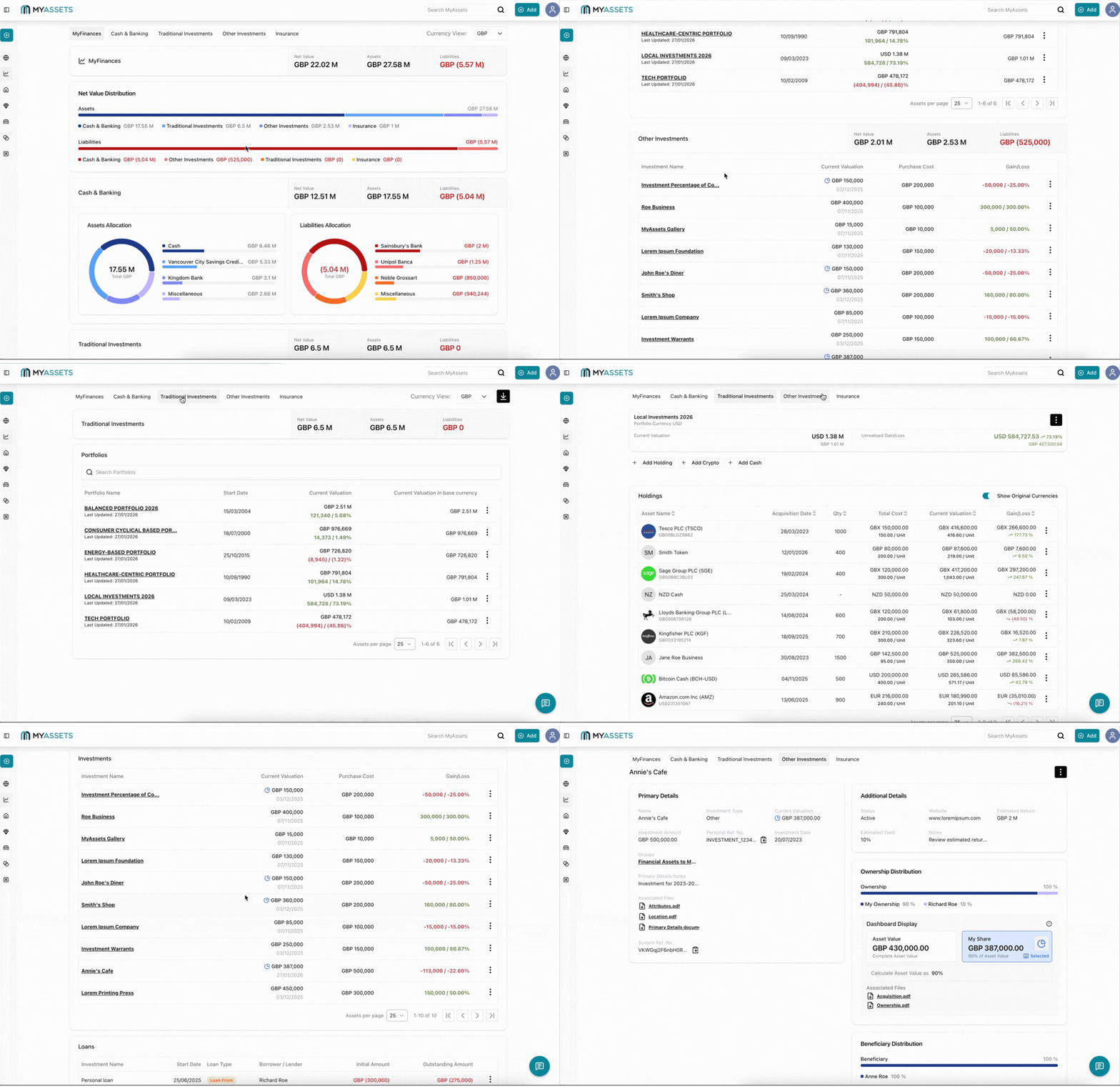
Using a tool like MyAssets means all your financial accounts, holdings, investment loans, and other assets live in one secure, user-friendly dashboard, giving you a comprehensive picture of your net worth at a glance.
This centralised visibility offers several powerful benefits:
- Better decision-making. With all assets tracked and updated in one place, you can assess which investments perform well, which assets are underutilised, and when to rebalance or diversify. This optimises returns and reduces risk.
- Stronger accountability and planning. A consolidated view helps you set realistic financial goals (e.g. saving for a home, retirement, emergencies), monitor progress, and adjust strategy as circumstances change.
- Efficiency and productivity. A unified system automates tracking, improves data accuracy, and simplifies record-keeping.
Having a centralised view through a tool like MyAssets transforms financial management from a fragmented, reactive process into a strategic, proactive discipline.
2. Real-Time Investment Portfolio Monitoring
A digital asset management tool can transform the way you oversee your investment portfolio by enabling real-time monitoring, which is critical for effective financial planning.
With MyAssets, you can aggregate all your financial accounts, investments, holdings, and liabilities on a single dashboard. This centralised view means you instantly know your current net worth. More importantly, you can track how it evolves as markets shift or as you make contributions or withdrawals.
Real-time monitoring offers three key advantages:
- It gives you immediate insight into which investments are performing well, so you can make timely decisions about whether to hold, sell, or rebalance assets. This helps you stay aligned with your financial goals as defined in your plan.
- By seeing updated values constantly, you can detect early if your strategy drifts off course (i.e. due to underperforming investments or changing market conditions), allowing you to respond before losses accumulate.
- Regular updates support better financial forecasting. When you know where you stand now, you can more accurately plan how much to invest, save, or allocate to different financial goals.
Using an asset management tool that offers real-time monitoring for your investments doesn’t just keep your records organised. It also turns your portfolio into a living, responsive system that supports disciplined investing, timely adjustments, and smarter long-term financial planning.
3. Improved Data Accuracy and Reduced Errors
An asset management tool can significantly improve data accuracy and reduce errors when managing investment portfolios or calculating your net worth (assets minus liabilities). Accurate and data about all your assets and liabilities is a foundational element for financial health.
Centralising all asset information in one platform helps you avoid the common pitfalls of manual record-keeping for investment portfolios, such as:
- Forgotten accounts
- Outdated values
- Duplicate entries
- Misclassification of assets and liabilities
With spreadsheets or multiple separate records, human error is a constant risk. But a system like MyAssets ensures that every holding, loan, and asset is logged consistently and updated accurately.
Because MyAssets also allows you to link liabilities (e.g. mortgages, loans, or other financial obligations) directly to their corresponding assets, your calculations of total liabilities become more precise and transparent. As a result, your net worth figure reflects reality rather than estimates or guesswork.
By generating downloadable reports and maintaining organised, up-to-date records, MyAssets supports regular reviews of your portfolio. This ensures that any discrepancy or outdated entry can be caught and corrected before it leads to flawed decisions.
Using a dedicated asset management tool doesn’t just make life easier. It ensures that the numbers underpinning your investment strategy are accurate, current, and reliable. This reliability is crucial for informed decision-making, risk assessment, and long-term financial planning.
Read more: FinTech and Financial Literacy: How Technology is Changing Money Management in the UK
How to Use MyAssets for Traditional and Other Investments
We’ve shortlisted three different ways you can use MyAssets to organise, track, and manage your traditional and alternative investments.
1. Add your Investments to MyFinances
MyFinances is one of the key categories in MyAssets, which allows you to bring all your financial holdings together in one place. This enables you to organise and oversee your portfolio alongside your other assets.
This unified view provides clearer insight into your overall net worth and financial well-being. By managing investments within a single platform, you can more easily track performance over time, assess risk exposure, and plan effectively for long-term objectives such as retirement or building wealth.
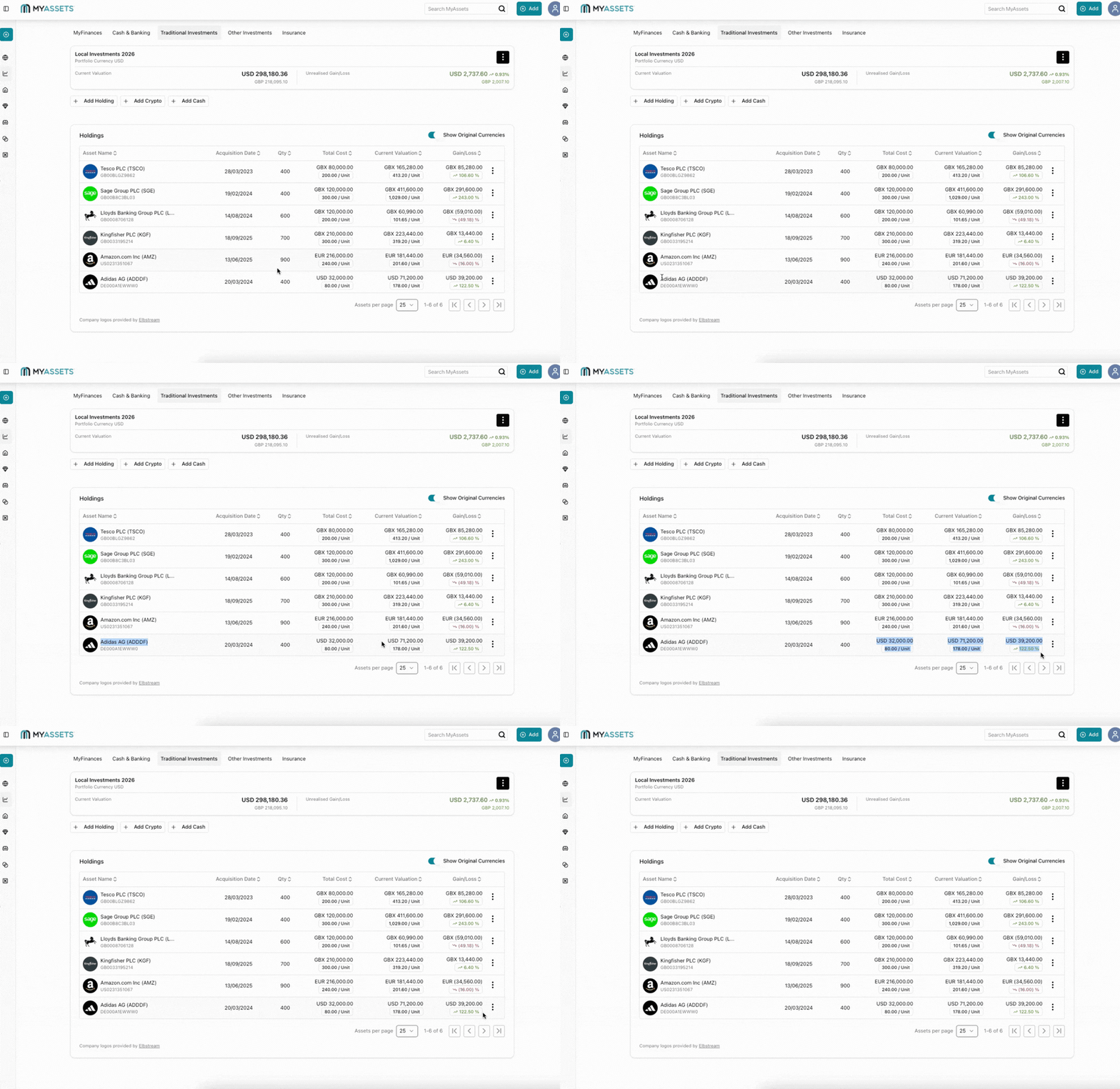
How to Add Traditional Investments to MyFinances
You can use MyFinances to add Traditional Investments and record key details such as:
- Portfolio name and acquisition dates
- Stock and custom holding details
- Unrealised gains and losses for each holding
You can also organise these entries with custom groups and store important documents securely in the document vault, making portfolio management both structured and accessible.
How to Add Other Investments to MyFinances
For other investments, such as alternative assets, MyFinances provides similar flexibility by letting you create detailed entries and categorise them in ways that reflect your goals and strategies.
You can add alternative investments such as:
- Percentage of the company or asset
- Shares
- Warrants
- Options
- Loans
- Others (e.g. precious metals and gemstones, commodities, domain names, etc.)
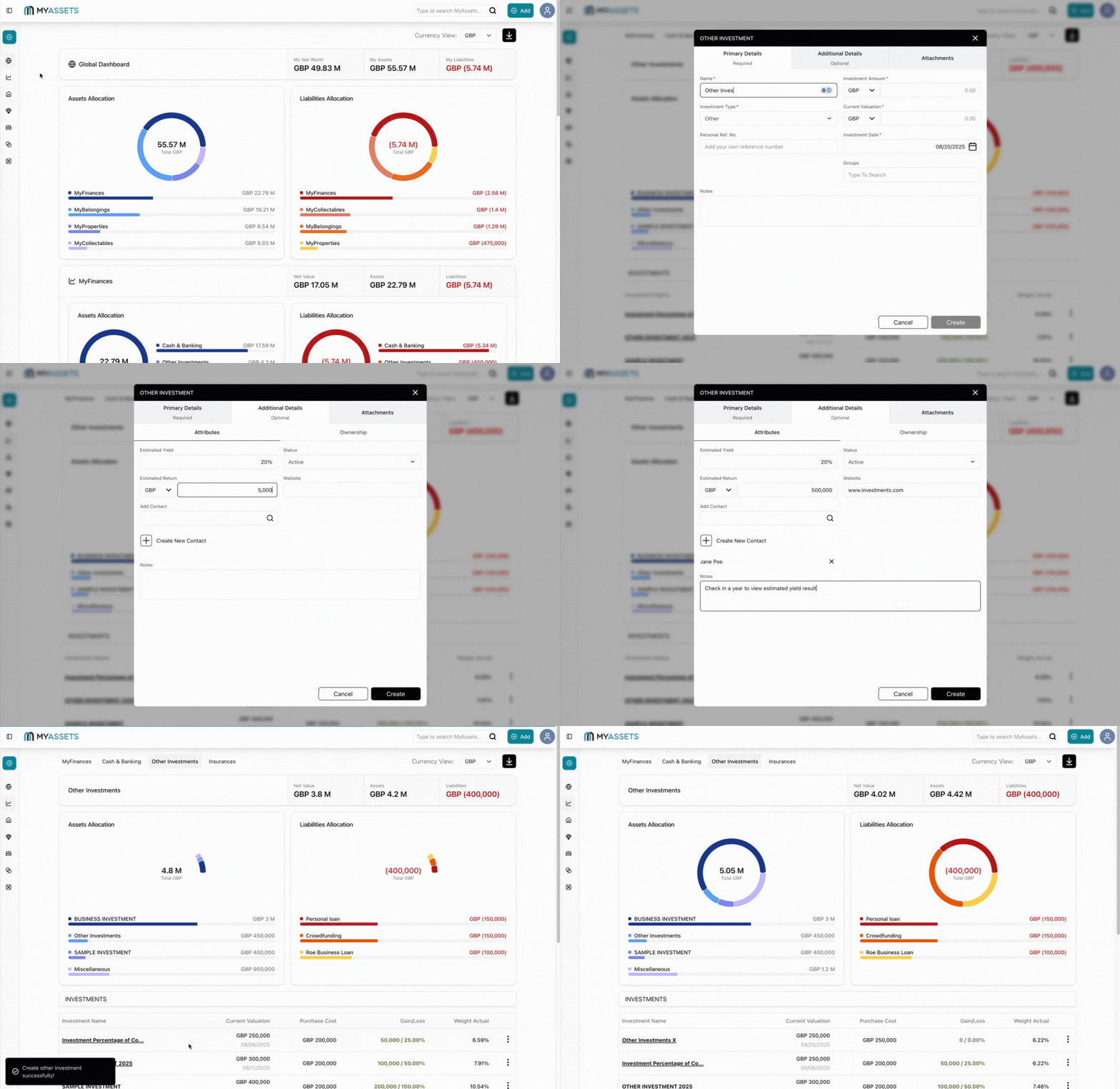
The intuitive asset categories and subcategories in MyAssets (e.g. MyFinances, MyProperties, MyCollectables, MyBelongings) help you organise diverse holdings in a logically segmented way, ensuring each investment fits into your overall asset picture and can be analysed within context.
2. Include Information about Your Investments in MyAssets
A comprehensive asset tracker ensures all your holdings are organised in one centralised platform rather than scattered across spreadsheets, bank statements, or disparate tools.
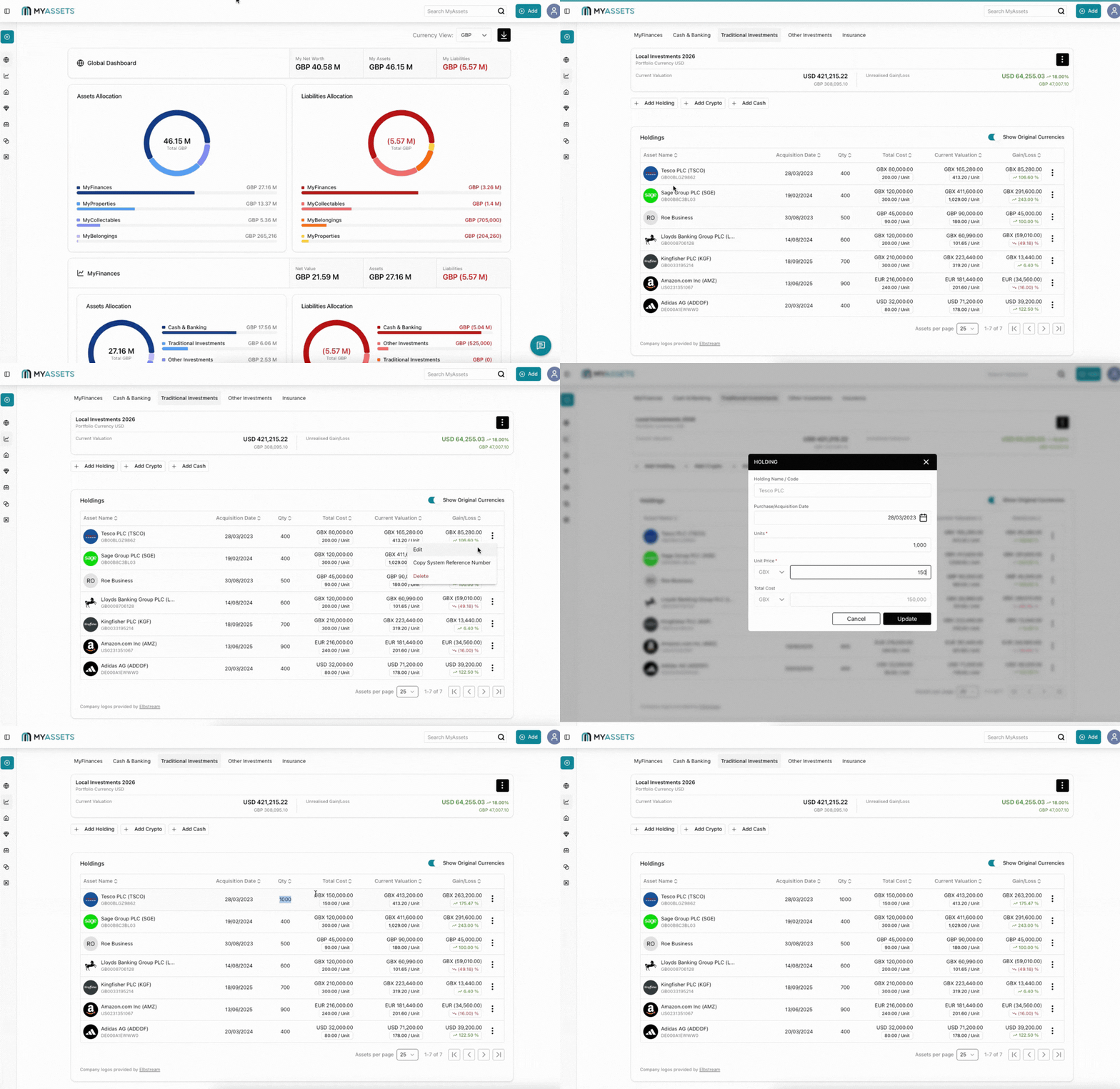
With Traditional Investments in MyAssets, you can include the following information about your holdings:
- Holding name or code
- Purchase date
- Units purchased
- Unit Price
With Other Investments in MyAssets, you can include the following information about your investments:
- Name of other investment
- Investment type
- Investment amount
- Current valuation
- Investment date
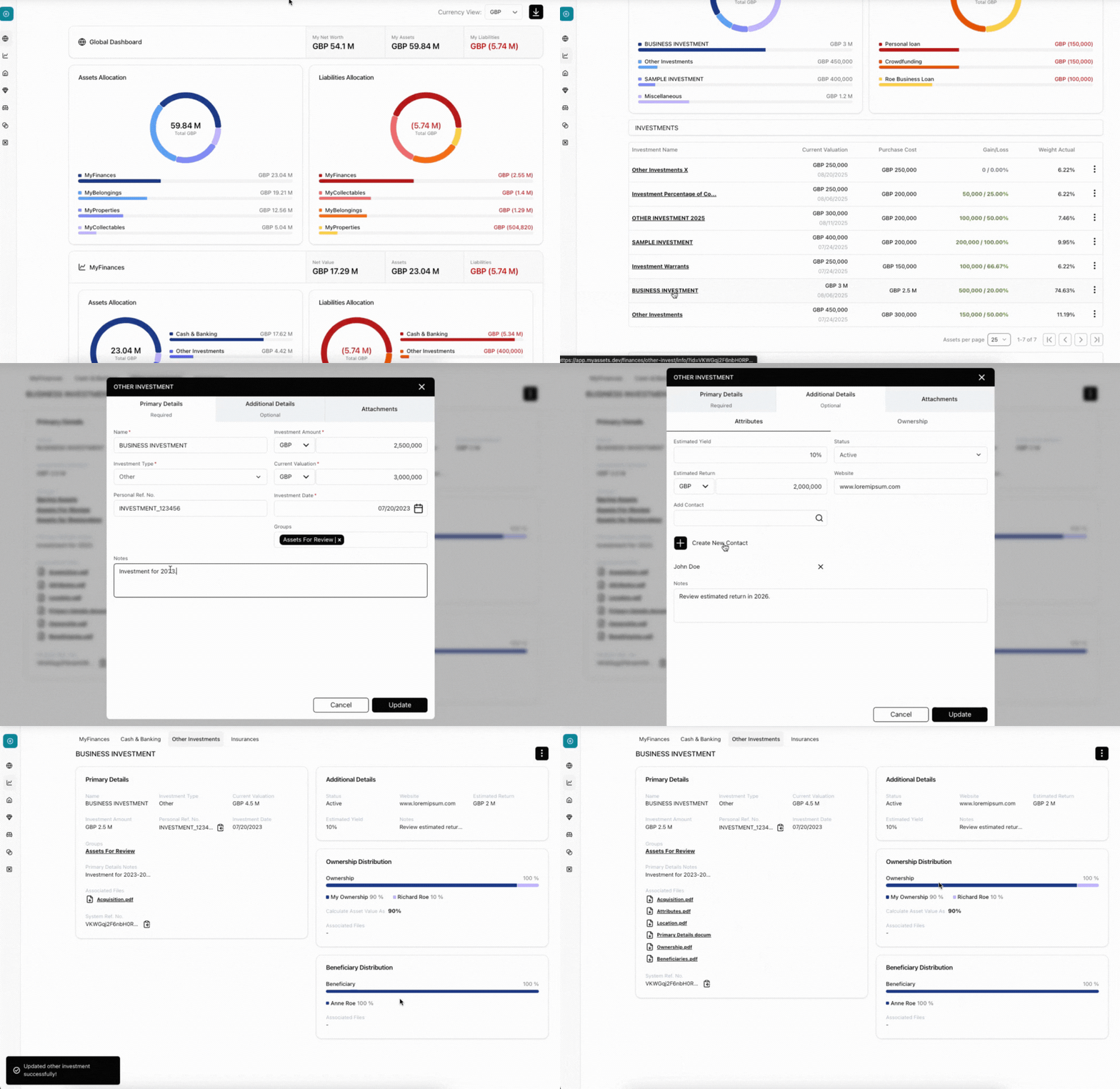
Including your investments in MyAssets also boosts transparency and organisation, enabling you to track financial milestones and integrate this information with the broader financial picture. With all investment data stored in one structured system, you can make smarter, faster decisions backed by accurate information. This is the core value of using a dedicated asset management solution. This consolidation also makes it easier to measure performance, assess risk, and plan toward long-term financial goals.
3. Monitor Your Investments' Performance in MyAssets
Tracking your investments’ performance (whether it’s appreciating or depreciating) in MyAssets is essential for understanding how your financial portfolio contributes to your overall wealth, and how fluctuations in markets impact your total net worth.
When you see your net worth rising or falling, you can adjust your strategy by reallocating resources, trimming underperforming assets, or reinforcing successful ones.
Once all investments are logged and consistently updated in MyAssets, you gain a dynamic snapshot of your evolving financial situation, allowing timely, informed choices that support both short-term adjustments and long-term growth.
In sum, monitoring investments in MyAssets keeps your net worth calculation accurate and your financial goals on track.
Managing Traditional and Alternative Investments: Frequently Asked Questions
1. What are Traditional Investments?
Traditional investments include financial assets such as stocks, bonds, mutual funds, and retirement accounts that are typically traded through established financial markets.
2. What are Alternative Investments?
Alternative investments are non-traditional assets, such as precious metals or domain names, that fall outside standard investment categories and often offer diversification benefits.
3. How Can I Use MyAssets for My Investments?
You can use MyAssets for your investments by recording, organising, and monitoring all investment types in one central platform to track performance, manage documentation, and understand their impact on your overall net worth.
MyAssets: The Digital Solution to Managing Your Investment Portfolio
MyAssets stands out as a powerful digital solution for managing your investment portfolios with clarity and confidence. By bringing all investment information into a secure, centralised platform, MyAssets eliminates fragmentation often associated with portfolio management. Users can track performance, organise assets across intuitive categories, and understand how each investment contributes to their overall net worth.
This comprehensive visibility supports better financial decision-making, whether you are adjusting strategies, monitoring long-term growth, or planning future goals. MyAssets provides the structure, insight, and accessibility needed to stay informed and in control, empowering individuals to manage their investments efficiently and build a stronger, more organised financial future.
As investment portfolios grow more diverse, having a reliable digital system becomes essential rather than optional. Start your 14-day free trial to organise your investment portfolios.



