

Every colossal property portfolio started small, more often on the screen of a humble spreadsheet. For decades, this tool has been the most transparent and cost-effective foundation for new property investors. Spreadsheets turn basic property management tasks, such as tracking income, expenses, and tenant information, into clear property insights.
However, the very simplicity that makes the spreadsheet essential, is also its greatest liability at scale. As portfolios grow exponentially, this manual system fractures, which then leads to administrative chaos, missed deadlines, and a profound lack of real-time automation.
It is when property portfolio management systems fracture that investors realise the need for some automation. Failing to modernise can leave property managers behind in an industry driven by speed and efficiency, as Wonderful Co., an open banking technology firm, stated.
In the United Kingdom, property management software has shifted from a 'nice to have' convenience to a non-negotiable necessity. Agencies are conceding the tangible benefits of technology adoption which include reduced administrative overhead across their portfolios.
If managing real estate still means juggling complex formulas and time-consuming manual data entry, it is definitely time for a smarter, automated approach.
This article goes beyond the spreadsheet's antiquated status, uncovering the key features that have propelled modern property management software into the spotlight, and evaluating which platforms best serve every kind of user.
- The Limitations of Spreadsheets
- Why Switch to Property Management Tools?
- Key Features to Look For in a Property Management Software
- Best Property Management Tools
- Making the Move: From Spreadsheets to Property Management Tools
- Best Property Management Platform: Frequently Asked Questions
The Limitations of Spreadsheets
Spreadsheets have long been the go-to tool for many, valued for their simplicity and low cost. However, as property portfolios increase in size and complexity, the drawbacks of this approach become harder to ignore.
Risk of Human Error
Did you know spreadsheets are prone to errors? It may come as a surprise, but Forbes reveals that nearly 88% of all spreadsheets contain significant errors—most of which stem from human error.
For landlords or property managers, this translates into high-risk, avoidable mistakes, such as mistyping the rental rate, billing the wrong tenant, or using an incorrect formula for shared utility costs.
These seemingly small input errors have a cascading effect that severely erodes data integrity, leading to reporting inaccuracies, audit risks, and tension between landlords and tenants.

Lack of Integration
Given that property management involves too many moving parts, from financial monitoring to tenant management, relying solely on disparate spreadsheets becomes inefficient and unsustainable.
Imagine the effort required to extract financial data from an online banking platform, manually copying and pasting figures into spreadsheets, and constantly cross-checking for accuracy.
The lack of integration leads property owners to spend hours instead of seconds to generate a single report, leaving them a step behind every decision. Moreover, it can also create duplicate data entry, which can lead to inaccurate reporting.
Time-Consuming Manual Updates
Managing a single rental unit is already a major time drain, with landlords and property managers spending roughly 4 hours per month per property on daily operations alone. For owners with multiple units, relying on spreadsheets only magnifies inefficiencies.
Whether it's inputting income and expense data, creating and maintaining tables for each property's ledger, or generating and troubleshooting complex formulas for accurate reporting, every task is executed manually, from start to finish.
Ultimately, this fragmented, manual workflow makes it nearly impossible to quickly aggregate data and gain essential portfolio-level insights, forcing owners to manage their investments reactively instead of strategically.
Why Switch to Property Management Tools?
Did you know you can cut the time spent on property management with the best software? Indeed, according to data reported by Hemlane, the best property management tools can save self-managing owners an estimated 50% to 70% of the time currently dedicated to administrative tasks.
More than just a time-saver, popular property management software delivers a host of benefits that can simplify and strengthen portfolio management.
Property Organisation Tools Streamline Operations
The most challenging part of renting out property is the necessity of doing everything all at once: organising, tracking, and managing administrative, financial, and operational details of every unit.
This is where property management software makes a difference. Factually speaking, 35% of a 40-hour work week spent on property management tasks can be optimised or streamlined through technology usage, as highlighted by a survey by the National Apartment Association.
Having this in mind, the best app to manage rental property is valuable for streamlining workflows. By offering centralised, automated capabilities, the best tools for landlords redirect effort from repetitive work toward building a property portfolio.

Property Software Improves Data Accuracy
Data informs nearly every decision, but managing it through isolated spreadsheets and outdated documents creates disorder.
To eliminate this risk and prevent costly errors from conflicting reports, a single source of truth is vital for maintaining consistent, accurate, and real-time information across all stakeholders. This makes the property management platform the best option, as it provides a consolidated view of property insights.
Leasing periods, management fees, security deposits, maintenance history. Name it, this tool can aggregate and report on all these critical data points to ensure every member operates from the same facts.
Smart Property Apps Support Scalability
When the rental property count increases, whether local or overseas, the time spent on these repetitive tasks grows more rapidly. To name a few, the workload extends from logging property contents and conditions to managing the end-to-end maintenance cycle, such as scheduling routine inspections and filing every repair invoice for financial reconciliation.
Just by thinking about the amount of time and administrative load that can be better spent on expanding the portfolio, leveraging a tool like property management software is entirely justifiable. Why? It is an indispensable solution for making informed decisions, as it stores and displays property-related information in one dynamic dashboard.
Imagine instantly accessing every rental property's details all in a single view: the tenant name, leasing period, security deposit amount, notes, and special rental terms. With such a tool, landlords can scale their portfolios without the stress of managing expanding data and documentation.
In essence, with all the advantages mentioned, transitioning from manual spreadsheets to a smart, integrated platform is no longer optional; it is the most critical decision for maximising efficiency and profitable growth.
See also: The Best Places To Buy Property Abroad for Investors
Key Features to Look For in a Property Management Software
With so many digital tools on the market, finding the right property management software comes down to one thing: the features that truly add value.
This article explores the most useful ones that can make portfolio management easier and more effective.
Centralised Data Management
At the heart of any property management software is centralised data management, which brings together all property information in one digital location.
From financial records (including security deposits, rent history, and expense tracking) and tenant profiles to maintenance logs, the software gathers everything, eliminating the need to switch between scattered notes or files.
Furthermore, the system allows users to easily digitise and upload physical documents, such as contracts and rental agreements, making all essential records readily available and searchable for management, owners, and compliance purposes.
Performance Analytics & Reporting
Managing rental properties comes with its share of critical decisions, especially when one intends to grow. This makes performance analytics and reporting essential, as it transforms raw financial and operational data into clear, actionable insights.
Most top-rated property management software offers this feature, allowing users to: (1) generate financial reports (like income, expenses, and cash flow) for auditing and transparency, and (2) identify trends in vacancy and occupancy rates to pinpoint areas of underperformance (i.e., excessive maintenance costs or slow rent collections).
By leveraging this report, individuals can make decisions that are no longer based on guesswork, but are strategically informed to maximise the performance of every property.
Integration Capabilities
To achieve streamlined operations and centralised data, integration capabilities are a must-have feature for modern Property Management Software.
This functionality allows the software to connect its system with specialised external platforms. Specifically, direct integrations with popular accounting software such as QuickBooks or Xero and payment gateways like Stripe are essential.
Through two-way data synchronisation, the software automatically updates critical financial records such as rent payments, categorised expenses, and invoices. This eliminates manual double-entry, saving countless hours, and significantly reducing the risk of costly financial errors.
Mobile Accessibility
For on-the-go monitoring, organising, or managing of rental properties, residential property management software needs to have mobile accessibility.
This raises the question: why does it matter?
Simply put, a mobile-first approach is essential because property management isn’t confined to a desk. Mobile access enables users to perform critical tasks on the go, such as adding tenant profiles, retrieving documents, updating maintenance schedules, and more.
Nevertheless, mobile functionality increases response times and ensures that critical information is captured and updated accurately, wherever the property manager is working.
Security & Data Protection
If you are worried about storing confidential information, a property management software is a safe place for all sensitive tenant, owner, and financial records.
Best rental management software employs security measures such as two-factor authentication (2FA), which requires an additional layer of verification beyond a password.
Many platforms also offer role-based access control, allowing administrators to assign specific permissions (such as viewing, editing, adding, or deleting) based on each user’s responsibilities.
This security layer safeguards sensitive tenant data found in credit reports, bank details, and lease agreements. This ensures privacy compliance and protecting against data breaches.
Best Property Management Tools
In today’s rapidly evolving property market, adopting the best property management tools is crucial for staying ahead of industry challenges.
With a list of property management software available online, this article narrows the options to the most reliable solutions, providing a clearer starting point for selecting the right one.
1. Landlord Studio
Landlord Studio is one of the best free property management apps, designed to help landlords and property managers oversee their rental properties.
By streamlining property management tasks like rent payment logging, expense management, and providing analytical reporting tools, users are equipped with the insights necessary to monitor cash flow and increase the profitability of their rental business.
Key Features
- Rental Accounting: Enables landlords to track rental income, expenses, and generate comprehensive financial reports.
- Rent Collection: Collects rent online through ACH transfers or direct card payments deposited straight into the landlord’s bank account.
- Tenant Screening Report: Helps landlords screen applicants by reviewing credit scores, criminal records, and other key details to reduce the likelihood of problematic tenants.
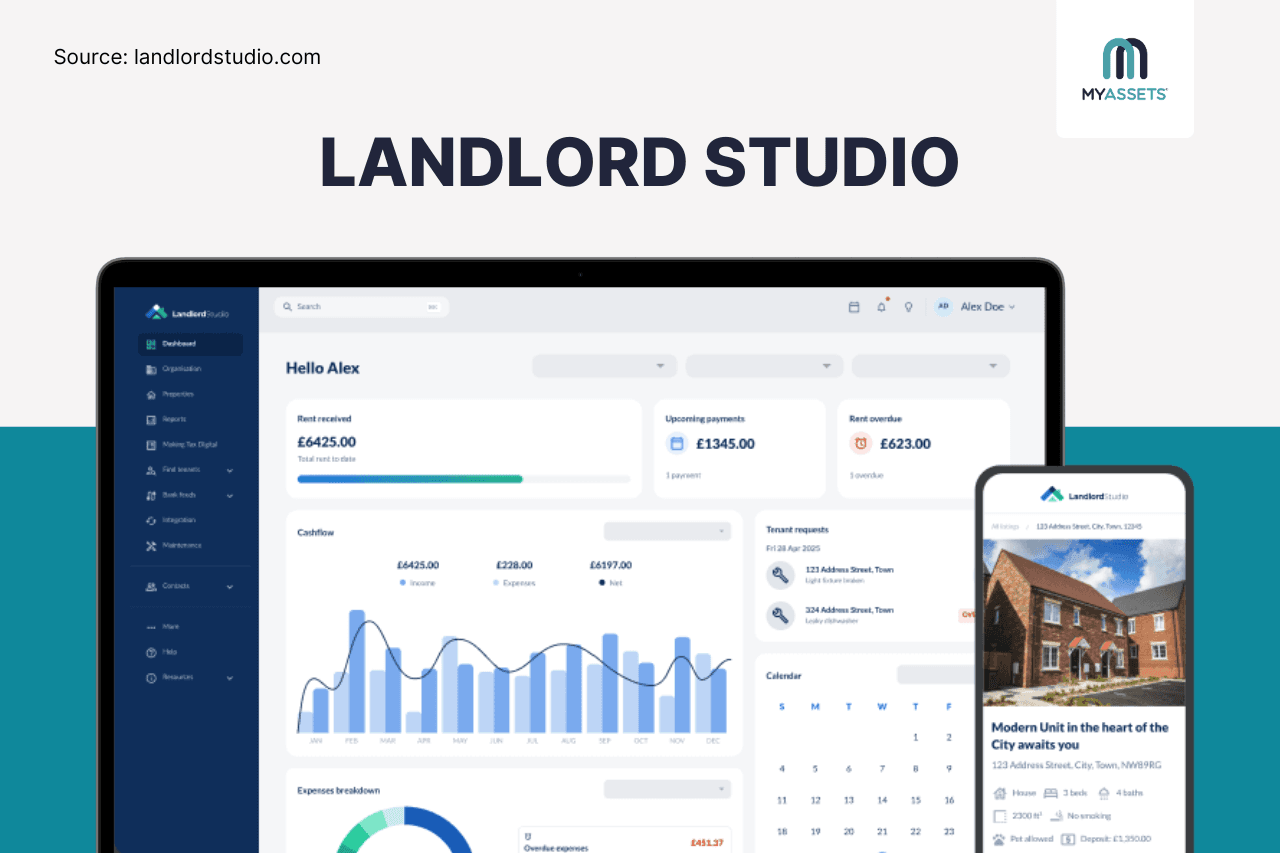
Best for: New landlords with 1-3 units (free plan).
2. Arthur Online
Arthur Online is widely recognised as the best property management platform in terms of workflow automation and stakeholder management, making it ideal for diverse medium to large-scale portfolios.
The platform excels at systemising and automating complex property operations, saving significant work hours. From tracking tasks, facilitating communication with tenants, to scheduling maintenance and providing custom reporting and analytics, these features collectively ensure property managers and landlords maintain a clear audit trail while increasing operational efficiency.
Key Features
- Integrations: Supports integrations with leading platforms like Xero, Zoopla, and Rightmove, while offering API documentation for customised connections with other tools.
- Stakeholder Communication: Offers dedicated portals for tenants, owners, and contractors, featuring built-in messaging tools to simplify communication.
- Task Management: Simplifies maintenance, inspection, and admin workflows by consolidating task assignment, priority setting, and tracking into a single system.

Best for: Medium to large-sized property portfolios (with 10-100 properties/units).
3. MyAssets
MyAssets is primarily an asset management platform designed to give users a complete, centralised view of their wealth. While it includes a robust property organisation tool for landlords and property managers to store, track, and connect all vital rental property details, its core function goes much further.
Unlike typical property software, MyAssets allows users to integrate every asset associated with the property. This includes finances (like loans and mortgages), collectables (such as art collection), and even detailed inventories of belongings. This unique feature transforms MyAssets into a powerful, comprehensive digital hub for managing an entire personal and investment portfolio.
Key Features
- Delegates: Add beneficiaries, co-owners, and property managers as Delegates to give them secure access to real estate data.
- Document Vault: Organise all key property documents such as titles, contracts, insurance, and more by uploading them to the corresponding asset entry or through the Document Vault for easy access.
- Smart Asset Linking: Connect physical assets, including family heirlooms, household items, and collectables, to their respective property for immediate access to their location.
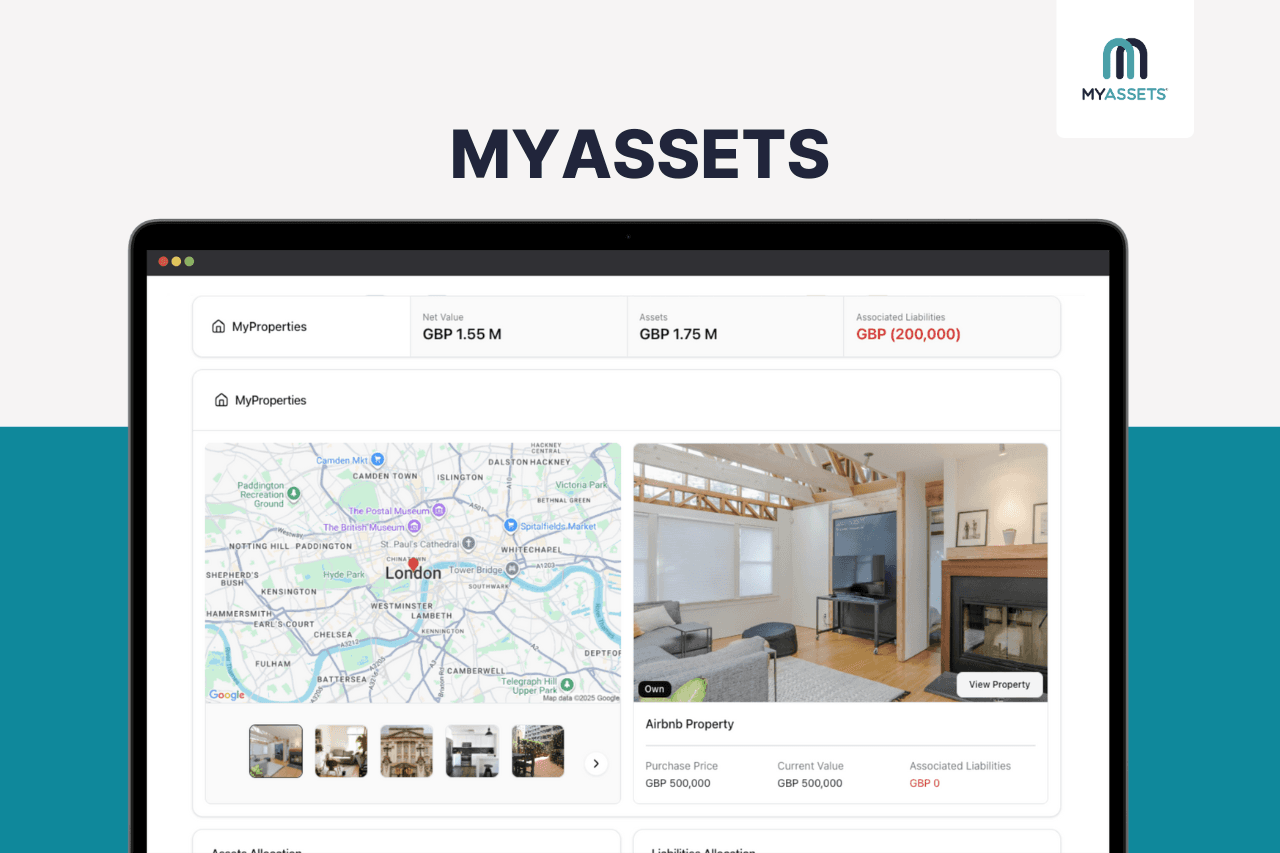
Best for: Small to large-sized property portfolios (with 1 or more properties).
4. Fixflo
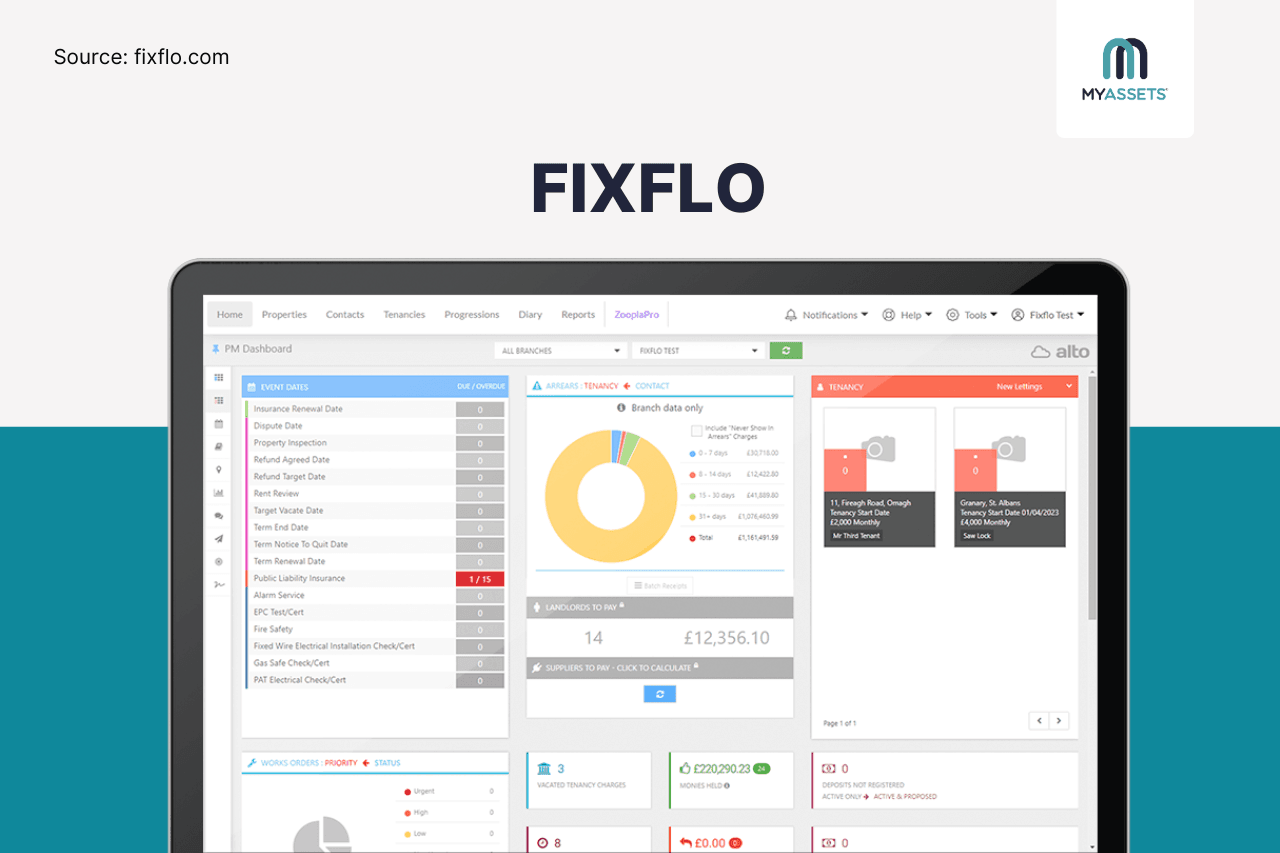
Fixflo is a popular property management software that focuses entirely on repairs and maintenance management.
This platform simplifies the complex repair process by enabling tenants to report faults easily (often via a visual interface), managing planned maintenance schedules, facilitating seamless communication with tenants and contractors, and, crucially, ensuring full legal compliance in the maintenance workflow.
Its core strength lies in its ability to connect all stakeholders and efficiently manage the lifecycle of a fault from initial report to final resolution and invoicing.
Key Features
- Contractor Marketplace: Provides access to a network of contractors, helping users assign and track work with greater efficiency.
- Planned Preventive Maintenance: Automates compliance management by sending reminders for required checks and creating a complete audit trail of all completed tasks to ensure full legal protection.
- Repair Reporting: Enables 24/7 online issue reporting with multilingual, picture-based communication, self-help guidance, and customisable interfaces for various property types.
Best for: Medium to large-sized property portfolios (with over 50 properties/units).
5. Appfolio
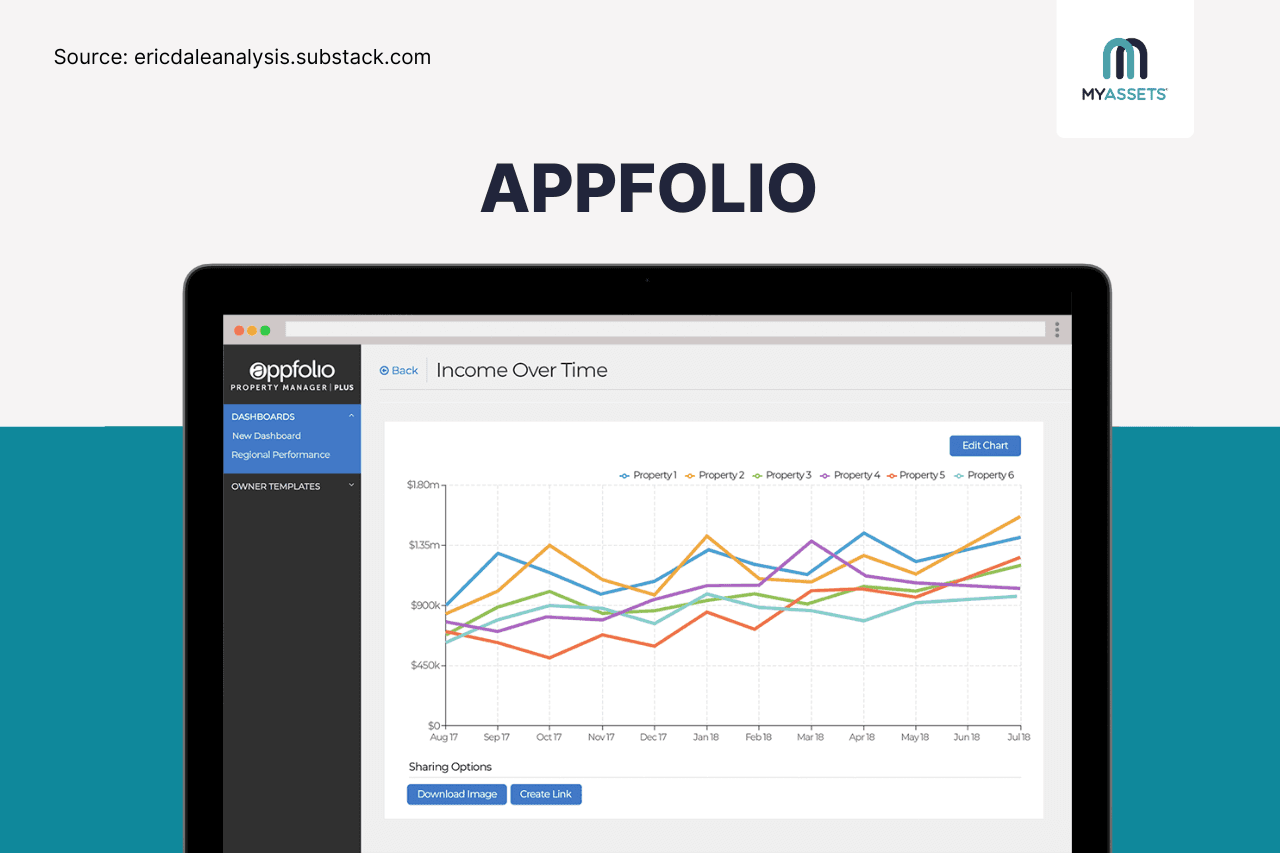
AppFolio delivers a Software as a Service (SaaS) solution for the real estate industry. As a top-rated property management software, it is designed to boost the efficiency and effectiveness of management processes across diverse property sectors (like residential, commercial, homeowner and condo association, student housing, and mixed-portfolio).
This software excels by providing tools that streamline everything from online leasing and resident screening to integrated accounting and maintenance management, allowing users to centralise operations and scale portfolios with greater ease.
Key Features
- Leasing CRM: Manages leads efficiently by creating guest cards for each prospect and monitoring their activity across the portfolio.
- Performance Insights: Generates reports that allow users to compare year-over-year financial performance and assess budget versus actual results.
- Work Order Management: Tracks and oversees the progress and completion of maintenance work orders, such as plumbing, electrical, cleaning, and general repairs.
Best for: Medium to large-sized property portfolios (with over 50 units).
6. Reapit
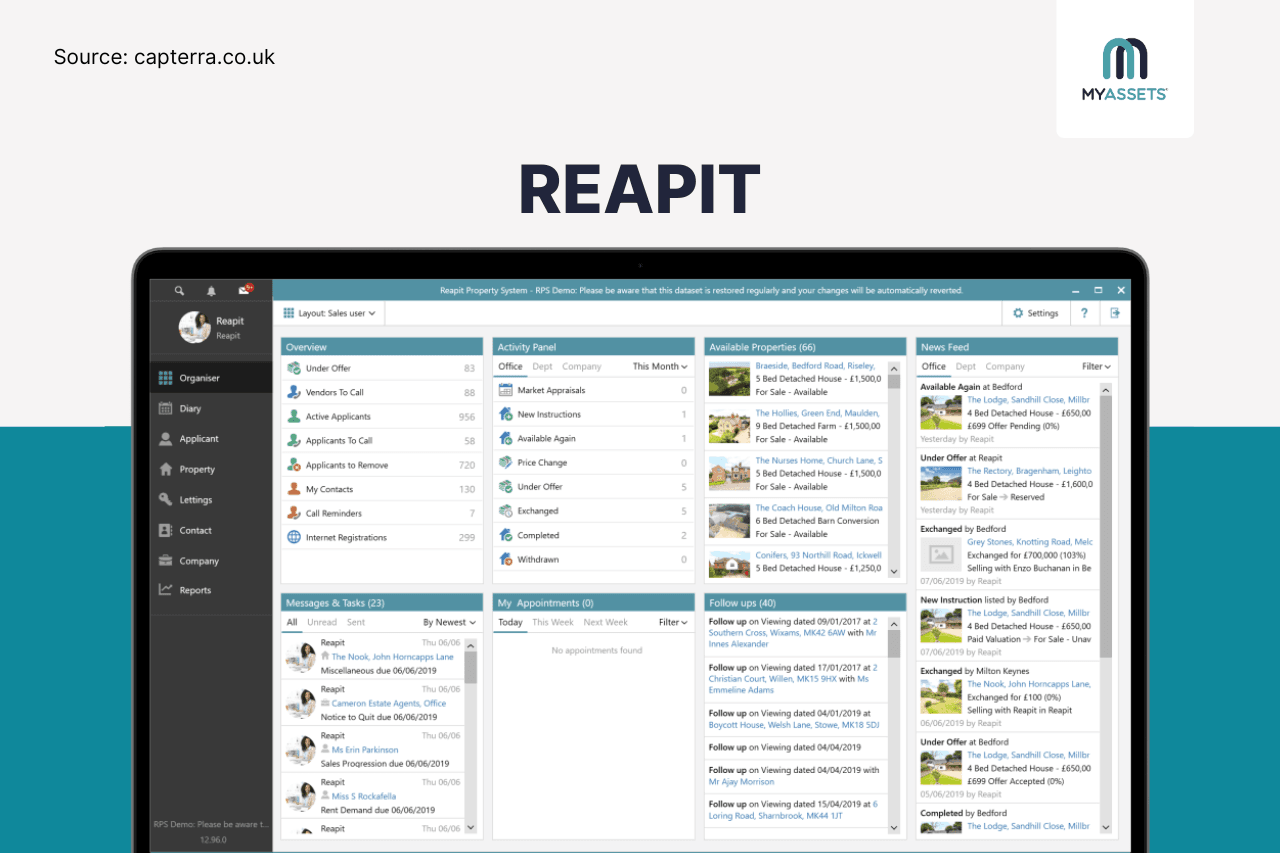
Considered as an end-to-end platform, Reapit is designed for the property management industry, as a single solution to oversee the entire rental portfolio: from client acquisition to tenancy and account management.
It offers integrated tools for sales, lettings, property management, payments, reporting, and analytics, all supported by strong security measures that make it a trusted choice among property professionals.
Key Features
- Landlord Database: Keeps all landlord details organised and searchable, from ID checks to properties and joint landlords, while optimising management of floats and payments for a better client experience.
- Tenancy Management: Manages renewals, rent reviews, inspections, and post-tenancy activities by assigning tasks and reminders directly to each tenancy record, ensuring no appointment or action is ever missed.
- Work Order Management: Generate work orders one at a time or in bulk, track contractor updates, and approve invoices before issuing them with landlord statements.
Best for: Large agencies with over 100 properties/units.
7. Alto
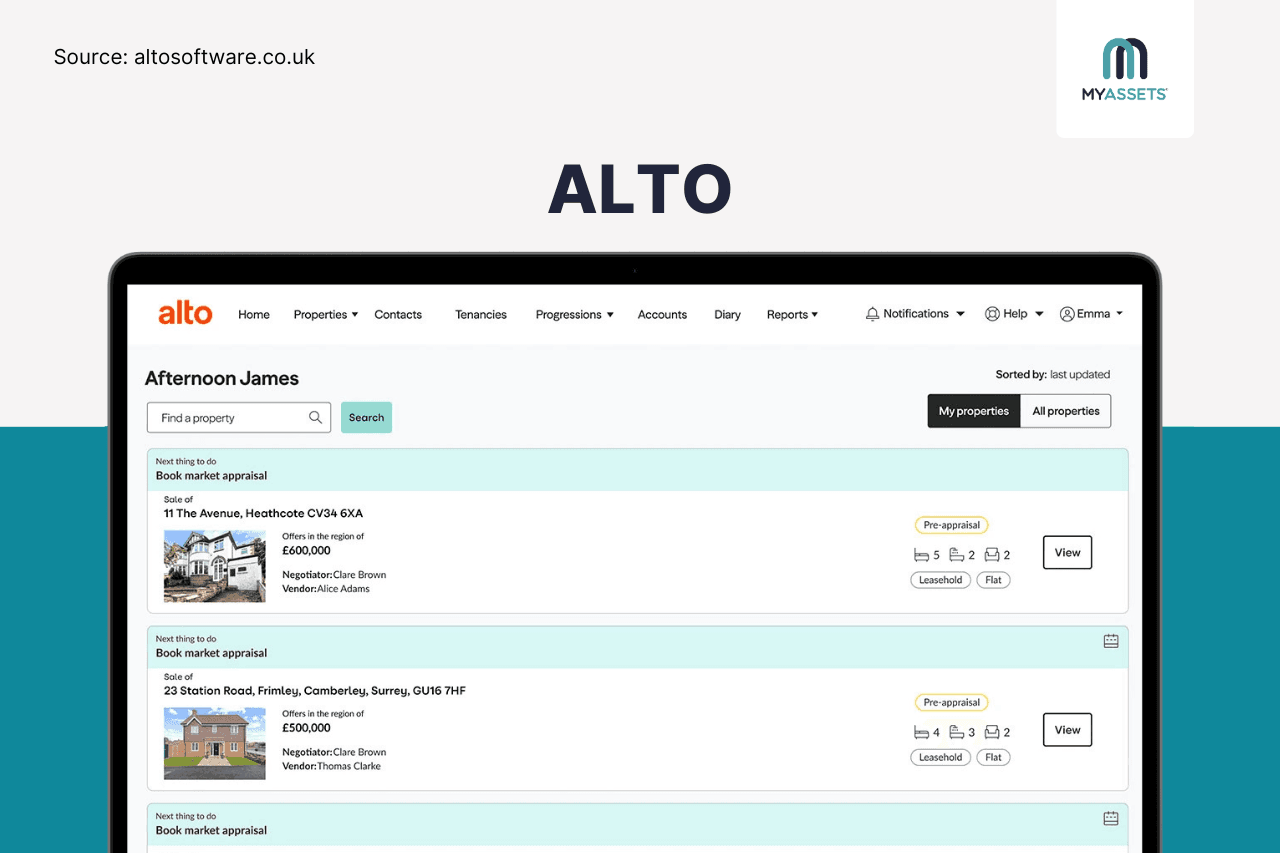
Alto is the dedicated estate agent software for residential property management. It empowers agents to manage their entire property portfolio with ease, covering key areas like tenancy management, maintenance tracking, and regulatory compliance.
By automating routine administrative tasks, Alto saves agents time to focus on growing their business. Its intuitive tools span marketing, accounting, and reporting and keep processes straightforward, enabling agents to expand their portfolios efficiently while easily mastering the platform.
Key Features
- Compliance Management: Manage compliance tasks, such as gas safety certificates, EICRs, and EPCs with a single click through Alto’s Symple integration.
- Property Marketing: Create, manage, and distribute on-brand brochures, window cards, and customer emails.
- Sales Progression: Track sales progress, handle broker and conveyancer referrals, and capture essential notes all within Alto’s dashboard.
Best for: Large agencies with over 100 properties/units.
Making the Move: From Spreadsheets to Property Management Tools
While spreadsheets have long been a go-to for managing rental portfolios, they are prone to human error, lack of integration, and time-consuming processes.
Property management tools overcome these challenges by streamlining operations, improving data accuracy, and offering scalability as the portfolio expands.
By choosing software with centralised data management, robust analytics, mobile accessibility, and strong security, landlords can work more efficiently and make informed decisions.
Platforms like Landlord Studio, Arthur Online, MyAssets, Fixflo, AppFolio, Reapit, and Alto provide the features needed to simplify property management while supporting portfolio growth. Making the move to these smart platforms isn’t just about technology but about gaining control, saving time, and empowering property investment strategy for the long term.
Best Property Management Platform: Frequently Asked Questions
1. What is property management software?
A digital solution that simplifies and automates tasks for landlords, property owners, and agents, including lease management, rent collection, expense tracking, and maintenance coordination.
2. What features should the best property management tools have?
The best residential property management software must have features that centralise data, deliver powerful reporting and analytics, integrate workflows, offer mobile access, and secure confidential information for efficient portfolio management.
3. How do I choose a property management platform that scales as I grow?
When selecting a property management platform that can scale, users should seek solutions with tiered pricing based on unit count, ensuring they pay only for what they use.
The software should also accommodate growing complexity with robust accounting and advanced reporting features. It is essential to verify that the platform offers strong integration capabilities, allowing seamless connection with additional third-party applications as business needs and systems expand.
Organise Your Rental Portfolio with MyAssets
When scaling a rental portfolio, fragmented systems and manual spreadsheets can slow progress and obscure financial clarity. MyAssets offers a smarter, centralised solution to organise, track, and grow with confidence.
MyAssets is an asset management software, with built-in tools to organise rental properties. It allows users to create a comprehensive digital profile for every rental property, spanning from government rates amount, income tax liability, and leasing period to management fees amount, notes or special rental terms, and security deposit.
Worried about tracking rental expenses?
MyAssets provides a micro and macro view of the user’s assets. Once rental property details are entered on the platform, it tracks the rental expenses and additional costs associated with the property.
Beyond the financial aspects, maintaining records of key contacts is equally crucial in supporting property growth. With MyAssets, users can benefit from an integrated Address Book that allows them to add vital contacts like agents, property managers, and tenants.
By linking each contact to a specific property within the platform, the user gain immediate access to the right person for any unit, streamlining communication and coordination across their entire portfolio.
Ready to make a big move? Start your 14-day free trial with MyAssets today.



