


Collaborative asset management is a strategic approach that brings teams together to effectively organise, share, and optimise assets through shared visibility and coordinated control. It is utilised when managing digital files, financial accounts, or physical assets such as collectables or belongings.
However, managing assets across multiple users and systems often introduces challenges such as duplication, inconsistent versions, and limited access control. Without a unified process, you risk wasting time searching for the right files or reconciling data inconsistencies, leading to inefficiency and confusion.
According to PwC’s Asset and Wealth Management Revolution, technology is transforming how organisations manage and grow assets. PwC highlights that innovations like AI, big data, and cloud infrastructure are driving both productivity and operational efficiency across the asset management industry. These tools enable real-time collaboration, automation, and data integration and allows you to focus less on manual administration and more on strategic decision-making.
Enter MyAssets: an all-in-one asset management app that simplifies collaboration and asset control. MyAssets unifies tracking, access, and communication, empowering you and your team to centralise assets, reduce duplication, and manage permissions seamlessly – boosting efficiency and transparency in every stage of the asset lifecycle.
- What is Collaborative Asset Management?
- Why You Need a Solution for Collaborative Asset Management
- Best Practices for Effective Collaborative Asset Management
- Establish Clear Naming Conventions
- Use Role-Based Permissions Strategically
- Encourage Real-Time Collaboration and Feedback
- Measure and Optimise the Asset Management Performance
- MyAssets App Features That Solve Your Asset Management Challenges
- MyAssets Provides a Centralised Digital Asset Repository
- MyAssets Offers Role-Based Access and Permissions
- MyAssets Features Smart Asset Linking Across Different Asset Categories
- Frequently Asked Questions: The Importance of Collaborative Asset Management
What is Collaborative Asset Management?
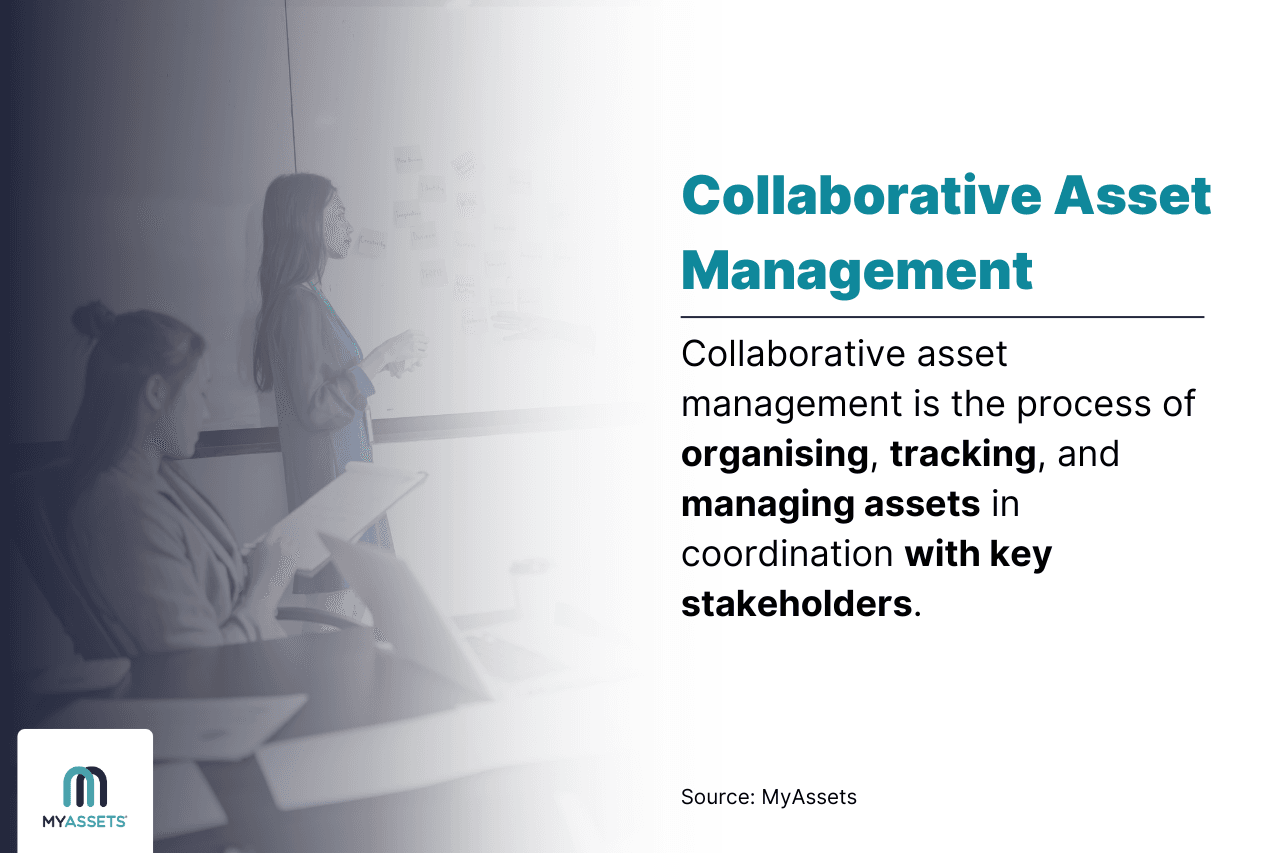
Collaborative asset management is the process of organising, tracking, and managing assets and investment portfolios in coordination with key stakeholders – such as beneficiaries, shareholders, and expert contacts like property agents or financial advisors.
Rather than operating in silos, collaborative management ensures transparency, shared access, and unified decision-making across all parties involved. It allows stakeholders to view real-time data, monitor performance, and align strategies to optimise both individual and collective asset outcomes.
In today’s digital environment, technology is key to fostering smooth and effective collaboration. Using a digital asset management system enhances coordination and communication through a centralised hub for storing and updating asset data. These platforms boost data accuracy, prevent duplication, and give stakeholders real-time access to critical information.
With capabilities such as secure file sharing and instant reporting, digital tools simplify daily operations and support smarter decision-making. By embracing these technologies, collaborative asset management becomes more efficient, transparent, and user-friendly, enabling stakeholders to work together confidently to manage complex portfolios.
Learn more: Best Apps for Organising Your Life and Boosting Productivity
Why You Need a Solution for Collaborative Asset Management
Collaborative asset management can quickly become difficult without the proper tools in place. It can result in common paint points such as:
- Scattered and disorganised files across various platforms make it hard to identify the most up-to-date or reliable information.
- A lack of flexible access controls often adds to the confusion: some individuals gain unnecessary permissions, while others can’t access the data they need.
- Weak security protocols put confidential financial and ownership information at risk, compromising both efficiency and trust among collaborators.
A dedicated digital solution like MyAssets addresses these challenges by providing a unified platform designed for collaboration, transparency, and control. MyAssets offers centralised storage, ensuring that all files and asset information are stored securely in one place, reducing duplication and improving organisation.
Its customisable permissions allow administrators to tailor access levels for different stakeholders, enhancing both flexibility and security. MyAssets also delivers real-time reporting and tracking, helping teams monitor asset performance and make informed decisions quickly. With such comprehensive capabilities, MyAssets turns complex, fragmented asset management into a streamlined, collaborative process.
Best Practices for Effective Collaborative Asset Management
We’ve shortlisted the best practices you and your team can implement in executing efficient collaborative asset management.
1. Establish Clear Naming Conventions
Establishing clear naming conventions is essential for effective document and asset management. Consistent naming systems improve organisation, ensure uniformity across teams, and make information easier to locate, identify, and share. Without clear standards, file storage systems can quickly become cluttered and confusing, leading to wasted time and errors in version control.
Using a file storage system like the one provided by MyAssets allows users to categorise and label documents, images, and other digital assets in a centralised system. This functionality of the Document Vault enables you to apply consistent naming conventions that reflect names, dates, or content types for different assets, making retrieval straightforward.
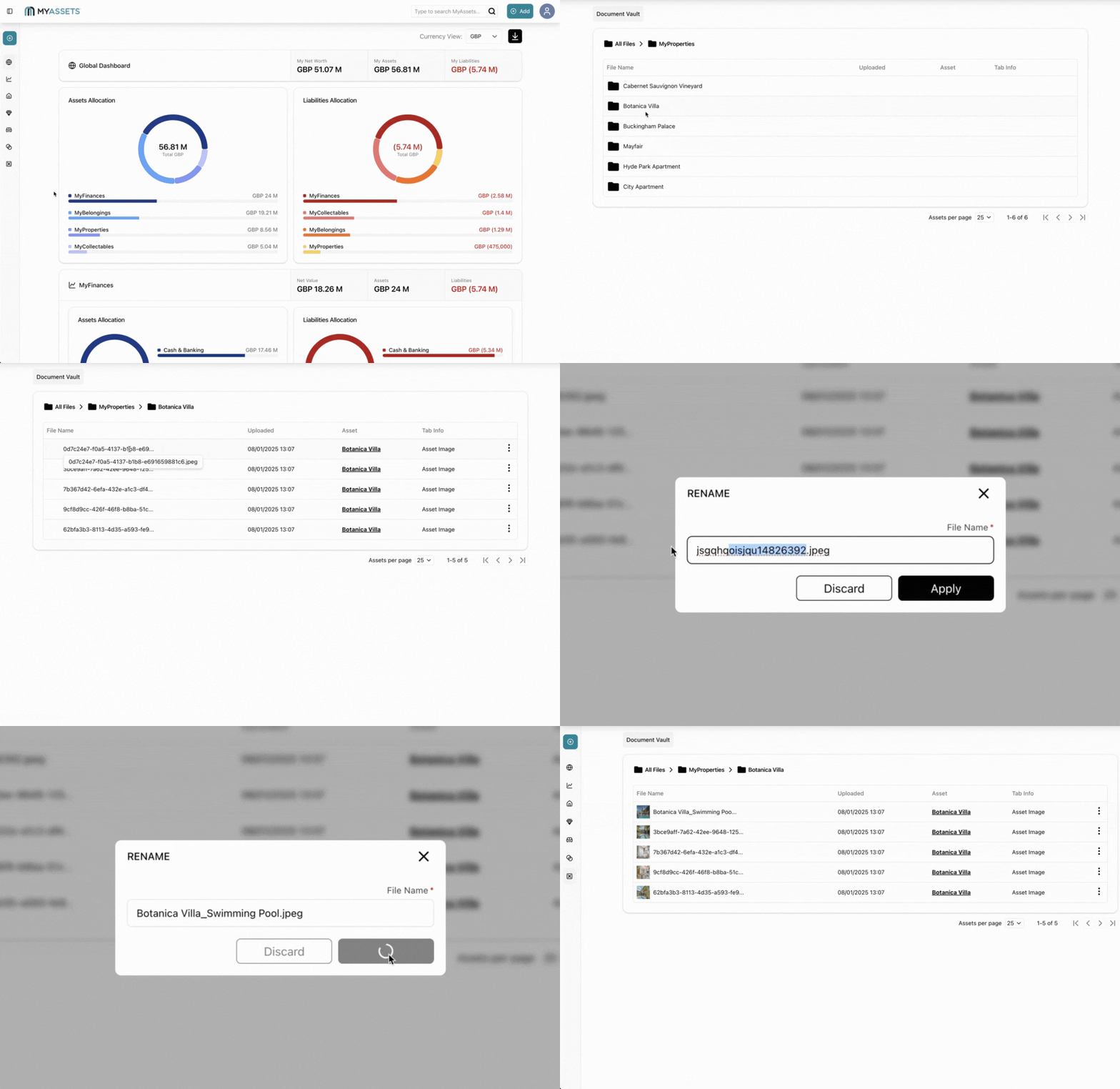
By combining these features with disciplined naming practices, you and your team can maintain an accessible and efficient digital system for asset data. Ultimately, clear naming conventions promote transparency, collaboration, and long-term data integrity across any organisation.
Clear naming conventions are crucial for documents and asset data because they improve organisation, ensure consistency, and increase accessibility, making files easy to find, identify, and collaborate on.
2. Use Role-Based Permissions Strategically
Effective asset management requires the strategic use of access control and user permissions to maintain security, accuracy, and collaboration. In environments where multiple individuals or teams manage shared assets, defining who can view, edit, or delete files is essential. Role-based permissions in an asset management platform enable administrators to assign specific levels of access according to each user’s responsibilities, preventing unauthorised changes while promoting efficient teamwork.
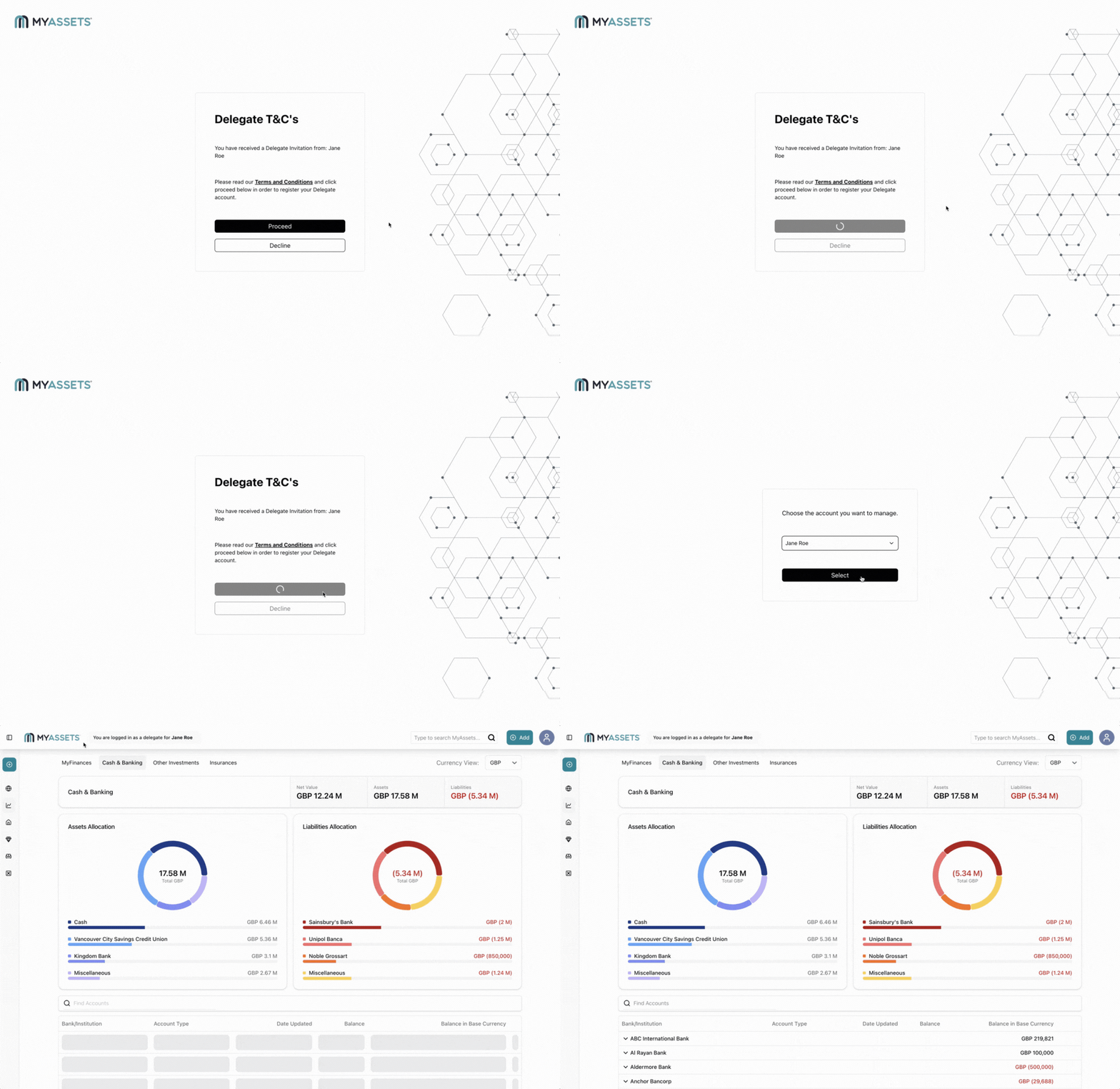
With MyAssets, the platform enhances this process by providing tailored role-based permissions to select Delegates, which enables the administrator to select which categories in the platform that other users (or Delegates) can access.

The process of collaborative asset management also becomes more efficient when your address book and assets are seamlessly integrated in the same app or system. In MyAssets, this integration links essential contacts in your Address Book (e.g. such as collaborators, clients, or vendors) to your assets across different categories.
By doing so, MyAssets provides a seamless way to manage both assets and the people connected to them. Users can quickly identify who is responsible for particular files and adjust permissions accordingly, ensuring the right individuals maintain control over the right information. Strategically managing access and permissions not only strengthens data security but also fosters accountability, transparency, and streamlined communication across all asset management activities.
3. Encourage Real-Time Collaboration and Feedback
Encouraging real-time feedback and collaboration is vital for building strong, high-performing teams. Open communication enables members to share ideas, address challenges quickly, and adapt to changes effectively.
Teamwork drives innovation, productivity, and engagement by uniting individuals around shared goals. When teams collaborate closely and communicate transparently, they can solve problems more efficiently and deliver higher-quality outcomes.
Using digital tools that support real-time collaboration helps create an environment where feedback flows continuously. These tools allow updates, edits, and discussions to happen instantly, reducing delays and miscommunication. You can track progress, assign tasks, and clarify objectives. This immediacy fosters a culture of accountability and trust, where everyone in your team feels heard and empowered to contribute.
Promoting real-time feedback and collaboration not only enhances teamwork but also strengthens organisational agility, ensuring that projects move forward smoothly and teams remain aligned with their collective goals.
4. Measure and Optimise the Asset Management Performance
Evaluating and enhancing asset management performance is vital to ensure resources are utilised effectively and continue to generate long-term value. Monitoring the management of assets enables organisations and individuals to pinpoint inefficiencies, minimise waste, and make data-driven financial decisions.
Wealth tracking apps offer tools that monitor, analyse, and optimise asset performance in real time. Tracking how assets are managed allows organisations and individuals to identify areas for improvement, reduce waste, and make informed financial decisions.
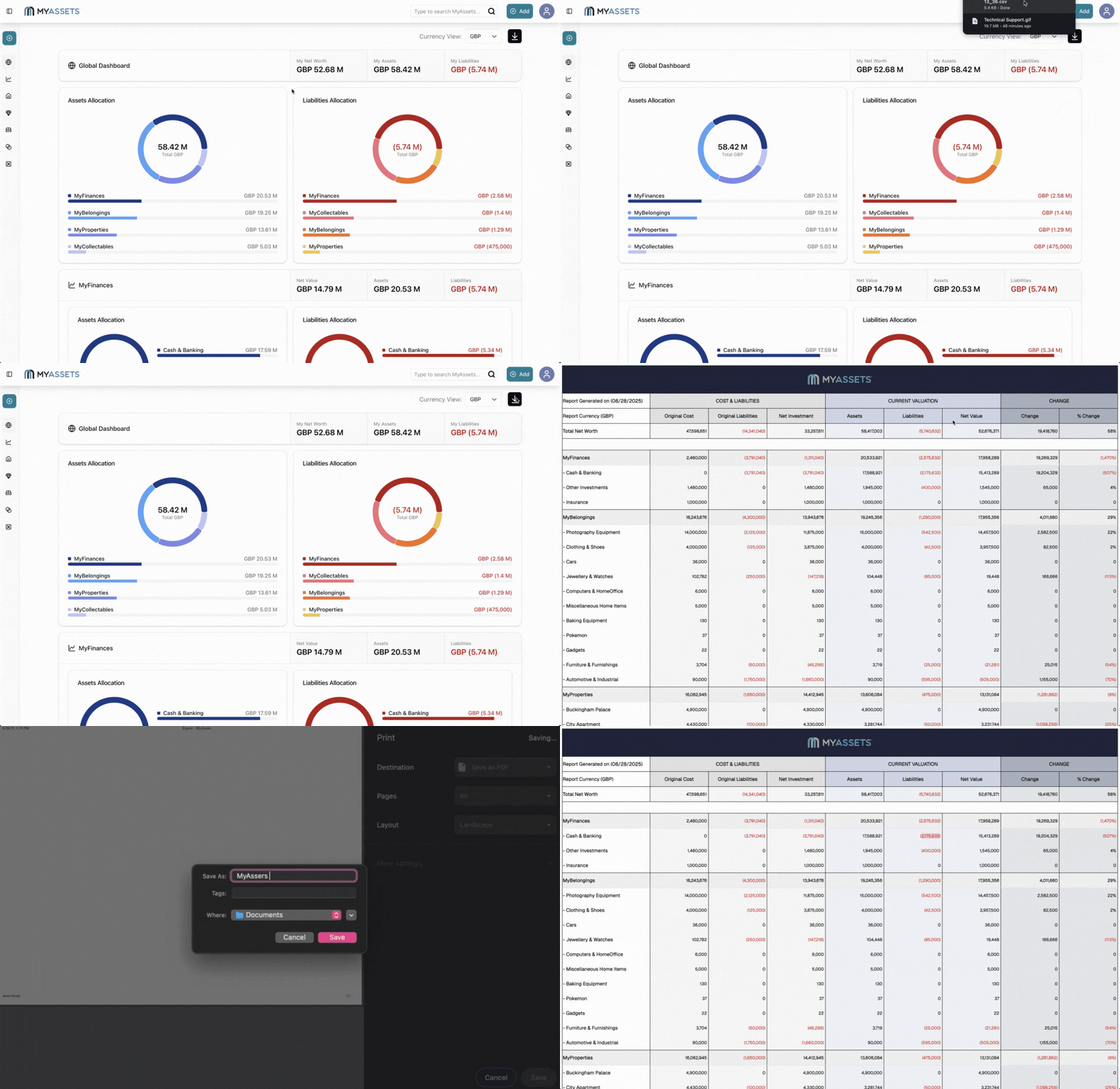
These platforms consolidate financial data from multiple sources into a single dashboard, providing a clear overview of total wealth and asset growth. MyAssets highlights how modern tracking apps use automation and data analytics to generate insights, helping users set goals, forecast trends, and adjust strategies based on performance metrics.
This continuous evaluation ensures assets remain aligned with business or personal objectives. By regularly measuring and optimising asset management performance through intelligent digital tools, users can enhance financial visibility, improve returns, and maintain long-term stability and growth.
Learn more: Powerful Apps to Take Control of Personal Asset Management
MyAssets App Features That Solve Your Asset Management Challenges
MyAssets provides an integrated system that addresses different aspects of organising, tracking, and monitoring assets. We’ve highlighted three key features in MyAssets that can help you improve the collaborative asset management process.
1. MyAssets Provides a Centralised Digital Asset Repository
MyAssets offers four broad, intuitive categories: MyFinances, MyProperties, MyCollectables, and MyBelongings. This encompasses the majority, if not all, available asset types, which allows you to create a central digital repository of every asset you own.
MyFinances allows you to track and monitor assets such as cash, financial accounts, investment portfolios, and insurance policies. This gives you a comprehensive view of your assets’ financial performance and how it integrates with other asset types. For example, insurance policies can be linked to belongings and collectables, while mortgage accounts can be connected to properties.
MyProperties allows you to manage real estate or commercial holdings and even link other assets, such as a vintage car or kitchen appliances, to specific locations within those properties.
With MyCollectables, you can track items like artwork, antiques, or rare finds with detailed metadata such as location, provenance, and even the room where they’re stored. Meanwhile, MyBelongings covers everyday valuables: household items, heirlooms, and personal electronics, essentially enabling you to create a full inventory of your tangible assets.
By consolidating all these asset categories into a single platform, MyAssets transforms what might otherwise be dispersed spreadsheets, passwords, or cloud folders into one organised hub. It allows you and your Delegates to attach documents and images, interlink assets, and maintain up-to-date records of acquisition, location, and ownership.
2. MyAssets Offers Role-Based Access and Permissions
The Delegates feature of MyAssets provides role-based access and customised permissions within a user’s account. This lets you designate trusted individuals to act on your behalf with respect to your asset data.
When you add someone as a Delegate, you control exactly what they can do: you can specify the asset category (e.g. MyFinances, MyProperties, MyCollectables, MyBelongings) they can view or manage, whether they have permission just to view, edit, create, or even delete entries.
This control means you’re not forced to grant full account access to all your Delegates: you maintain ownership and oversight while delegating specific workflows. For example, you might allow an assistant to update household belongings lists but restrict portfolio-edit rights. The platform also lets you revoke or amend delegate permissions anytime.
The Delegates feature transforms MyAssets into a flexible shared-management hub: you keep top-level control of your wealth and possessions, and empower trusted people to help maintain, update or monitor specific asset classes.
3. MyAssets Features Smart Asset Linking Across Different Asset Categories
MyAssets’ Smart Asset Linking feature is a powerful way to weave together all your different asset types into a cohesive, interrelated ecosystem and gain total visibility into how your assets interact. Through Smart Asset Linking, you can connect items across categories, such as linking your collectables or personal belongings to specific properties.
This linking feature brings complete context: by mapping relationships and dependencies, you can clearly understand hierarchies, usage relationships, and how one asset affects another’s value or location.
For example, you can track where a rare painting is stored (i.e. which room in which property), or link your vehicle, its insurance policy, and its location within one of your real estate assets. Beyond visibility, the feature also offers simplified operations; when you update one asset in a linked set, the related assets stay synchronised. This minimises manual effort and helps avoid oversight on connected items.
The Smart Asset Linking scales as your assets grow. The structured linking system remains manageable even as you add more assets, making it easier to maintain and optimise your portfolio over time.
Frequently Asked Questions: The Importance of Collaborative Asset Management
1. How does MyAssets help teams collaborate more effectively?
MyAssets provides a centralised digital workspace where you and your team can upload, access, and edit assets in real time. Features like Smart Asset Linking and access control with Delegates make collaboration seamless and secure.
2. How secure is asset data storage in MyAssets?
MyAssets uses bank-grade security protocols. The platform also features role-based access controls for invited users. You maintain full control over who can view, create, edit, or delete specific assets.
3. How does MyAssets simplify asset management?
It centralises your asset information, automates updates, and provides tools for easy monitoring, saving you time and reducing manual work.
MyAssets: Empowering Collaborative Asset Management
MyAssets empowers collaborative asset management by unifying data, communication, and decision-making into a single platform. It streamlines how you track asset performance, share insights, and coordinate actions, reducing silos and improving accountability.
By centralising documentation and simplifying reporting, MyAssets enables faster, more informed decisions. Its intuitive interface encourages engagement within your team and consistent processes, enhancing efficiency and minimising risk. Through seamless collaboration, MyAssets transforms asset management from a fragmented task into a coordinated, strategic effort that drives stronger organisational outcomes.
Start your 14-day free trial and manage your assets with your team on MyAssets.



