


Do you log in to multiple bank accounts just to piece together your full financial picture? For many, this has become a tedious chore of life admin: logging into HSBC online banking to check a current account, switching to Lloyd’s Bank to see whether savings have grown, and then opening Barclays to review a credit card balance.
Not only is this process time-consuming, but it is also cognitively exhausting due to constant switching between banking platforms. Indeed, research by Jacob M. Rose, F. Douglas Roberts, and colleagues shows that processing multiple financial data sources at once dramatically increases cognitive load.
Why? When financial data is scattered across different systems and interfaces, people are forced to split their attention and use limited working memory to piece the information together.
In simple terms, the brain becomes a manual connector between disconnected numbers. This then requires individuals to:
- Remember a savings balance from one app
- Recall a credit card balance from another
- Combine financial data mentally to understand what’s left for them
Over time, this repetitive mental effort creates friction and decision fatigue, discouraging many from consistently tracking the financial side of their net worth altogether.
This raises an important question: is there a better way to consolidate fragmented financial data into a centralised view?
Enter financial aggregators, digital solutions designed to bring order to financial chaos. Instead of jumping between multiple banking apps and stitching scattered information, users can see their entire financial life come together in one place.
To make sense of these platforms, this article explores how financial aggregators work, the key features to consider, and finally, the best financial account aggregators available for consolidating accounts.
- What Does a Financial Aggregator Do?
- Key Features to Look for in a Financial Data Aggregator
- 7 Best Financial Account Aggregators
- The Best Financial Data Aggregation Platforms for Complete Financial Visibility
- Financial Data Aggregation: Frequently Asked Questions
What Does a Financial Aggregator Do?
A financial aggregator is a tool that consolidates financial data from multiple accounts into a single dashboard. It connects securely to financial institutions to pull data from a wide range of account types, including:
- Checking Accounts
- Credit cards
- Investments
- Loans
- Mortgages
- Savings Accounts
By unifying these scattered data streams, the financial data aggregation software provides a holistic, bird’s-eye view of their finances. This clarity eliminates guesswork, allowing users to accurately evaluate their true financial position and make informed, data-driven decisions.
See More: How To Monitor Your Wealth: A Beginner’s Guide
Key Features to Look for in a Financial Data Aggregator
Before choosing a financial data aggregator, it is crucial to understand what actually makes one useful. Here are the key features to look for when evaluating the best financial aggregator.
Financial Dashboards
A financial dashboard provides a bird’s-eye view of an individual’s finances, bringing together key data into clear, easy-to-read charts, summaries, and widgets.
Core information typically includes:
- Asset and liability allocation
- Financial trends over time
- Overall net worth
- Total asset value
- Total outstanding liabilities
Financial dashboards make it straightforward for users to understand their overall financial position at a glance and monitor the metrics that matter most.
Net Worth Calculation
Net worth calculation is an essential feature that computes the difference between a user’s total assets and total liabilities.
It produces a single figure by combining key financial data:
- Assets- savings, current account, and investments
- Liabilities- credit cards, loans, and mortgages
According to Schwab Moneywise, net worth delivers users a clear snapshot of their overall financial position and serves as a key benchmark for tracking progress toward financial goals.
Multi-Account Coverage
The multiple-account coverage enables a financial aggregator to connect and unify different financial accounts:
- Brokerage accounts
- Checking account
- Credit Cards
- Savings account
This is especially useful for those who wish to manage a wide variety of financial accounts, as it centralises their financial data into a single screen. As a result, users gain a complete view of their finances without having to switch between multiple apps or websites.
7 Best Financial Account Aggregators
Managing several financial accounts can feel like a full-time job: constant logins, scattered balances, and no clear sense of the bigger picture.
To simplify the process and bring clarity to your finances, here are some of the best financial aggregator apps to unify your accounts and streamline tracking.
1. Monarch Money
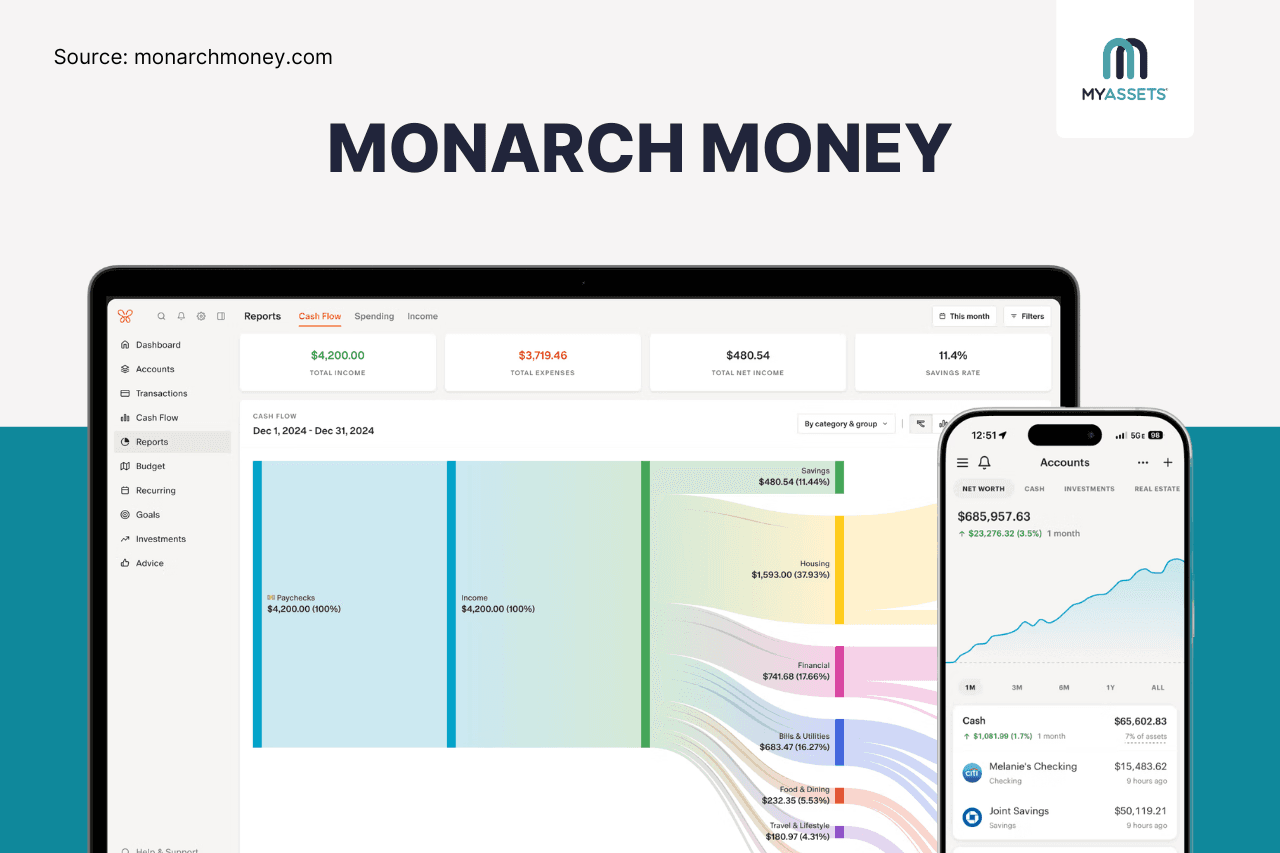
Monarch Money is a personal finance platform designed to track spending, manage debt and plan long-term financial goals. By consolidating various financial accounts into a single, centralised dashboard, it functions as a financial data aggregation tool that provides a complete view of their net worth.
Pros
- Integrates with over 13,000 financial institutions using aggregation networks like Plaid and Finicity
- Uses AI to organise transactions and create budgeting plans tailored to users’ needs
Cons
- Paid-only platform
- While feature-rich, its higher price point may not offer the best value for users with a few financial accounts
Free Trial: Yes - 7 days
Price: Starts at $14.99/month
2. Quicken Simplifi
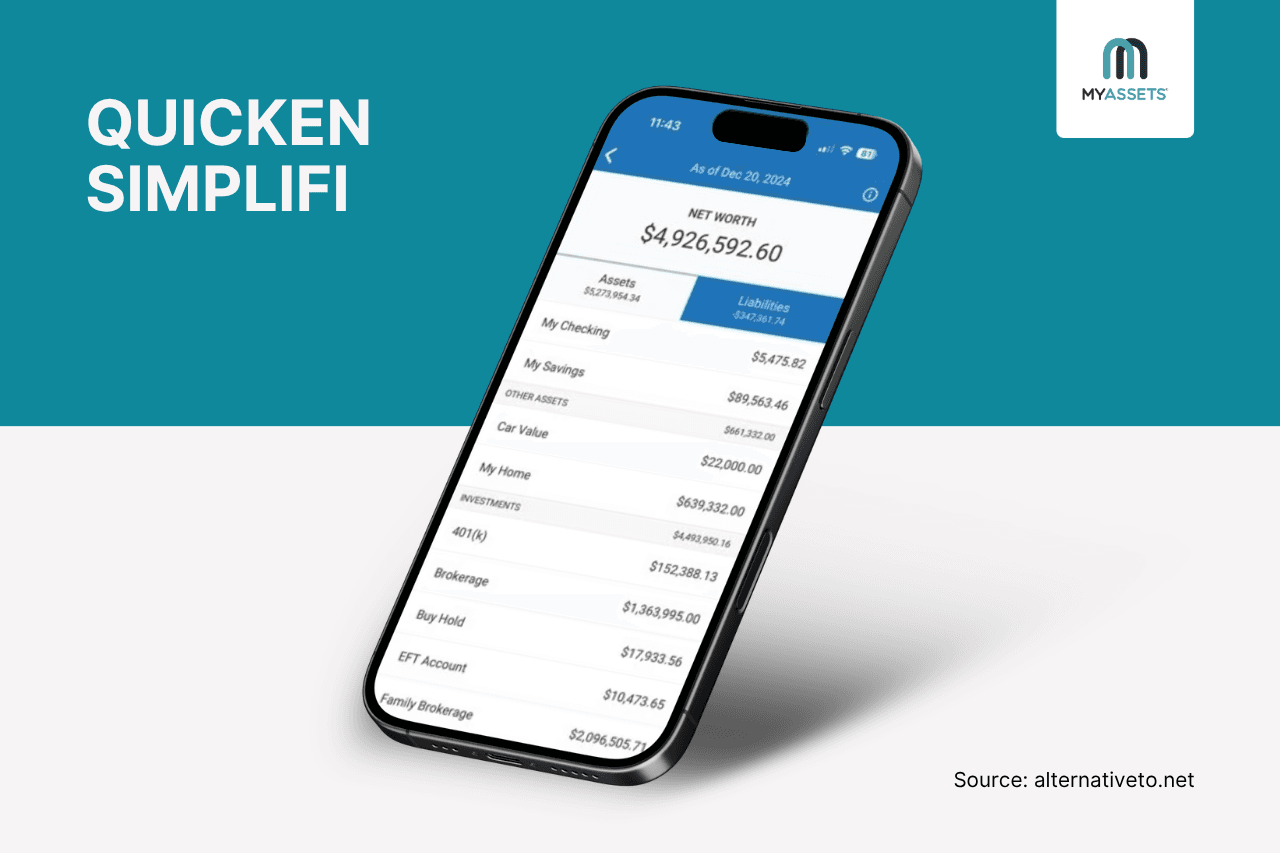
One of the best financial aggregator apps is Quicken Simplifi, which syncs bank accounts, credit cards, loans, and investments into a single dashboard. In this way, individuals can monitor spending, stay on top of bills, and achieve their financial goals.
Pros
- Calculates leftover spending money after accounting for income and recurring bills
- Imports transactions and allows users to categorise spending, track recurring expenses, and record refunds
Cons
- A few advanced features, like the retirement planner, are only available on desktop
- It only tracks basic investments and may not suit users needing deep portfolio analysis or tax support
Free Trial: No
Price: $3.99/month
3. MyAssets
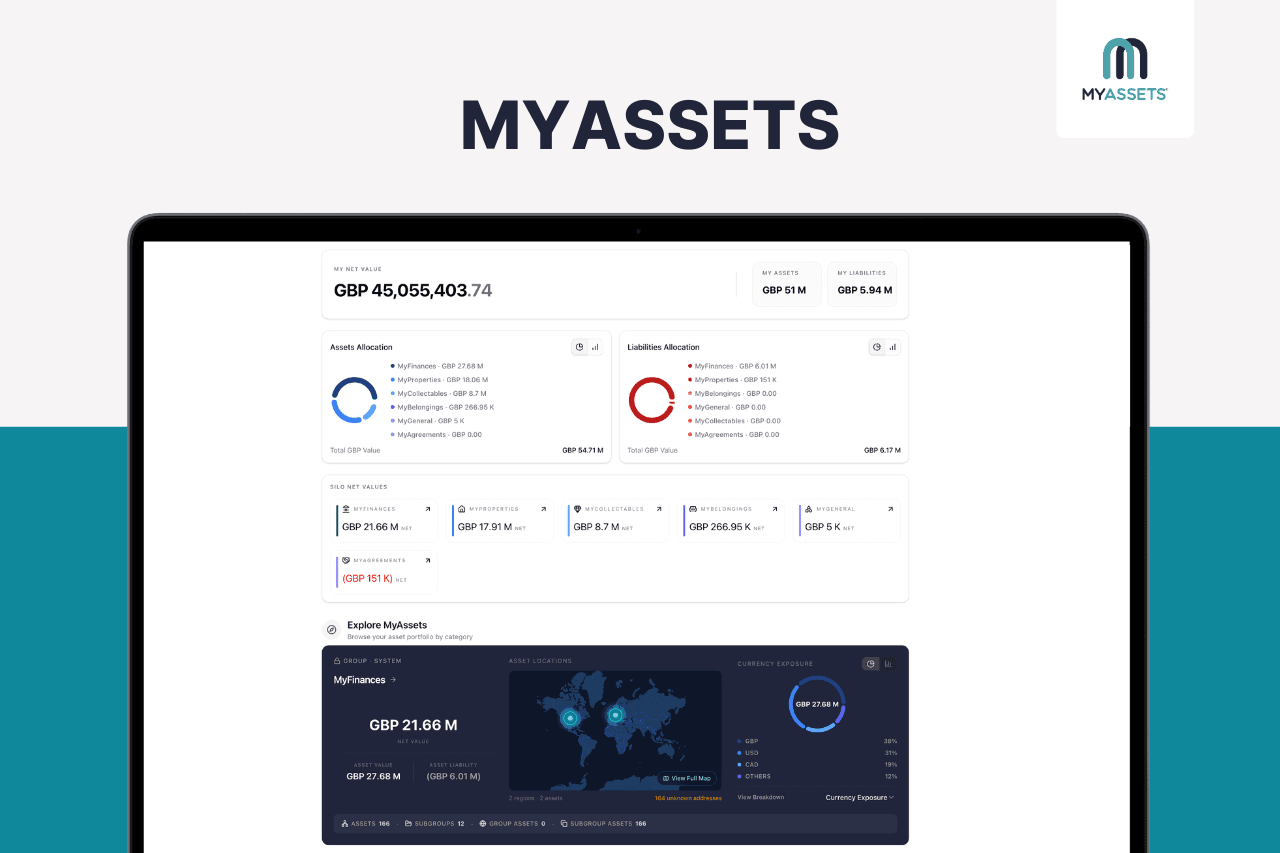
MyAssets is an integrated finance organiser that links financial accounts and assets together to deliver a comprehensive view of financial net worth.
It also extends beyond standard financial holdings by organising and managing alternative wealth, ranging from real estate to collectable investments.
In doing so, MyAssets affixes traditional banking with broader asset management, giving users a single platform to organise and monitor their entire wealth.
Pros
- Beyond standard current and savings accounts, MyAssets excels at aggregating complex financial data, including multi-currency accounts, investment brokerages, mortgages/loans, and insurance policies
- Connect liabilities such as mortgages to their corresponding property asset, ensuring an accurate link between debt and ownership
- Users can either link their bank accounts for automatic syncing or manually record their financial data
Cons
- Crypto and other advanced options are still being rolled out, but ongoing development suggests strong future potential
- Setting up accounts and adding data requires some initial effort, but centralised tracking delivers fast and noticeable benefits
Free Trial: Yes - 14 days
Price: $25/month
4. Copilot Money
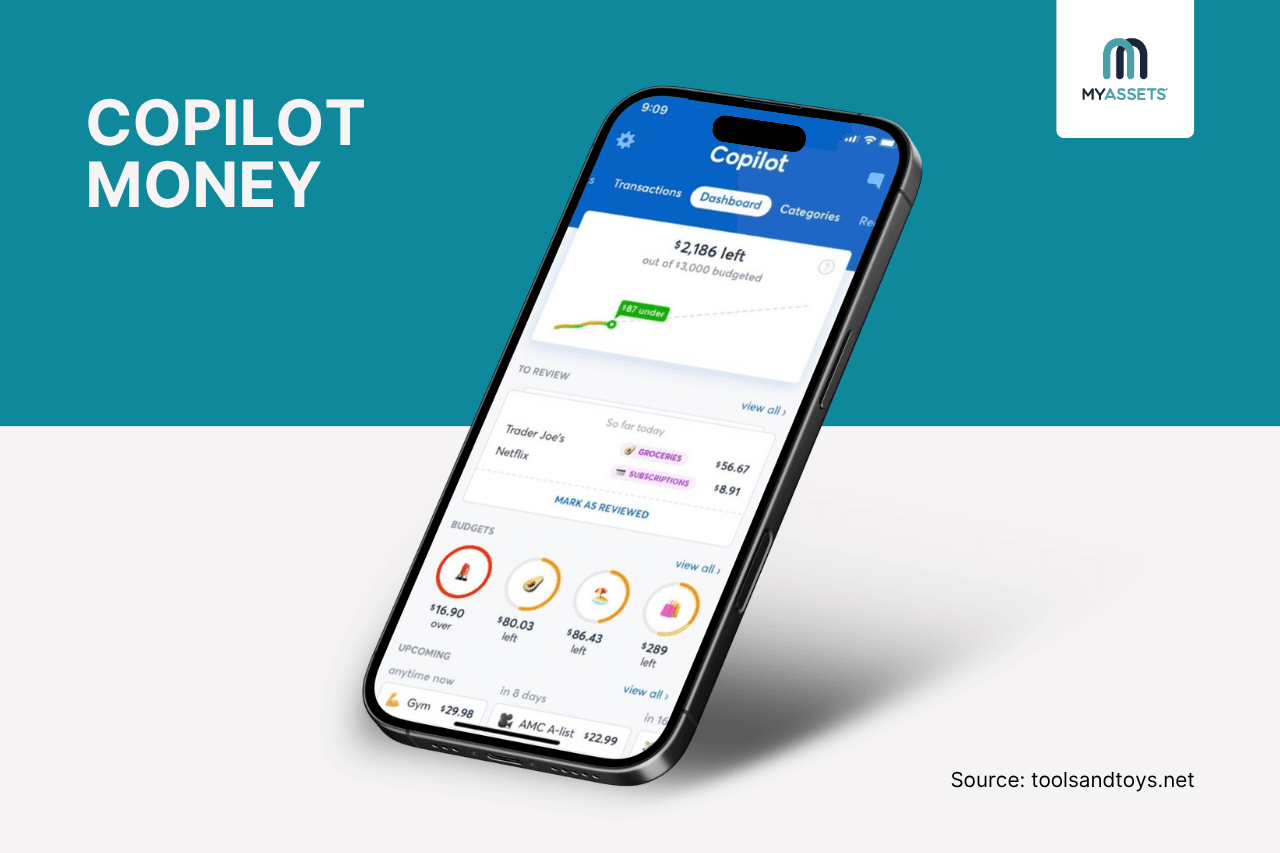
Copilot Money is a personal finance app that helps users understand their complete financial picture by consolidating financial accounts and displaying net worth, monthly spending charts, and budget goals in a single dashboard.
Pros
- Categorises transactions and learns user spending behaviour over time, reducing manual entry
- Uses a subscription-based approach, avoiding ads and user data monetisation
Cons
- Built mainly for iPhone, iPad, and Mac users, limiting access for those on Android devices
- Recording cash transactions or entering data manually may not feel very seamless
Free Trial: Yes - 1 month
Price: $7.92/month
5. Yodlee
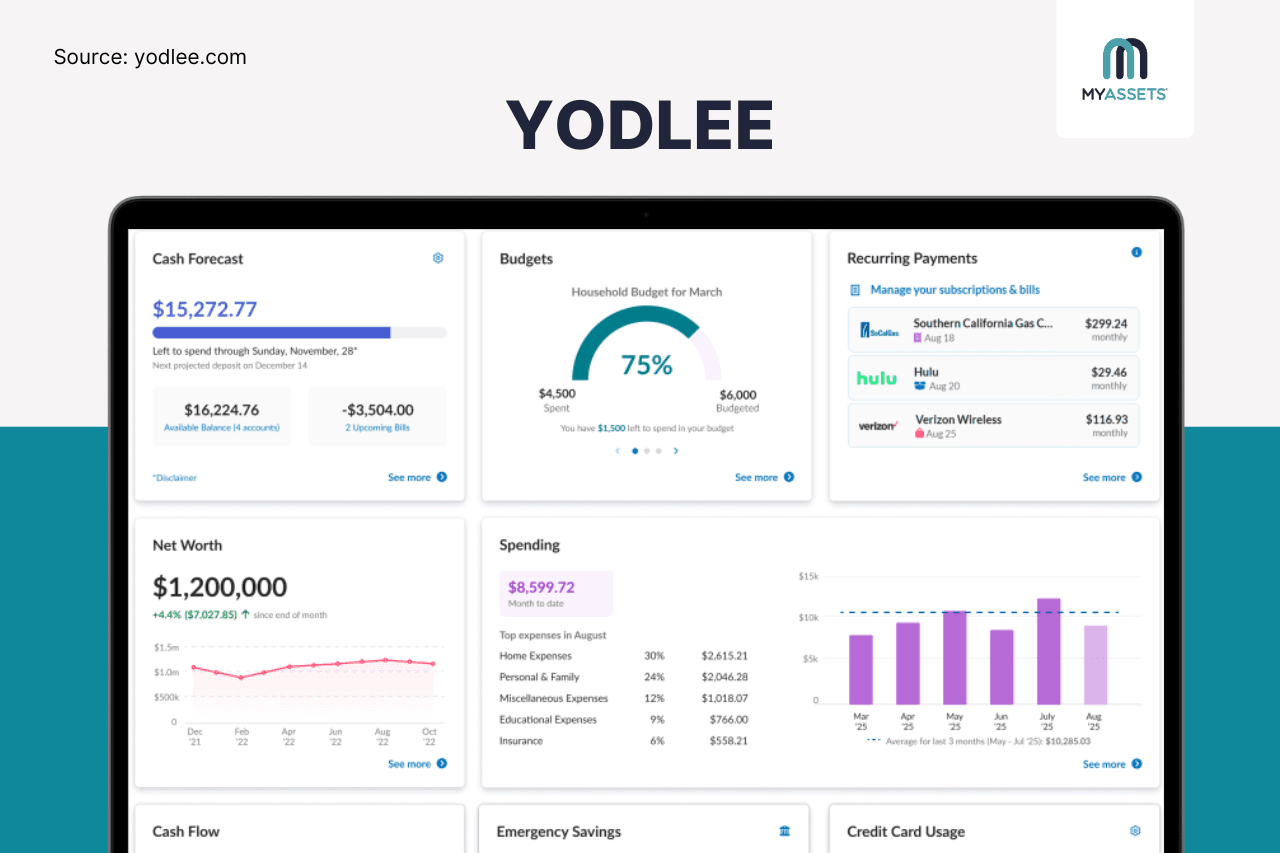
As financial data aggregation software, Yodlee enables apps and websites to connect to users’ financial accounts, bringing together information from bank accounts, credit cards, and investment portfolios.
Financial institutions and finance apps use Yodlee’s aggregation capabilities to power a wide range of financial services, including:
- Account balances and transactions overview
- Cash flow and financial behaviour analysis
- Debt management
- Money transfers between linked accounts
- Net worth tracking
Pros
- More stable data access than smaller aggregators due to decades of experience and direct integrations with thousands of institutions
- Uses an AI-driven system to refine and organise transaction data
Cons
- Built for enterprises and fintechs, not direct consumer use
- Unlike newer solutions, Yodlee’s older tech stack can result in more complex setup processes and integration challenges
Free Trial: No
Price: Contract-based
6. Salt Edge
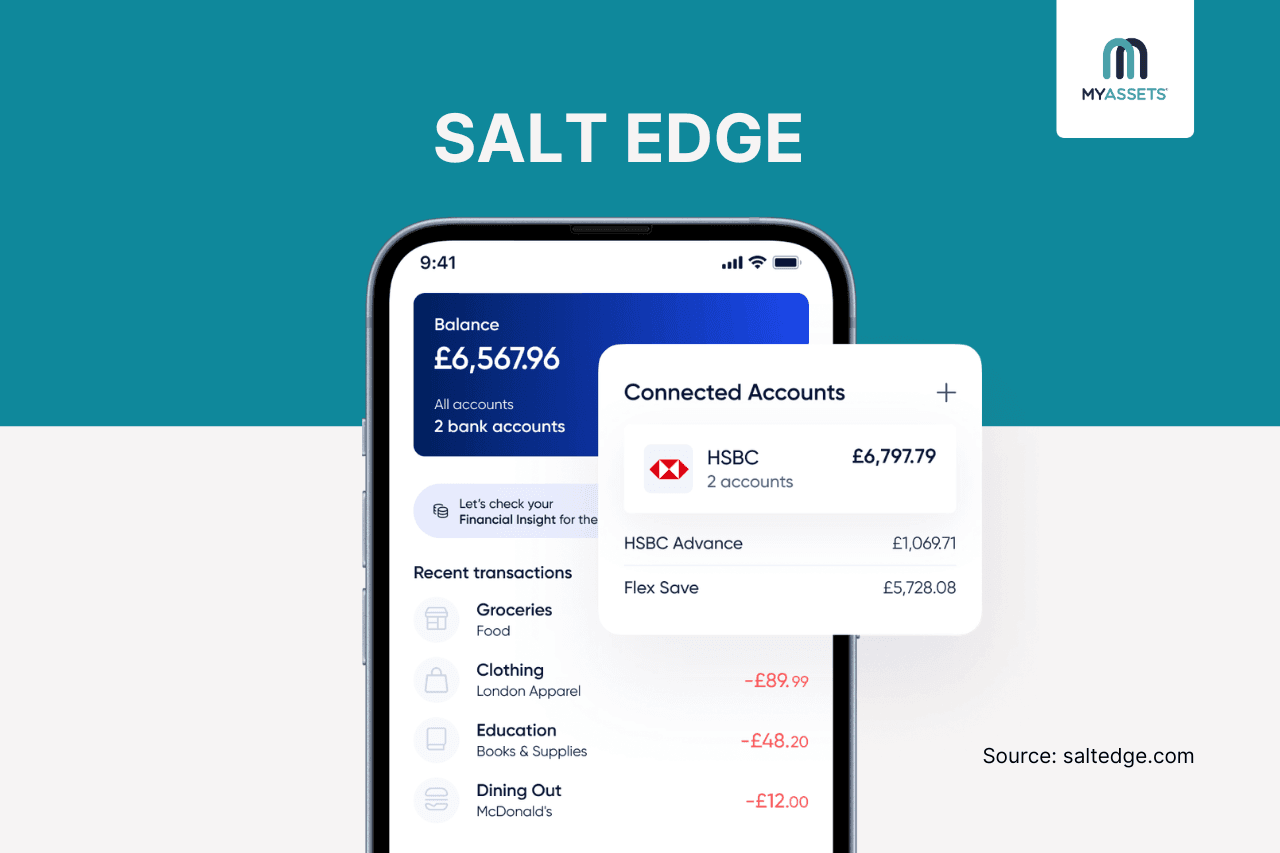
Salt Edge is an open banking account aggregator that links businesses with financial institutions to enable the seamless transfer, retrieval, and analysis of multi-source financial data.
Pros
- Enables reporting, trend visualisation, and insight generation, all of which support decision-making, while improving financial strategy
- Offers access to 5,000+ financial institutions in over 50 countries through a single unified API
Cons
- In certain regions, connectivity may rely on screen scraping or stored login credentials, potentially raising privacy concerns for some
- Since Salt Edge relies on multiple bank APIs, weaker or non-standard systems can sometimes lead to service disruptions
Free Trial: No, but offers a free tier
Price: $500/month
Read More: Powerful Apps to Take Control of Personal Asset Management
7. Moneyhub
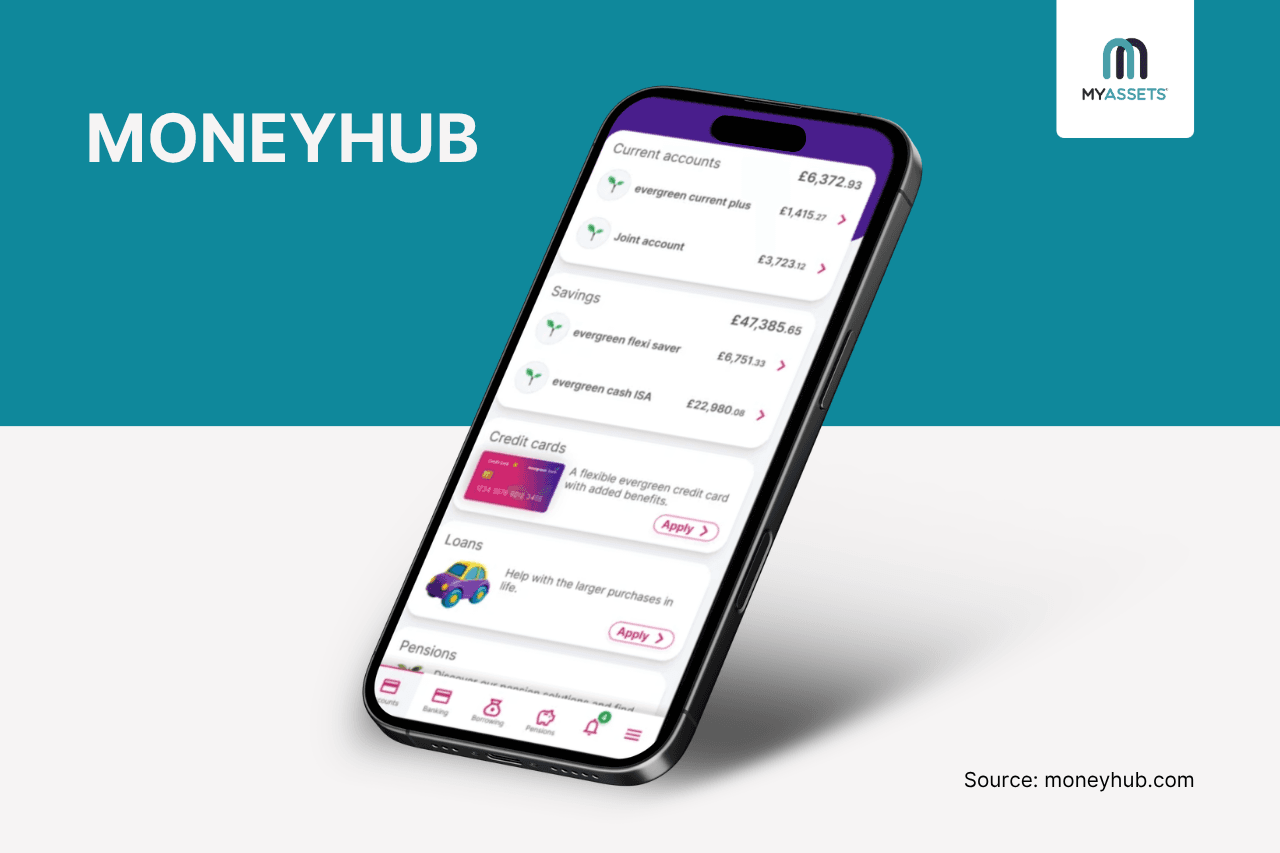
Moneyhub is a financial data aggregation platform utilising open banking to provide a complete financial picture. Through its platform, users can connect all their financial products in one place to track spending, manage budgets, and plan ahead.
Pros
- Connects to long-term assets such as pensions, investments, mortgages, loans, and property valuations, which go beyond standard bank accounts
- Features a highly customisable system for adjusting categories, rules, and budget metrics
Cons
- Consumer version will be discontinued, and the service will focus on enterprise clients
- Designed to operate within UK and European regulatory frameworks, and is not focused on global multi-market expansion
Free Trial: Yes - 6 months
Price: Starts at £0.99/month for the web app and £1.49/month for the mobile app
The Best Financial Data Aggregation Platforms for Complete Financial Visibility
Financial account aggregation software plays a vital role in how individuals understand and manage their finances. By consolidating financial data and transforming complex financial data into charts and graphs, these platforms help users turn fragmented information into actionable insights.
This is best exemplified by the financial aggregators such as:
- Monarch Money
- Quicken Simplifi
- MyAssets
- Copilot Money
- Yodlee
- Salt Edge
- Moneyhub
While these digital solutions enhance visibility into personal finances, the financial aggregator ultimately depends on an individual's needs.
Whether the priority is budgeting, net worth tracking, investment monitoring or managing a broader range of assets, it is important to choose the platform that aligns with one’s goals and assist in making informed decisions.
Financial Data Aggregation: Frequently Asked Questions
1. What are the benefits of Account Aggregator?
Account aggregators provide a unified view of all financial accounts in one place, making it easier to track spending, monitor net worth, and manage finances. They also improve decision-making by turning fragmented financial data into clear insights.
2. Is Account Aggregator safe?
All information exchanged between financial institutions is secured with strong encryption, keeping it safe from hackers while in transit.
3. What is the best app to keep track of all financial accounts?
There is no single best app as it varies depending on user’s needs. For budgeting-focused users, Monarch Money is often recommended, while those looking to track both financial accounts and broader assets may find MyAssets to be a better fit.
MyAssets: The Net Worth Aggregator for Everything You Own and Owe
When money is spread across various banks and brokerages, it is easy to lose sight of the bigger picture. MyAssets as a net worth aggregator addresses this by providing a 360-degree view of an individual's wealth, consolidating disparate data into a single platform.
Cash at one bank, debt at another?
MyAssets brings everything together:
- Bank accounts (checking and savings)
- Investment portfolios (stocks, bonds, and mutual funds)
- Properties (residential, rental, and commercial),
- Valuable assets (art and collectables)
What’s more, liabilities are also accounted, including:
- Mortgages
- Loans
- Credit card debts
Because net worth isn’t just about assets. MyAssets provides a single source of truth, offering a complete, accurate picture of an individual’s financial health.
Even better, all this information is neatly organised in a Global Dashboard, allowing users to see their entire financial picture at a glance.
Raw numbers are transformed into intuitive graphs, and assets are clearly categorised, making it straightforward to understand where money is allocated, track progress, and make informed financial decisions.
Managing financial accounts with others?
Managing finances is rarely a solitary endeavour, yet sharing sensitive financial data often poses a significant security risk. MyAssets solves this with the Delegates feature. This provides individuals with full control over account permissions, allowing them to assign who can view, edit, delete, or create entries within their portfolio.
This granular control enables collaboration without compromising total privacy. For example, an individual can grant:
- View-Only Access to a financial advisor to monitor investment performance and provide strategic guidance
- Edit Permissions to a spouse or partner to ensure household assets and shared liabilities are updated in real-time
In this way, MyAssets ensures that data remains protected when managing sensitive information with others.
Stop guessing and start knowing your assets’ true worth with MyAssets, free for 14 days.



