


Do you know where you stand financially? Calculating net assets is a crucial step that goes beyond surface-level bank balance monitoring. Across expanding businesses and individual wealth portfolios, net assets provide a reliable reference point for decisions based on equity, not just liquidity.
Essentially, net asset calculation reveals the bottom line of financial health –the total value of all assets after all liabilities have been deducted. Simply put, this figure shows what is actually owned, free from debt, providing an accurate measure of financial strength and stability.
According to Indeed, net assets in a business setting are synonymous with shareholders’ equity, often reported as book value on the balance sheet, while for individuals, the same calculation reveals true net worth.
At its core, the computation is straightforward: Net Assets = Total Assets – Total Liabilities
By applying the net assets formula, individuals and businesses alike can make informed decisions regarding:
- Debt management
- Investments
- Long-term financial planning
To learn more about net assets, this article explores what net assets are, how they are calculated, and, more importantly, introduces a wealth of net asset calculators to support the entire process.
- What are Net Assets?
- How Do You Calculate Net Assets
- List All Your Assets
- Calculate Your Total Assets
- Identify Your Liabilities
- Compute Your Total Liabilities
- Subtract Total Liabilities from Total Assets
- Best Tools for Calculating Net Assets
- Net Assets Decoded: Turning Calculations into Insight
- Calculate Net Assets: Frequently Asked Questions
What are Net Assets?
Net assets represent an entity’s total worth, calculated similarly to personal net worth:
Total Assets – Total Liabilities
For businesses, calculating net assets represents the shareholders’ equity —showing the value that would remain if all obligations were settled.
It also provides a snapshot of financial strength and solvency, which is why investors and analysts closely monitor this number, according to Beaumont Capital Markets.
Net Assets Component
To accurately calculate net assets, the components should be categorised as follows:
- Total Assets
- Current Assets: Assets that are cash or can be quickly converted into cash (within one year), including cash on hand, cash equivalents, marketable securities, and inventory.
- Non-Current (Fixed) Assets: Long-term investments such as property, buildings, machinery, and vehicles that are owned for more than one year to support income generation.
- Total Liabilities (Subtracted)
- Current Liabilities: All short-term debts, including payables and accrued expenses, that are due within one year.
- Long-Term Liabilities: Financial commitments such as loans, mortgages, and deferred tax liabilities that are payable beyond one year.
Net Assets Use Case Example
To illustrate the impact of net assets, here’s a real case from the business world.
In 2019, London Capital Finance (LCF) collapsed, owing approximately £240 million to retail investors. At the time, the company had gross assets of £62.3 million but liabilities totalling £72.5 million, resulting in a negative net asset position of nearly £10 million.
This imbalance meant the company was highly unlikely to repay its debts and was considered technically insolvent well before its collapse.
This example highlights net assets as a financial health indicator, which helps businesses and individuals evaluate whether their financial standing is secure or under pressure.
How Do You Calculate Net Assets
Net assets may be simple in theory, but applying a systematic method ensures the figure fully captures the financial position by accounting for every asset and liability. Follow this step-by-step guide to get started.
Step 1: List All Your Assets
Identify and record everything the business or individual owns. These items, known as assets, are anything of financial value that can be converted into cash or used to generate income.

Assets are typically categorised into:
- Current Assets (convertible to cash within a year)
- Accounts receivable (money owed by customers)
- Bank Balances
- Cash
- Inventory
- Short-Term Investments (i.e., Certificates of Deposit, Money Market Funds, and Treasury Bills)
- Non-Current Assets (convertible to cash over a year)
- Buildings
- Long-Term Investments (i.e., ETFs, Stocks, Bonds, and Shares)
- Machinery and equipment
- Property
- Vehicles
Step 2: Calculate Your Total Assets
Calculate the total value of all assets by summing the amounts from each category listed in the previous step.
Consider the following assets and corresponding amounts as an example:
Current Assets
| Asset | Amount (£) |
|---|---|
| Cash | 50,000 |
| Bank Balances | 30,000 |
| Accounts Receivable | 20,000 |
| Total Current Assets | 100,000 |
Non-Current Assets
| Asset | Amount (£) |
|---|---|
| Property | 200,000 |
| Buildings | 150,000 |
| Equipment | 55,000 |
| Vehicles | 40,000 |
| Shares | 50,000 |
| Total Non-Current Assets | 495,000 |
To get the total assets, add the values of total current and non-current assets using the formula:
Total Assets = Total Current Assets + Total Non-Current Assets
Example:
- Total Current Assets = £100,000
- Total Non-Current Assets = £495,000
Total Assets: £100,000 + £495,000 = £595,000
This figure then represents the total value of all assets before accounting for any liabilities.
Learn More About: How to Calculate Your Asset Value Using 10 Valuation Methods
Step 3: Identify Your Liabilities
Completing the net assets formula requires identifying all debts and obligations. These liabilities represent amounts owed to others and are later deducted from total assets.
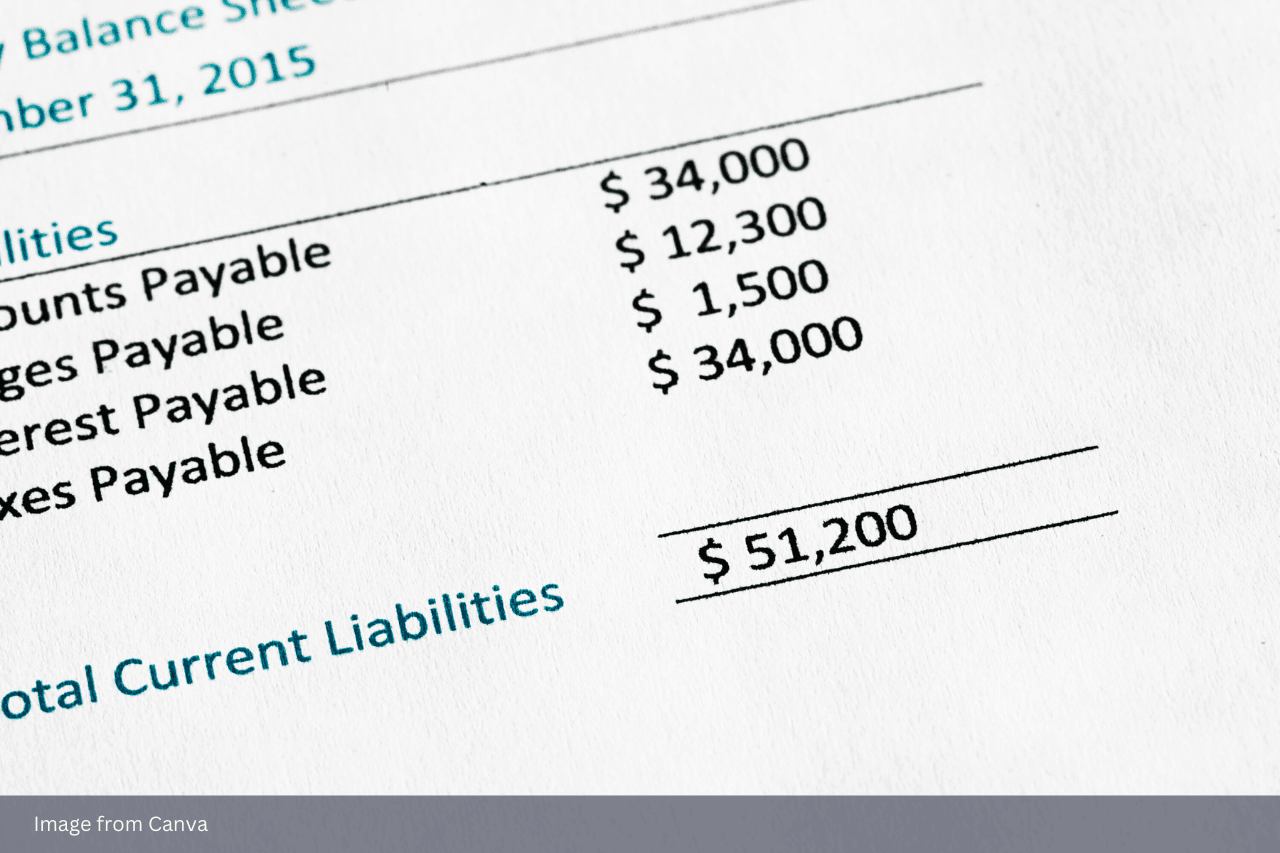
Liabilities are typically classified into two main categories:
- Current Liabilities (due within one year)
- Accounts Payable
- Accrued Expenses (owed wages, taxes)
- Short-term Loans
- Long-Term Liabilities (due over several years)
- Bonds Payable
- Lease Obligations
- Mortgages
Step 4: Compute Your Total Liabilities
Calculate the total value of all liabilities by adding the outstanding balances.
To demonstrate, listed below are examples of liabilities and their corresponding amount:
Current Liabilities
| Liability | Amount (£) |
|---|---|
| Accounts Payable | 25,000 |
| Short-Term Business Loan | 40,000 |
| Total Current Liabilities | 65,000 |
Long-Term Liabilities
| Liability | Amount (£) |
|---|---|
| Equipment Loan | 120,000 |
| Commercial Mortgage | 250,000 |
| Total Long-Term Liabilities | 370,000 |
To calculate total liabilities, add the values of current and long-term liabilities using the formula:
Total Liabilities = Total Current Liabilities + Total Long-Term Liabilities
Example:
- Total Current Assets = £65,000
- Total Non-Current Assets = £370,000
Total Liabilities: £65,000 + £370,000 = £435,000
This total outlines all debts and obligations the business is accountable for.
Step 5: Subtract Total Liabilities from Total Assets
Once total assets and total liabilities are calculated, the final step is to determine net assets. So, what is the formula for net assets? It is straightforward:
Net Assets = Total Assets – Total Liabilities
The calculation can be further broken down by asset and liability type, providing a clearer view of the company’s financial structure and shareholders’ equity.
Total Assets (Total Current Assets + Total Non-Current Assets) – Total Liabilities (Total Current Liabilities + Total Long Term Liabilities) = Net Assets
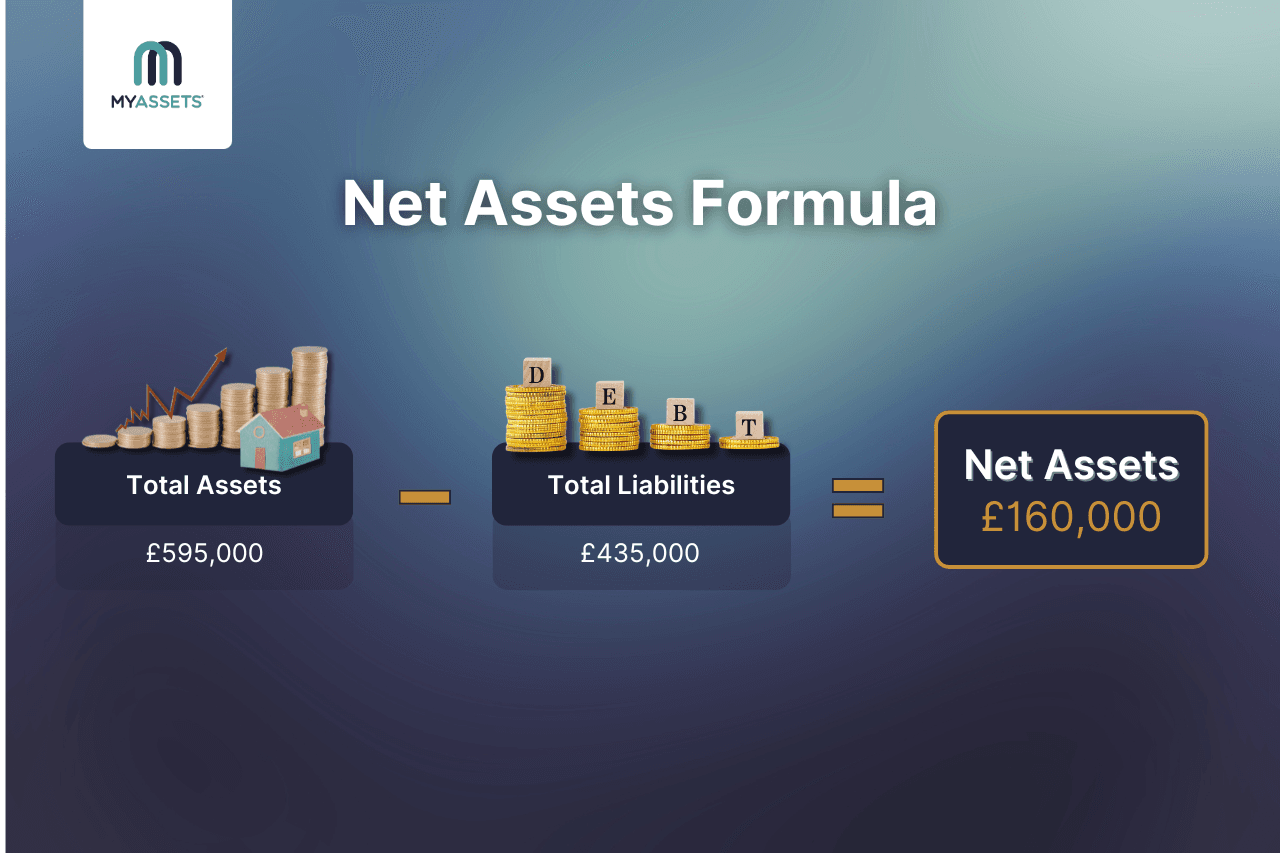
Example using the previous figures:
- Total Assets = £595,000
- Total Liabilities = £435,000
Net Assets: £595,000 – £435,000 = £160,000
Ultimately, the net asset figure reflects overall financial health and can be understood as follows:
- Positive Result: Signifies that total assets exceed total liabilities, meaning the business or individual owns more than it owes and is generally solvent.
- Negative Result: Indicates insolvency, meaning liabilities exceed total assets. This suggests financial strain and may require corrective action.
Since the result shows £160,000, it indicates a positive net asset position. This means the business owns £160,000 more in assets than it owes in liabilities, signalling financial resilience and a buffer to support future growth, reinvestment, or unexpected expenses.
Read More: 5 Powerful Strategies to Increase Your Net Worth
Best Tools for Calculating Net Assets
From spreadsheets to net worth calculator apps, a variety of digital tools can help streamline the process of calculating net assets. Here are some options to explore:
1. Spreadsheet
Microsoft describes spreadsheets as digital tools that streamline the organisation, calculation, and analysis of data. When utilised as a net worth calculation sheet, this tool enables users to manually record assets and liabilities while automated formulas compute the net asset figure.
Why Use a Spreadsheet?
- Customisable: Allows users to customise categories and create formulas beyond net asset calculations, adapting the spreadsheet to their specific financial needs.
- Data Fluency: Promotes deeper engagement with numbers, as manually entering assets and liabilities enhances financial awareness and encourages deliberate financial decisions.
- Low Cost: Free tools like Google Sheets and Microsoft Excel make net asset calculation accessible, while paid templates usually involve only a single upfront cost, making them economical.
Why Not Use a Spreadsheet?
- Error-Prone: Small errors, like removing a formula or misplacing a decimal point, can distort net worth and misrepresent your financial position.
- Requires Technical Knowledge: Users must understand spreadsheet functions and how to organise data to fully utilise features, such as automated charts and advanced trend analysis.
Examples of Spreadsheets
Among the most commonly used spreadsheet tools are:
- Microsoft Excel
- Google Sheets

2. Net Worth Calculator App
As net worth and net assets are calculated using the same formula, a net worth calculator app is a valuable tool that acts as a financial aggregator, consolidating all assets and liabilities to compute total net assets. These apps are more straightforward, providing an instant snapshot of one’s financial health, based on data provided and collected.
Why Use a Net Worth Calculator App?
- Account Aggregation: Connects to financial accounts to sync balances for bank accounts, credit cards, and investment portfolios.
- Asset Categorisation: Predefined categories streamline the organisation of diverse assets, enabling users to assess individual asset values and see how they collectively shape overall financial position.
- Visual Data Analytics: Transforms raw data into charts and growth timelines, helping users visualise trends in assets and liabilities.
Why Not Use a Net Worth Calculator App?
- Limited Customisation: Standardised templates can be limiting for users with unique financial structures or specialised assets.
- Subscription Costs: Basic versions are usually free, but many premium, ad-free wealth trackers charge a monthly or annual fee. Despite the recurring cost, the enhanced financial organisation and insights they provide can justify the expense.
Examples of Net Worth Calculator Apps
Listed below are notable net wealth calculators worth exploring:
- Empower
- Kubera
- MyAssets

3. Accounting Software
According to Wikipedia, accounting software is a digital solution designed to:
- Automate routine accounting tasks
- Maintain records
- Manage financial transactions
It is an ideal choice for those seeking deeper financial insight beyond net asset calculations, providing detailed reports, such as profit and loss statements, cash flow statements, income statements, and more.
Why Use Accounting Software?
- Audit Trails: Maintains a complete, traceable history of all changes and corrections, ensuring asset and liability records remain accurate and verifiable during audits.
- Detailed Reporting: Beyond net assets, the software delivers reports, including profit and loss, cash flow, and balance sheets, offering context for financial decisions.
- Real-Time Updates: Net assets are recalculated automatically as transactions are recorded, giving users an up-to-date view of their financial position.
Why Not Use Accounting Software?
- Learning Curve: Mastering all the features may be challenging, demanding both initial training and continuous effort.
- Overkill for Simple Needs: When only basic net asset tracking is needed, full-featured accounting software can be unnecessarily complex.
Examples of Accounting Software
For those interested in accounting software, here are some recommended tools to consider:
- Quickbooks
- Xero
- Zoho Books

Whether one opts for the granular control of a spreadsheet, the streamlined view of a net worth calculator, or the comprehensive reporting of accounting software, the objective is to select a solution that best fits one’s goals, workflow, and need for insight.
See More: 7 Best Wealth Tracking Apps to Monitor Investments with Ease
Net Assets Decoded: Turning Calculations into Insight
While the formula to calculate net assets is a simple subtraction of liabilities from assets, the process is far more than a mere numerical exercise. It provides a definitive view of financial health, revealing the true value an individual or business retains once all obligations are satisfied.
By systematically following these five steps, anyone can strip away financial complexity to reveal their actual standing:
- List All Assets: Catalogue everything of value, from liquid cash to fixed property.
- Total Your Assets: Aggregate these values to find gross assets.
- Identify All Liabilities: Account for every debt, including short-term bills and long-term loans.
- Compute Total Liabilities: Sum all obligations to understand the total financial burden.
- Perform the Final Calculation: Subtract total liabilities from total assets to reveal total net assets.
Calculating net assets may appear straightforward, yet expanding businesses or portfolios can make it challenging. Mastery of the process, supported by tools such as spreadsheets, net worth calculators, and accounting software, then helps streamline the whole process to gain financial clarity.
Calculate Net Assets: Frequently Asked Questions
1. What is the formula for net assets?
The formula for net assets is: Total Assets – Total Liabilities = Net Assets. It shows the value that remains after all debts and obligations are deducted from what is owned.
2. How often should net assets be calculated?
Net assets should be reviewed at least once every quarter to assess financial position and measure progress. For more complex or fast-changing portfolios, monthly calculations are advisable.
3. How do liabilities impact the overall net asset?
Liabilities reduce the overall net assets because they represent debts or obligations that must be paid. That means, the higher the liabilities, the lower the net assets.
MyAssets: One Platform for Total Net Worth Tracking
When financial data is scattered across different accounts, many struggle to form an accurate financial overview. But with a net worth tracking app like MyAssets, users can gain a consolidated view of their assets, liabilities and net worth.
One Dashboard for All Assets
Imagine having all assets summarised and neatly organised in one Global Dashboard:
- Finances are categorised into cash and banking, traditional investments, other investments, and insurance policies, alongside a chart showing asset distribution.
- The total value of assets, liabilities, and net value for buildings, warehouses, and other properties is displayed with the location indicated.
- All belongings, including machinery, equipment, vehicles, and other valuable business assets, are systematically inventoried.
All these assets are consolidated in a single view, allowing users to monitor holdings across every category. On top of that, the platform automatically calculates net worth, meaning all assets added —whether finances, properties, or belongings —are accounted for to provide a clear, real-time snapshot of the overall financial picture.
One System for Every Asset
Even better, users can manage relationships between assets with its Smart Asset Linking feature. In practice, this means users can connect related items, like a warehouse with its mortgage or the equipment it houses. This helps understand how assets relate to one another and their impact on one’s net worth and portfolio.
One Platform for All Users
MyAssets makes collaboration easy with its Delegates feature, empowering teamwork with business partners, accountants, or other trusted collaborators.
Users can control access by assigning specific roles:
- View: Allow them to see assets and financial data.
- Create/Edit: Let them add or update entries.
- Delete: Grant permission to remove items if necessary.
With MyAssets, collaborators can contribute efficiently to your collection, while owners retain full control and oversight of their assets and net worth.
Organise, track and manage your assets in one place with MyAssets, free for 14 days.



