

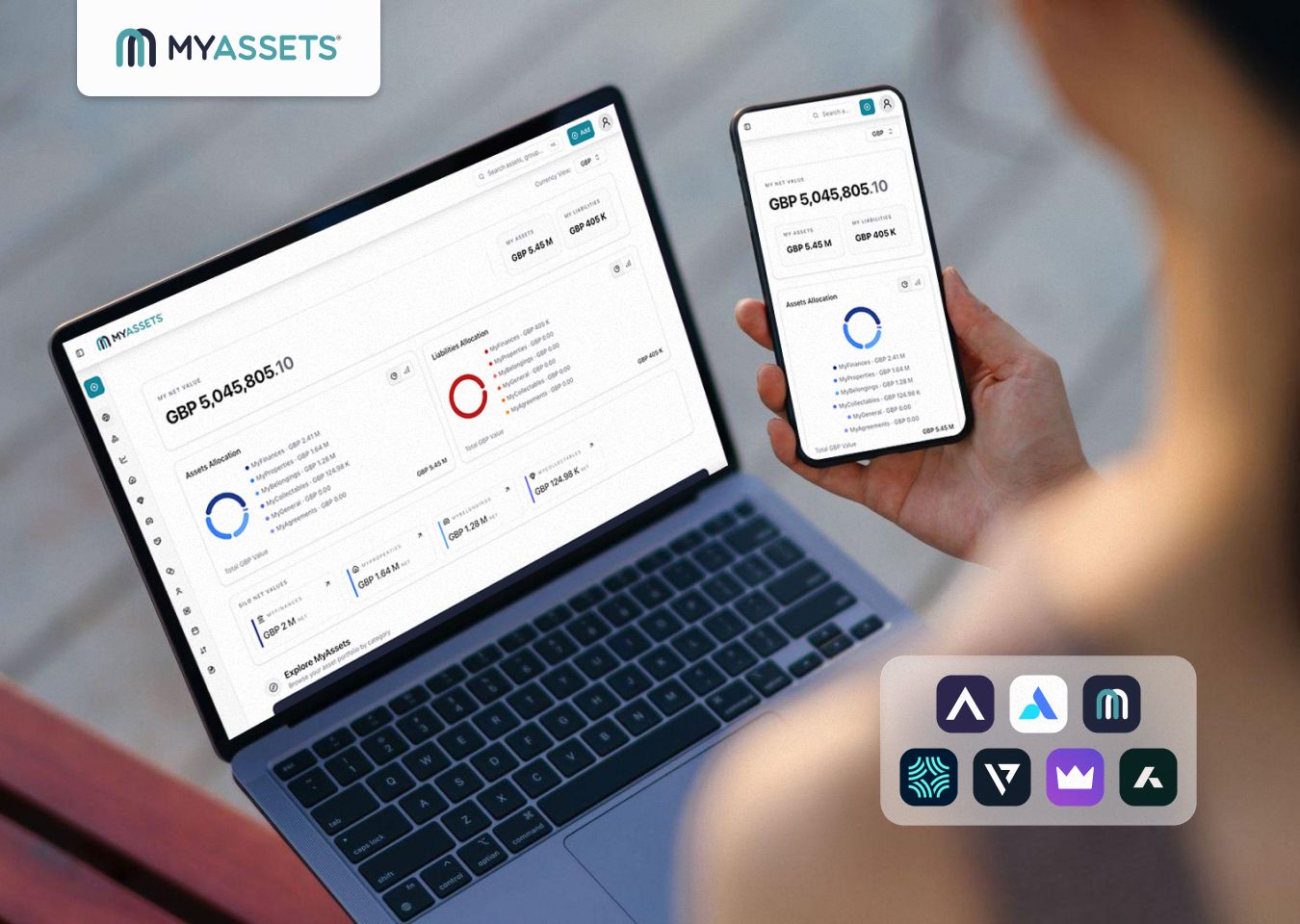
Are scattered financial accounts making your wealth harder to track? As individuals increasingly spread their wealth across banks, investment platforms, real estate holdings, and alternative investments, keeping track of every asset can become a challenge. Instead of having a complete picture of their wealth, many are left managing fragmented data across different institutions and systems.
This lack of wealth aggregation is more common than many realise. According to research by MX, 50% of respondents said they have not used apps to track all their accounts in one place. As a result, individuals are left tracking net worth, assessing portfolio performance, and making informed financial decisions from fragmented data, making it difficult to see their overall financial position.
Wealth aggregators are designed to solve this problem. By consolidating information from different accounts and asset types into one dashboard, they provide a complete view of wealth and improve decision-making.
To better understand how financial tools help in managing your wealth, this article explores how a wealth aggregator works, what features matter most in a wealth aggregation app, and which platforms are worth exploring to build a clearer financial picture.
- How Do Wealth Aggregators Work?
- What Features to Look for in a Wealth Aggregation App?
- 7 Best Wealth Aggregators
- Wealth Account Aggregation: One Place for Your Entire Wealth Portfolio
- Aggregated View of Wealth App: Frequently Asked Questions
How Do Wealth Aggregators Work?
Wealth is distributed across a mix of assets and liabilities, forming a complex financial picture:
- Assets: Cash and bank accounts, investment portfolios (stocks, bonds, ETFs), retirement accounts, real estate, and alternative investments (cryptocurrencies, art, and collectables)
- Liabilities: Mortgages, personal loans, credit card debt, and other outstanding obligations
Wealth aggregators simplify this by connecting different accounts and consolidating the data into a single platform. Using integrations and data feeds to aggregate wealth, they collect information from multiple financial institutions and convert it into a consistent format, making it easy to view everything in a unified dashboard.
Through this automated wealth data aggregation, users can see their total net worth and track performance across all assets without switching between multiple platforms.

What Features to Look for in a Wealth Aggregation App?
When selecting a wealth aggregation app, prioritising features that improve visibility, accuracy, and ease of use is essential. To help you select the best app, below are the key features to consider:
Account Aggregation
Savings account in HSBC, a current account in Lloyds Bank, and a mortgage account in Barclays? This is a common dilemma of individuals managing finances across multiple institutions. Information is spread across different banks, platforms, and service providers, requiring separate logins to access balances, transactions, and holdings. As a result, monitoring wealth requires more time and effort to gain complete and accurate figures.
Account aggregation solves this problem by connecting multiple financial accounts using APIs provided by services such as Plaid. Once linked, the platform pulls real-time data, including account balances and transactions from different institutions, creating a single, up-to-date view of all financial activity across accounts.
Net Worth Tracking
Many individuals rely on manual calculations or outdated spreadsheets to determine their net worth. However, with assets spread across multiple classes and accounts, arriving at an accurate net worth figure can be time-consuming and error-prone.
A wealth aggregator app with a net worth tracking feature streamlines this process by automatically calculating the combined value of all assets and liabilities added within the platform. This provides users with an accurate view of their overall financial position, without the need for manual calculations.

Multi-Asset Integration
Wealth is often distributed across asset types, from cash and investments to real estate and alternative holdings. Because these assets operate differently and are held in different institutions and platforms, they are rarely viewed in a single picture. This fragmentation can complicate understanding the overall wealth structure and composition of the portfolio.
Fortunately, a multi-asset integration enables a wealth aggregation platform to connect and bring together diverse asset classes into one unified system. By consolidating data from banks, investment accounts, retirement funds, real estate, and alternative assets, and standardising it into a consistent format, users are provided with a complete, structured view of their entire portfolio in one place.
7 Best Wealth Aggregators
Managing wealth across multiple accounts can be complex. This article highlights seven useful tools to help aggregate wealth management by centralising assets and improving overall visibility.
1. Altoo
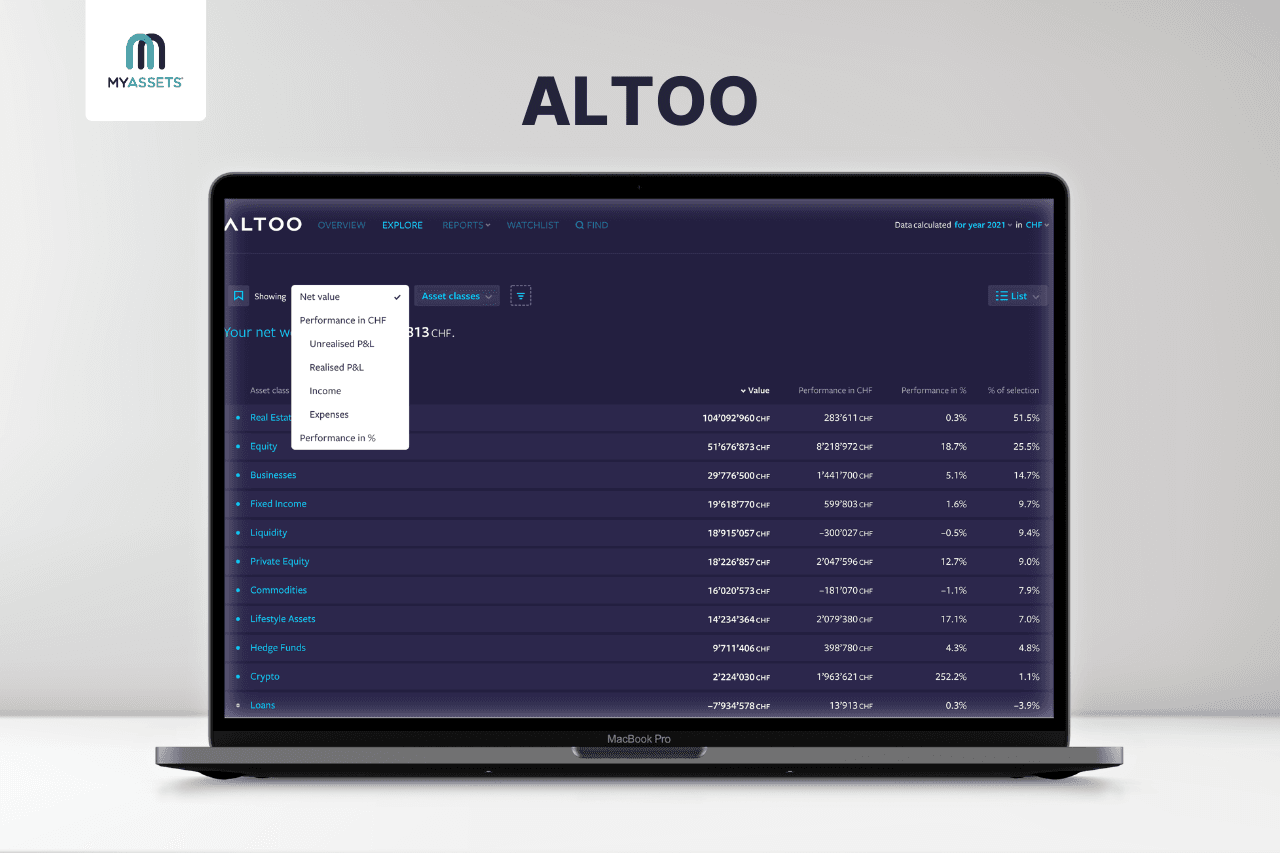
Altoo is a wealth platform that aggregates data from more than 3,500 financial institutions, unifying bankable and non-bankable assets, including real estate, private equity, art, and collectables, in one dashboard.
Pros
- Supports collaboration via a built-in private messenger for direct communication within the platform
- Stores important documents like trust agreements, insurance policies, contracts, and other asset-related paperwork
Cons
- Pricing is customised for enterprise needs and can increase overall multi-bank costs
- Mainly serves Europe and Switzerland, with limited US compliance features and additional requirements for users outside the region
Free Trial: No, but it offers a free demo
Starting Price: Undisclosed
2. Asora
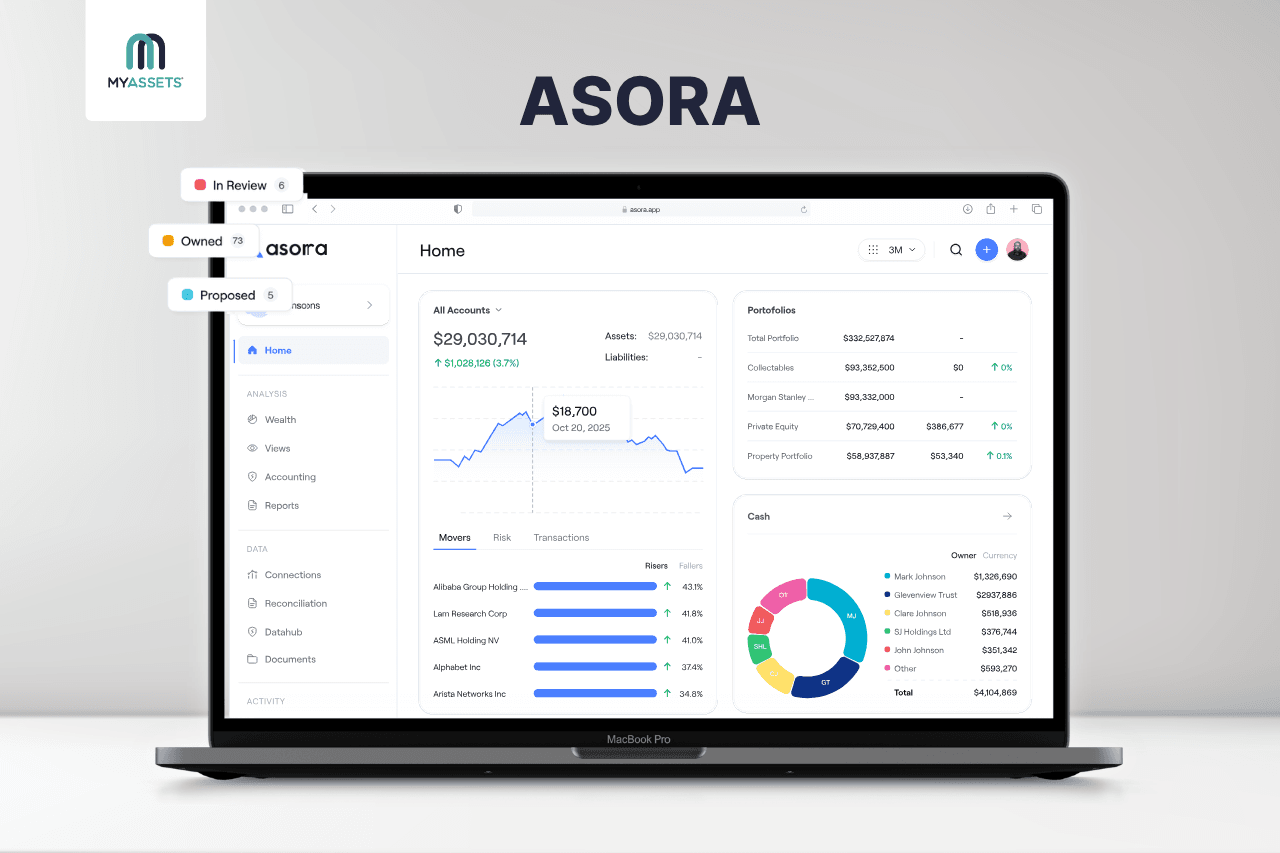
Asora is built for single and multi family offices to track and manage private and liquid assets. It aggregates and standardises data from multiple financial institutions to create a unified view of one’s entire wealth structure.
Pros
- Links to banks, custodians, and alternative investment platforms to automatically sync portfolio data, eliminating manual updates and reconciliation work
- Subscriptions include unlimited users, allowing family members, accountants, and office staff to be added at no extra cost
Cons
- Expanding family offices may outgrow their features as data complexity increases
- Data aggregation for investment accounts and alternative fund holdings requires additional add-ons
Free Trial: No, but offers free demo
Starting Price: $10,800/year
3. MyAssets
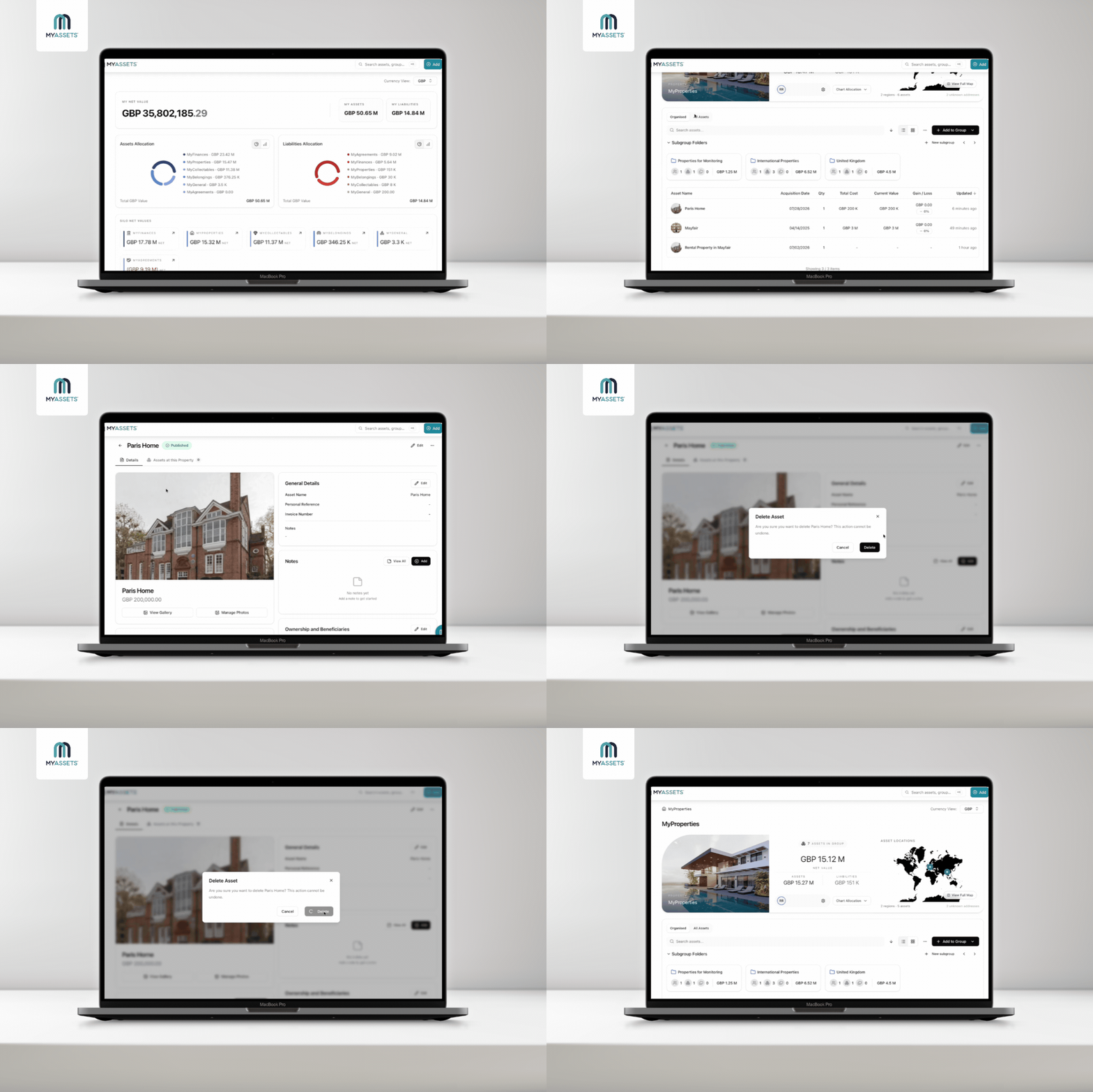
Looking for a digital tool providing wealth account aggregation? MyAssets is an asset management platform designed to centralise wealth data across multiple asset classes. From financial accounts and real estate to collectables and other valuable possessions, MyAssets tracks both what they own and what they owe to deliver a holistic view of their total net worth.
Pros
- Allows users to link related assets together like a home, its mortgage, and art collection linked to its corresponding insurance policy
- Supports recording and tracking important dates, such as payment due dates, policy renewals, and contract expirations to prevent missed deadlines
- Uses Plaid, an authorised payment institution, to securely connect bank accounts and import financial data
Cons
- Some assets may need to be entered and updated manually
- Requires more maintenance to fully benefit from the platform's asset management capabilities
Free Trial: No, but it offers a free plan
Starting Price: $25/month
4. Masttro
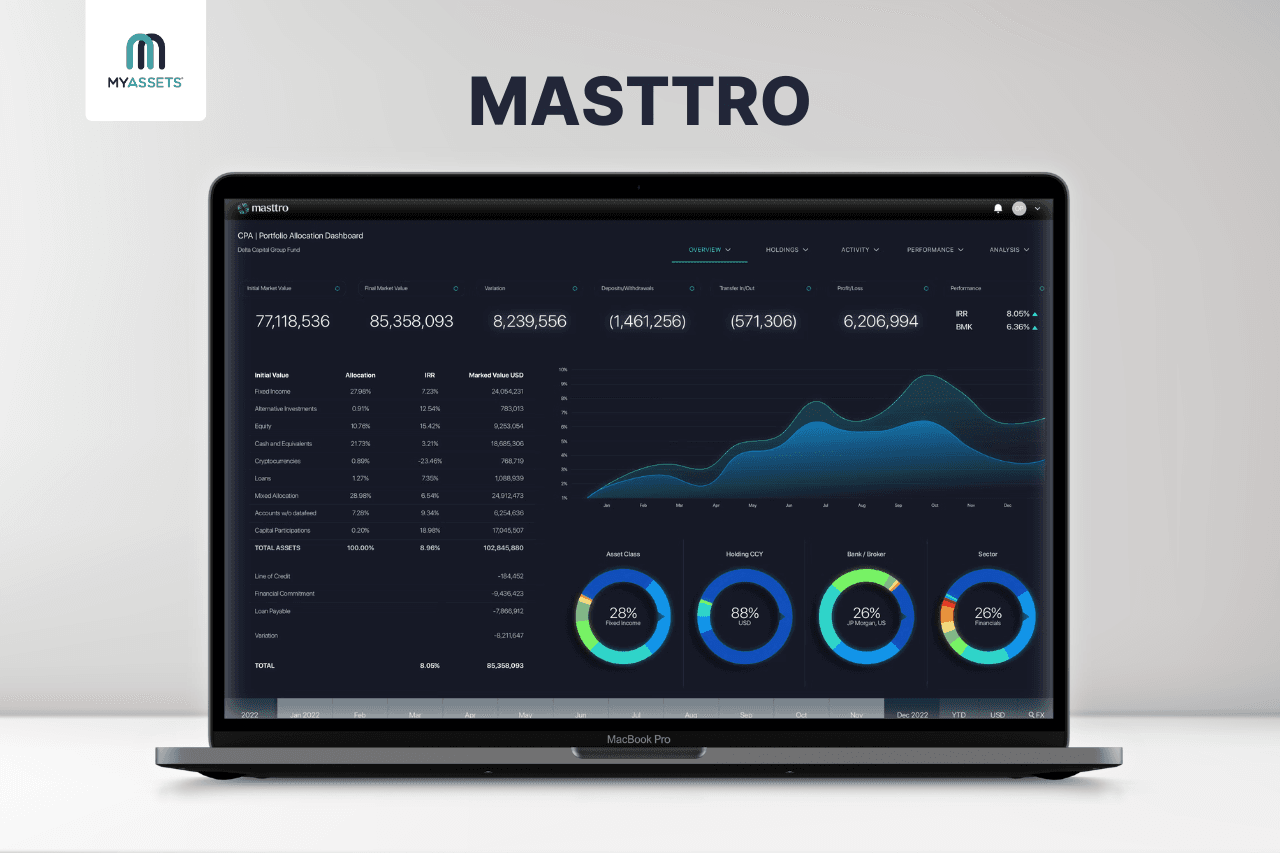
Masttro is a wealth management solution that delivers a full view of wealth across liquid and illiquid investments, liabilities, and passion assets (such as art, classic cars, and handbags). It includes aggregated reporting and analytics tools to help family offices and wealth advisors gain clearer portfolio insights.
Pros
- Build customised reports and presentations with flexible layouts, and share them as reports or interactive dashboards
- Connects to 700+ custodian data feeds in more than 40 countries, supporting extensive global wealth aggregation
Cons
- Certain features may be more limited or less developed on mobile compared to desktop
- Customer support can sometimes be slow or insufficient, especially for complex integration issues
Free Trial: No, but offers a free demo
Starting Price: Undisclosed
5. Vyzer
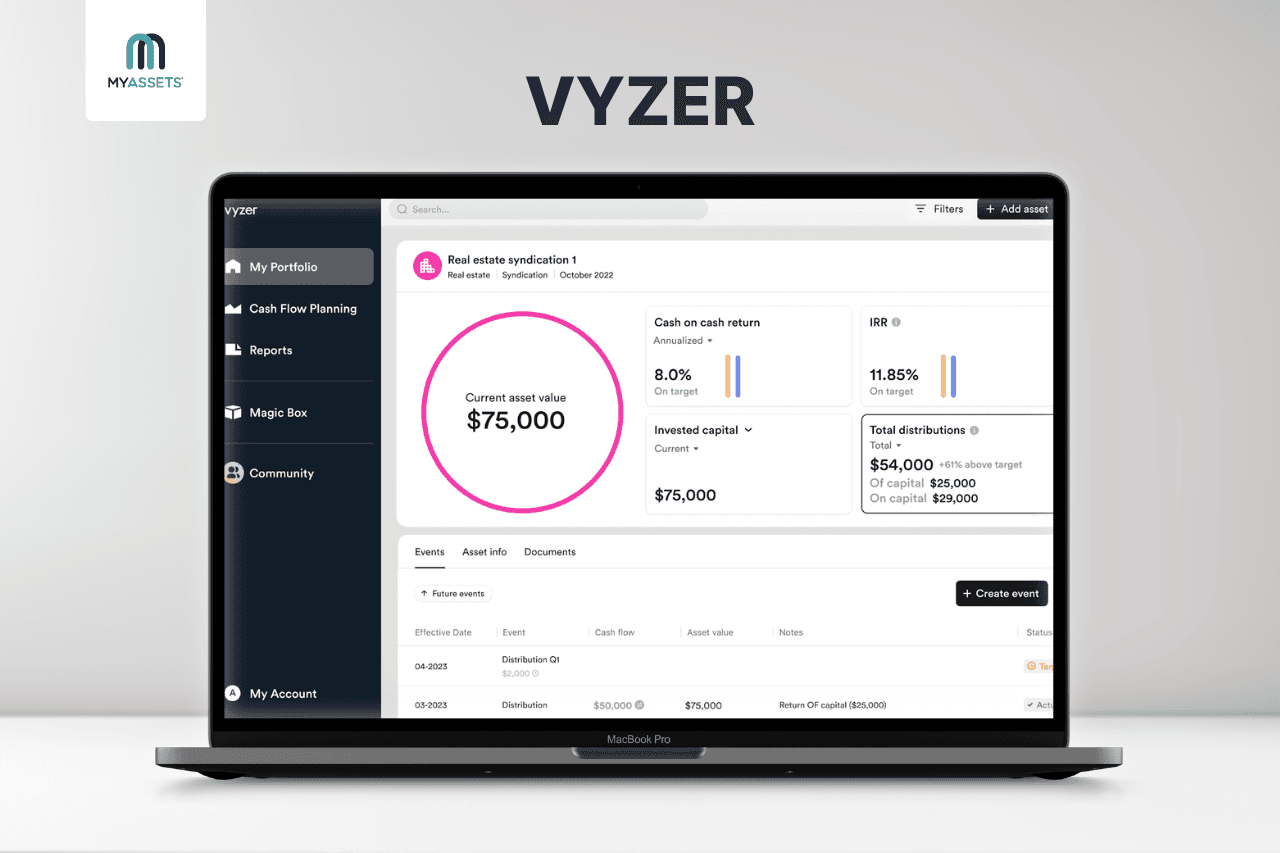
Vyzer is an AI-powered wealth tracking platform that helps manage complex portfolios. It aggregates data across bank accounts, brokerages, real estate, venture funds, crypto, and other assets, while helping users forecast cash flow, manage documents, and access portfolio insights through conversational AI.
Pros
- Provides scenario planning tools to forecast future cash positions based on capital calls, distributions, and investment exits
- Uses AI to analyse financial documents and automatically identify, create, and update portfolio holdings
Cons
- Its advanced features may be excessive for those seeking simple net worth or budgeting tools
- Unlimited syncing of bank and brokerage accounts is only available on Vyzer’s Elite plan
Free Trial: No, but it offers a free plan
Starting Price: $180/month
6. Wealthica
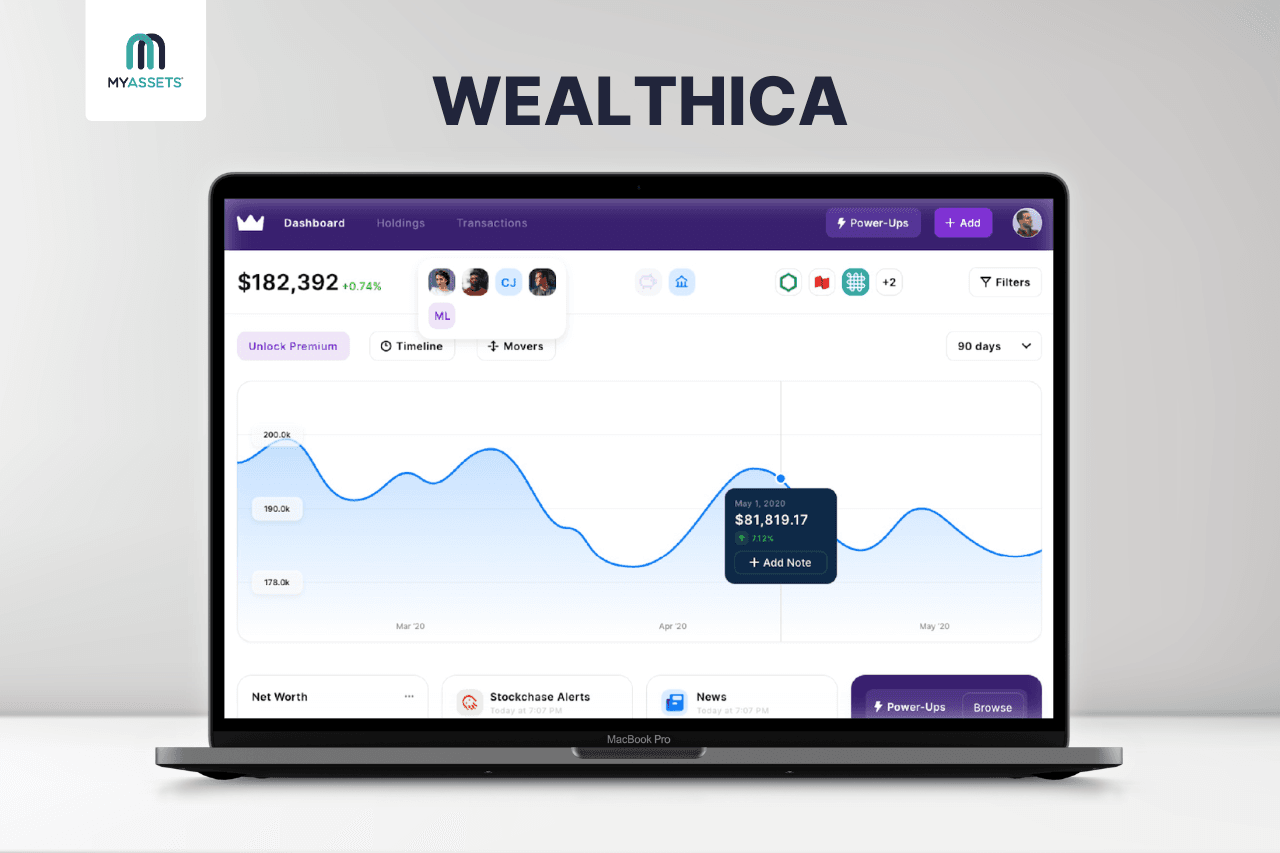
Wealthica is a wealth aggregation platform that connects to more than 20,000 financial institutions, including banks, investment accounts, and cryptocurrency platforms. It consolidates transaction and investment data into a single dashboard, providing users with a comprehensive and unbiased view of their wealth.
Pros
- Offers optional Power-Ups that enhance the platform with dividend tracking, portfolio analytics, and capital gains reporting
- Provides date-to-date net worth comparisons, highlighting increases or decreases in both dollar and percentage terms
Cons
- Best suited for Canadian users, with some features and integrations geared toward Canada
- Some add-ons, such as Wealthscope integration and Google Sheets export, require an additional fee
Free Trial: Yes - 14 days
Starting Price: $75/year
7. Addepar
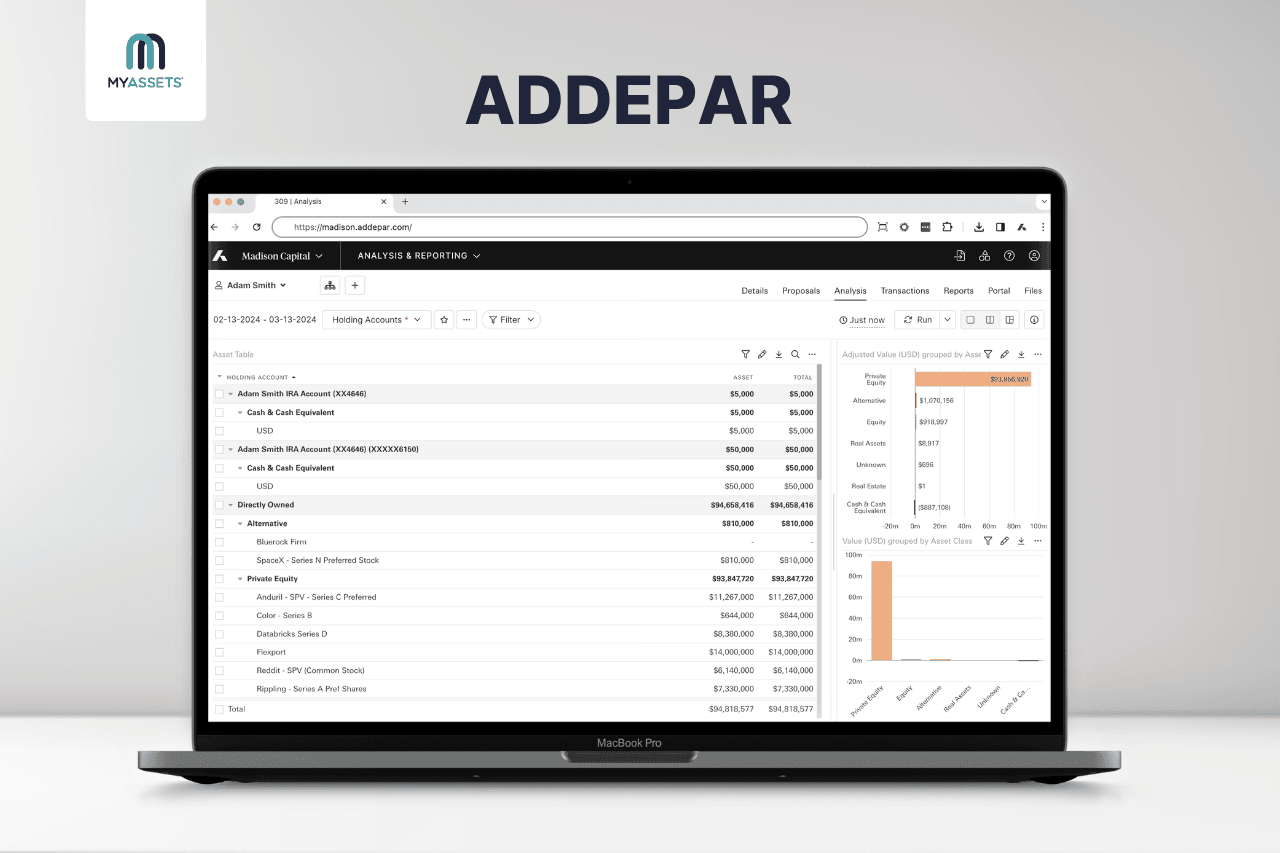
Addepar is a wealth management platform specialising in data aggregation, analytics, and portfolio reporting for high-net-worth and ultra-high-net-worth individuals. It unifies data across asset classes and global custodians, providing a comprehensive view of wealth and portfolio performance to support more informed decision-making.
Pros
- Delivers robust portfolio analytics with support for Time-Weighted Returns (TWR), Internal Rate of Return (IRR), and risk exposure analysis
- Simulates different market conditions to project future cash flows for portfolios containing private equity, real estate, and other asset classes
Cons
- Better suited for financial assets than non-traditional holdings such as art, operating businesses, or direct real estate
- Its advanced functionality may require a dedicated administrator to oversee reporting and platform management
Free Trial: No
Starting Price: Undisclosed
Read More: 5 Powerful Strategies to Increase Your Net Worth
Wealth Account Aggregation: One Place for Your Entire Wealth Portfolio
For many, the ability to see beyond siloed data and into a complete financial picture unlocks deeper insights and uncover opportunities that might otherwise go unnoticed. Wealth aggregation makes this possible by consolidating assets and liabilities into a single view, enabling individuals to gain a more accurate understanding of their net worth.Among the tools that bring wealth aggregation to life are platforms that bring together financial accounts, investments, properties, and other assets into one unified dashboard. This includes:
- Altoo
- Asora
- MyAssets
- Masttro
- Vyzer
- Wealthica
- Addepar
Whether the goal is to monitor net worth, consolidate accounts, or gain a complete picture of wealth, the right wealth aggregation platform can transform fragmented financial data into actionable insights.
Aggregated View of Wealth App: Frequently Asked Questions
1. What is a wealth aggregator?
A wealth aggregator is a platform that consolidates financial data from multiple accounts, institutions, and asset classes into a single view. It helps users track assets, liabilities, and net worth in one place, providing a more complete picture of their overall wealth.
2. What is the best wealth aggregation app?
There is no single best wealth aggregation app, as the right choice depends on an individual's needs and portfolio complexity. For example, Altoo and Addepar are well suited for high-net-worth individuals and family offices, while MyAssets and Wealthica are ideal for users seeking a comprehensive view of both financial and non-financial assets.
3. How can I use apps to track and aggregate my investment portfolio?
Individuals can use wealth aggregation apps by connecting their bank accounts, brokerage accounts, retirement funds, and other assets to a single platform, provided the app supports integrations with those accounts. The chosen app then consolidates and updates this information, enabling users to track portfolio performance, asset allocation, and net worth from one dashboard.
MyAssets: Bringing All Your Wealth Together in One Complete Platform
Managing wealth is challenging enough, but having to collect and reconcile data from multiple sources adds another layer of complexity. That is why having a platform that consolidates all wealth information into a single view is essential.
Introducing MyAssets, an asset management platform that goes beyond tracking bank account balances. It provides a complete net worth overview by bringing together financial assets, properties, collectibles, valuable possessions, and liabilities in one place.
What’s more? MyAssets make wealth management streamlined by allowing users to do the following:
- Add delegates and assign permissions, allowing trusted individuals to view or edit portfolio entries as needed
- Connect bank accounts for automatic balance updates and syncing, or manually enter financial information to ensure complete record
- Organise wealth into differernt silos—General Assets, MyFinances, MyProperties, MyCollectables, MyBelongings, and MyAgreements—to see how much each asset category contributes to overall wealth
With all wealth information organised in one place, MyAssets makes it seamless to monitor wealth, manage all accounts, and gain a clearer understanding of overall financial position in one app.
Interested to know more? Get started with your free MyAssets account today.



