

Did you know that using a wealth calculator can help improve financial behaviour?
In fact, a cross-country study by Başar et al. (2025) found that FinTech adoption is strongly linked to proactive savings behaviour. Individuals who use digital financial services more frequently, across multiple platforms, and with deeper engagement tend to save a larger proportion of their income.
These findings reflect a major shift in personal finance: digital financial tools influence how people manage their wealth.
By reducing complexity and offering functional and psychological benefits, FinTech innovations encourage individuals to formalise or increase their savings. Wealth tools bring this to life, transforming abstract financial data into clear insight that makes one’s wealth growth understandable.
However, with several personal wealth calculators available today, choosing the right one can be a challenge. Luckily, this article explores the best options, from net worth trackers that provide a snapshot of overall wealth to retirement savings calculators that help plan for long-term financial goals.
- What is a Wealth Calculator?
- Best Wealth Tools To Make Sense Of Your Financial Position
- Net Worth Checker
- Investment Worth Calculator
- Retirement Money Calculator
- Compound Growth Calculator
- Capital Gains Tax Estimator
- Calculating Your Way to a Clearer Financial Picture
- Personal Wealth Calculator: Frequently Asked Questions
What is a Wealth Calculator?
At its core, a wealth calculator is a digital solution that calculates net worth by deducting total liabilities (owed) from total assets (owned).
However, modern wealth tools go beyond a simple snapshot. They provide specialised insights into different engines of one’s finances, including:
- Capital Gains Tax: Estimating what you’ll actually keep after taxes.
- Compound Interest: Discovering how your investments grow over time through compounding.
- Investment Returns: Evaluating potential gains based on different contribution amounts, time horizons, and expected returns.
- Retirement Income: Estimating how much you need to retire comfortably.
By automating these calculations, wealth growth calculators reduce the mental exhaustion of conducting complex math.
Discover Apps to Monitor Investments: 7 Best Wealth Tracking Apps
Best Wealth Tools To Make Sense Of Your Financial Position
Are you looking for calculators that evaluate different facets of wealth? From net worth and investment portfolios to retirement and compound interest, these tools help wealth planners understand the numbers.
1. Net Worth Checker
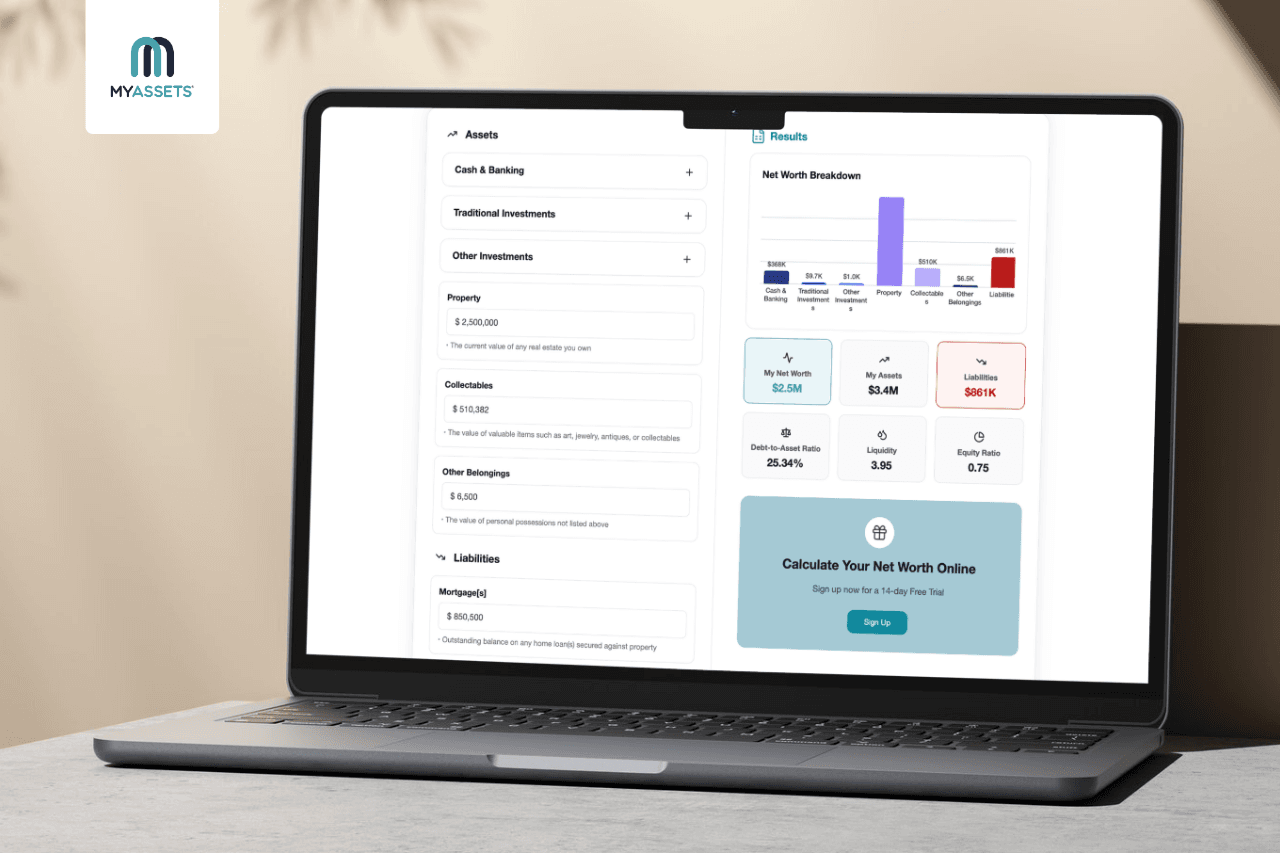
A net worth checker is a tool determining an individual’s overall financial position by calculating the difference between total assets (what is owned) and total liabilities (what is owed).
Variables Involved
To ensure accurate results, users must input asset values across:
- Cash
- Savings Account
- Investments (stocks and shares, bonds and gifts, cryptocurrency)
- Property
- Collectable Investments (art, jewellery, antiques)
As well as liabilities, such as:
- Loans (personal, auto, student, or other fixed-term loans)
- Credit Card Balances
- Mortgages
Once entered, the net worth calculator compiles the data and applies the net worth formula (Total Assets – Total Liabilities) to generate an accurate financial overview.
Use Cases
Below are key scenarios where net worth checker proves useful for monitoring wealth and improving overall financial health:
- Assessing financial health. Provides a financial snapshot which helps determine whether an individual is in a positive or negative financial position.
- Evaluating borrowing power. Helps understand one's debt-to-asset ratio, which can be a deciding factor in securing favourable interest rates.
- Optimising asset allocation. Highlights how much of the total wealth is allocated to various investments, helping guide portfolio adjustments.
Read More: Net Worth Aggregators Explained: Simplify Money Tracking
2. Investment Worth Calculator
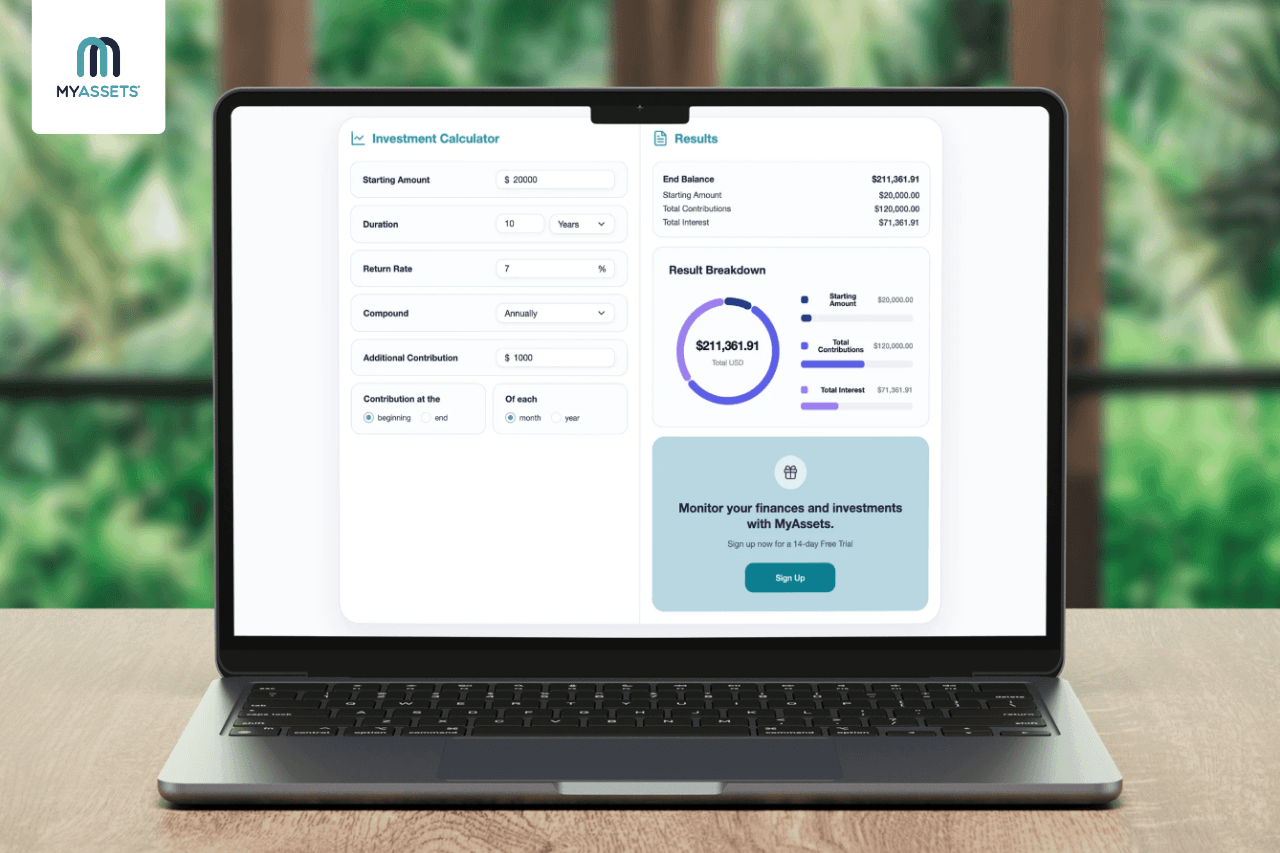
Ever wondered how your investments might grow over months or years? An investment worth calculator is the solution for projecting how an investment can grow over time, using inputs such as the initial investment, expected rate of return, and time frame.
Variables Involved
Fundamental elements that help calculate investment include:
- Return Rate: The rate of gain or loss on an investment, showing its growth or decline relative to its starting point.
- Starting Amount: The initial sum of money invested at the beginning. It could be a large sum set aside for a property purchase, an inheritance, or precious metals like gold.
- End Amount: The projected value of the investment at the end of the investment period, including the investor’s initial capital plus any gains or losses.
- Investment Length: The total duration for which the money is invested.
- Additional Contributions: Any additional amounts added to the investment over time that can increase total return and result in a higher ending value.
Use Cases
To demonstrate how an investment calculator can guide smarter decisions, below are some use cases:
- Comparing scenarios. Allows users to test different investment amounts, timeframes, or interest rates to identify the most effective strategy.
- Enhancing portfolio strategy. Provides insight into potential returns, supporting decisions about risk, allocation, and diversification.
- Planning for goals. Helps individuals determine how much to invest to reach financial objectives, like buying a property abroad or funding retirement.
3. Retirement Money Calculator
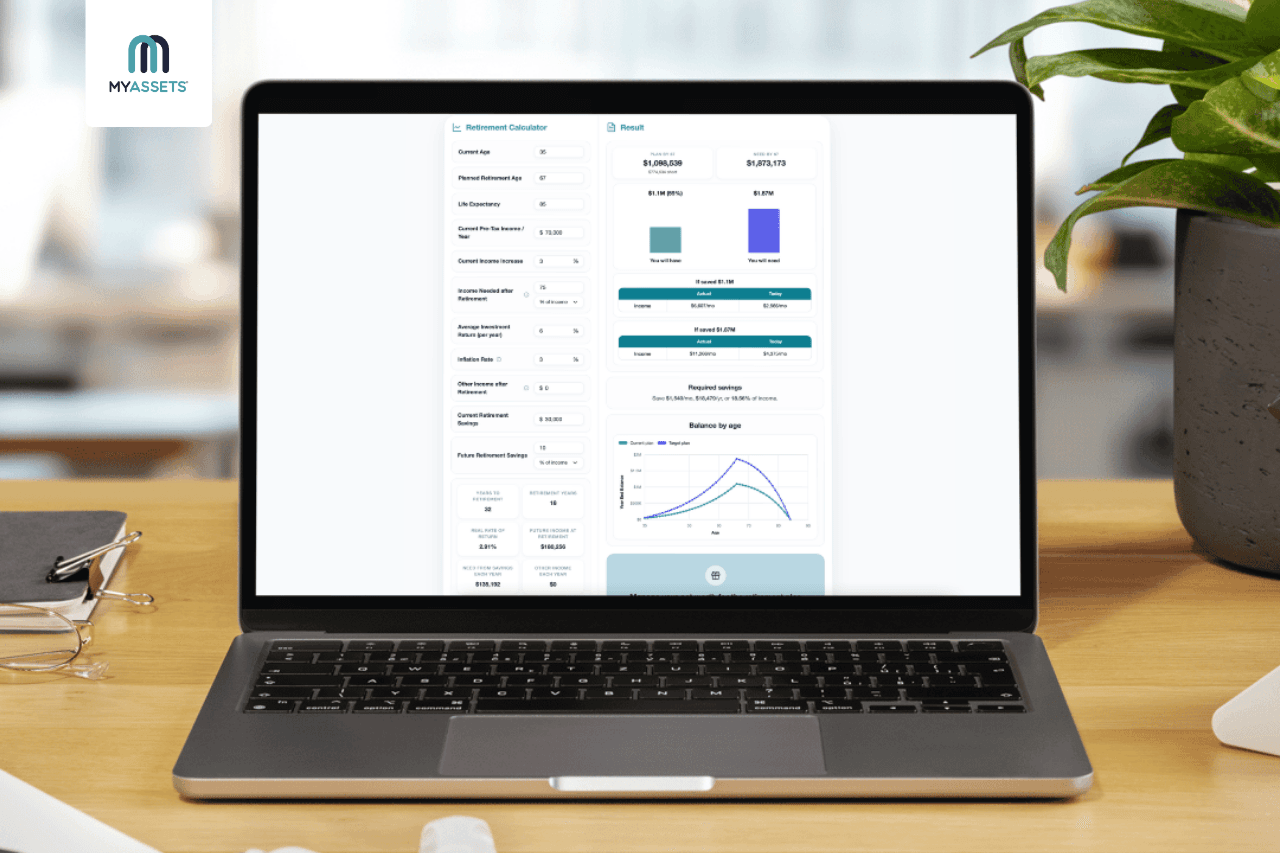
A retirement money calculator helps project how much income an individual may have in retirement based on current savings, contributions, and planned retirement age. It allows users to see if they are saving enough and to adjust variables, such as contribution amounts or retirement timing, to better align with their desired lifestyle.
Variables Involved
To achieve accurate calculations for retirement, individuals must provide the following key inputs:
- Financial Assets: The current value of all retirement-related accounts and savings, such as workplace pensions, personal pensions, Stocks and Shares Individual Savings Accounts (ISAs), and other investment or savings accounts.
- Income and Expenses: Includes estimated annual spending during retirement, target retirement income, and additional income sources, such as state pension or rental income.
- Contributions: Regular contributions made to retirement accounts, on a monthly or annual schedule, including any contributions matched by an employer.
- Timeline: Includes current age, planned retirement age, and estimated life expectancy, which together determine how many years are left to save, when withdrawals will begin, and how long retirement savings need to last.
- Economic Assumptions: Factors in expected annual investment return and inflation rate, which are essential for estimating how savings grow and how rising living costs affect purchasing power.
Use Cases
The following highlights how a retirement calculator can help individuals plan for their retirement.
- Assessing savings adequacy. Evaluates whether current savings and contributions are sufficient to meet future retirement goals.
- Evaluating retirement timing. Assesses the financial impact of retiring earlier or later on overall savings and income sustainability.
- Identifying savings gaps. Highlights any shortfall between projected savings and required retirement income, enabling early adjustments.
See Also: How Real Estate Can Strengthen Your Retirement Portfolio
4. Compound Growth Calculator
A compound growth calculator is a tool that shows how investments or savings can grow over time by adding returns back into the principal (original amount).
Variables Involved
For the calculator to apply the compound interest formula, individuals must provide these variables:
- Principal Amount: The starting sum of money that is initially invested or saved.
- Interest Rate: The rate at which the savings or investment grows. The higher the rate, the faster the money grows through compounding.
- Compounding Frequency: How often interest is calculated and added to the balance (i.e., yearly, monthly, or daily). More frequent compounding leads to faster growth.
- Time: The length of time the compounding interest is applied. Long-term investments benefit the most from accelerated growth over time.
Use Cases
Here are practical scenarios that demonstrate the value of a compound interest calculator for individuals.
- Determining real savings goals. Tells exactly what the monthly contribution and interest rate are needed to reach a certain goal.
- Estimating portfolio growth. Shows how savings or investments can grow over time through compounding, helping individuals see future value.
- Building a long-term financial plan. Helps see how combining initial savings, regular contributions, and compounding can support long-term goals like buying a first home or building a sufficient retirement fund.
5. Capital Gains Tax Estimator
Figuring capital gains tax? A capital gains tax estimator is the tool for estimating tax owed when selling chargeable assets, such as:
- Buy-to-let properties, second homes, and other non-primary residences.
- Cryptocurrency and other digital assets.
- Gifts received, excluding those from spouses or civil partners.
- Ownership stakes or legal rights in assets, such as patents and other intellectual property.
- Shares and other investments outside ISAs or pensions.
- Valuable personal possessions over £6,000 (jewellery, art, collectables, or other high-value physical assets excluding cars).
Once figures like sale price and purchase price are provided, the capital gains tax calculator computes the taxable gain and the total tax due.
Variables Involved
For an accurate estimate of capital gains tax, users need to provide the following information:
- Purchase Price: The total amount originally paid for the asset, including any associated fees or transaction costs.
- Sale Price: The proceeds received when the asset is sold.
- Holding Period: The duration the asset was owned before selling, which can influence whether gains are taxed as short-term or long-term.
- Capital Gains Tax Rate: The tax rate applied to the gain, determined by local regulations, income level, and the holding period.
- Allowable Deductions or Expenses: Costs incurred in buying, selling, or improving the asset that can reduce the taxable gain, such as broker fees or renovation expenses for property assets.
Use Cases
Figuring out capital gains tax helps users see how selling assets affects their tax obligations. To demonstrate its value, the following use cases show how the calculator can guide informed financial decisions.
- Estimating tax liability before selling assets. Allows users to calculate the exact capital gains tax owed on the sale of stocks, property, or other investments.
- Estate Planning. Assists in estimating the capital gains tax on inherited assets upon sale and supports managing trusts and estates for tax-efficient transfers.
- Optimising sales timing. Helps users model future outcomes, like delaying a sale to benefit from tax breaks or increased allowances.
Calculating Your Way to a Clearer Financial Picture
Wealth calculators have automated complex calculations and data processing, allowing users to gain insights across a variety of areas:
- Net Worth Checker: Provides a snapshot of overall financial standing by comparing total assets against liabilities.
- Investment Worth Calculator: Calculates potential return on investment and evaluates different investment scenarios to support financial decisions.
- Retirement Money Calculator: Estimates future retirement income based on current savings, contributions, and desired retirement age, helping users plan effectively.
- Compound Interest Rate Calculator: Demonstrates how savings or investments grow over time, including interest earned on both the principal and accumulated interest.
- Capital Gains Tax Estimator: Calculates potential tax obligations when selling assets, helping users plan transactions and optimise tax outcomes.
Ultimately, these wealth tools provide users with the financial insights they need to understand every aspect of their financial picture. From the big-picture overview of net worth to the detailed performance of individual investments, retirement projections, compound growth, and potential tax liabilities, these calculators help users make informed, strategic decisions with confidence.
Personal Wealth Calculator: Frequently Asked Questions
1. Is a wealth calculator accurate?
A wealth calculator provides an estimate based on the data entered and assumptions used; therefore, its accuracy depends on the completeness and correctness of that information.
2. Which financial calculator is the best?
The best wealth calculator depends on the financial insight needed. Use a net worth checker for a full financial snapshot, a capital gains tax estimator for asset sales, an investment worth calculator to forecast returns, and a retirement money calculator to plan income in retirement.
3. How to track your wealth?
Tracking wealth starts by regularly monitoring all assets and liabilities, including savings, investments, property, and debts. Using tools like a net worth app can streamline the process, from aggregating data to calculating it.
MyAssets: A Net Worth Calculator for Bridging Wealth Gaps
One poor money habit many individuals fall into is guessing their way through their financial decisions. While quick and easy, it often leads to poor financial outcomes in the long run due to lack of clarity and control.
To solve this, utilising net worth apps like MyAssets helps provide a clear, structured view of overall finances, replacing assumptions with accurate insights.
Cash at one bank, debt at another?
When money is spread across various banks and brokerages, it is easy to lose sight of the bigger picture. MyAssets addresses this by providing a 360-degree view of an individual's wealth, consolidating disparate data into a single platform.
It brings everything together: bank accounts (checking and savings), investment portfolios (stocks, bonds, and mutual funds), properties (residential, rental, and commercial), and valuable assets, such as art and collectables.
Even liabilities are included—mortgages, loans, and credit card debts—because net worth isn’t just about assets. MyAssets provides a single source of truth, offering a complete, accurate picture of an individual’s financial health.
What’s more? All this information is neatly organised in a Global Dashboard, allowing users to see their entire financial picture at a glance. Raw numbers are transformed into intuitive graphs, and assets are clearly categorised, making it straightforward to understand where money is allocated, track progress, and make informed financial decisions.
Want to collaborate on money matters safely?
Managing wealth is rarely a solitary endeavour, yet sharing sensitive financial data often poses a significant security risk. MyAssets addresses this by providing individuals with full control over account permissions, with the Delegates feature allowing them to assign who can view, edit, delete, or create entries within their portfolio.
This granular control enables seamless collaboration without compromising total privacy. For example, an individual can grant:
- View-Only Access to a financial advisor to monitor investment performance and provide strategic guidance.
- Edit Permissions to a spouse or partner to ensure household assets and shared liabilities are updated in real-time.
In this way, MyAssets ensures that data remains protected when managing sensitive information with others.
Stop guessing and start knowing your assets’ true worth with MyAssets, free for 14 days.



