


Did you know many landlords are managing their rental properties alone? The latest English Private Landlord Survey 2024 found that 52% of landlords who registered a deposit do not use an agent to let or manage their properties. Similarly, the State of the Lettings Industry Report 2025 found that about 43% of landlords still self-manage.
While these figures differ, they tell the same story: landlords are taking property management into their own hands.
So, why are landlords going solo? For most, the primary driver is purely financial: rising interest rates, mortgage costs and operating expenses have squeezed yields across the buy-to-let sector.
On top of that, paying an agent’s fee – typically 8 to 15% of rent or a letting fee – erodes net returns substantially. As a result, independent landlords are skipping the middleman to protect profit margins against rising mortgage rates and operational costs.
Nevertheless, the challenge doesn’t end with cutting out fees. Independent landlords now face the administrative load of a full-time management team, from collecting rent to scheduling safety checks, and keeping up with evolving housing regulations. This is where rental property management software comes in.
Transforming how landlords manage their property investment, the best rental management software helps organise and automate day-to-day tasks, including auto-chasing late rent payments and tracking compliance details.
By bringing rental management tasks into an organised system, property rental software helps landlords streamline their workload, stay on top of responsibilities and manage properties more efficiently — without relying entirely on an agent or property manager.
Looking for the best app for rental property management? Discover the importance of rent apps and software for small-scale landlords, which features make rent management more efficient, and the top tools worth exploring.
- What Is Rental Property Management Software?
- Why Do Small-Scale Landlords Need Software for Managing Rental Properties?
- 5 Rental Property Management Software for Independent Landlords
- Self-Managing Rental Properties with the Best Rental Management Software
- Property Rental Management Software: Frequently Asked Questions
What Is Rental Property Management Software?
Rental property management software is a tool designed to help landlords manage rental property administration.
Depending on the platform, these features may include:
- Document Storage: stores lease agreements, tenant records, and other property-related documents.
- Expense Management: captures and categorises property-related costs.
- Maintenance Management: logs maintenance requests, schedules repairs, and tracks their progress.
- Reminders: sends reminders for rent payments, inspections, renewals, and other important deadlines.
- Rent Tracking: tracks payment deadlines, logs rent payments, and identifies overdue amounts.
Overall, these features create a system that allows landlords to organise rental information, manage payments, and stay on top of schedules.
Learn More: What Is Property Portfolio Management?
Why Do Small-Scale Landlords Need Software for Managing Rental Properties?
Whether landlords manage properties independently to reduce agent fees, prefer a hands-on approach, or have other reasons for self-managing, rental property software can help support the daily workload to keep rental responsibilities organised.
But what makes it useful for landlords managing rentals? Here are some of the reasons:
Reduce Time Spent on Rental Admin
Self-managing a rental property means taking on administrative tasks that an agent or property manager would normally handle. These tasks can be time-consuming, particularly when landlords have to manage them manually.
The following comparison from Rentto highlights how long rental management tasks can take with and without software:
| Task | Without Software | With Software | Time Saved |
|---|---|---|---|
| Rent collection (per month) | 8-10 hours | 30 minutes | 90% |
| Tenant screening | 3-5 hours per applicant | 30–60 minutes | 80% |
| Maintenance coordination | 5–8 hours per week | 1–2 hours per week | 75% |
| Lease renewals | 2–3 hours per tenant | 15–30 minutes | 85% |
| Financial reporting | 6–10 hours per month | 15 minutes (auto-generated) | 95% |
| Tenant communications | 5–7 hours per week | 1 hour per week | 80% |
Given the time difference, the best software for rental property minimises time by bringing tasks into one system and automating routine processes where possible.
Avoid Missed Deadlines
Missed maintenance check this year? Scheduling recurring property tasks is vital to ensure maintenance, inspections, renewals, and compliance requirements are completed on time. For independent landlords juggling multiple responsibilities, tracking important dates across Google Calendar or physical calendars can increase the risk of missing an upcoming deadline.
The rental property management software for landlords helps set reminders for recurring tasks and keep important dates in one place. This allows landlords to see what is coming up, plan ahead, and reduce the risk of missing essential rental property management deadlines.

Support Financial Oversight
Beyond rent payments, landlords need to account for property-related expenses, including:
- Insurance premiums
- Maintenance and repair costs
- Taxes
- Other costs associated with managing letting properties
Monitoring these figures helps property owners determine whether rental income is covering expenses and generating a profit.
How can landlord software help? From recording rental income and property expenses to categorising costs and tracking payment records, rental property software helps users manage their cash flow, monitor property performance, and keep financial records organised for tax submissions.
5 Rental Property Management Software for Independent Landlords
With several property management apps available for landlords, choosing the right one comes down to finding the features that address the demands of day-to-day rental management. Here are five of the best property management apps for landlords worth exploring:
1. TurboTenant – for lead generation and tenant screening
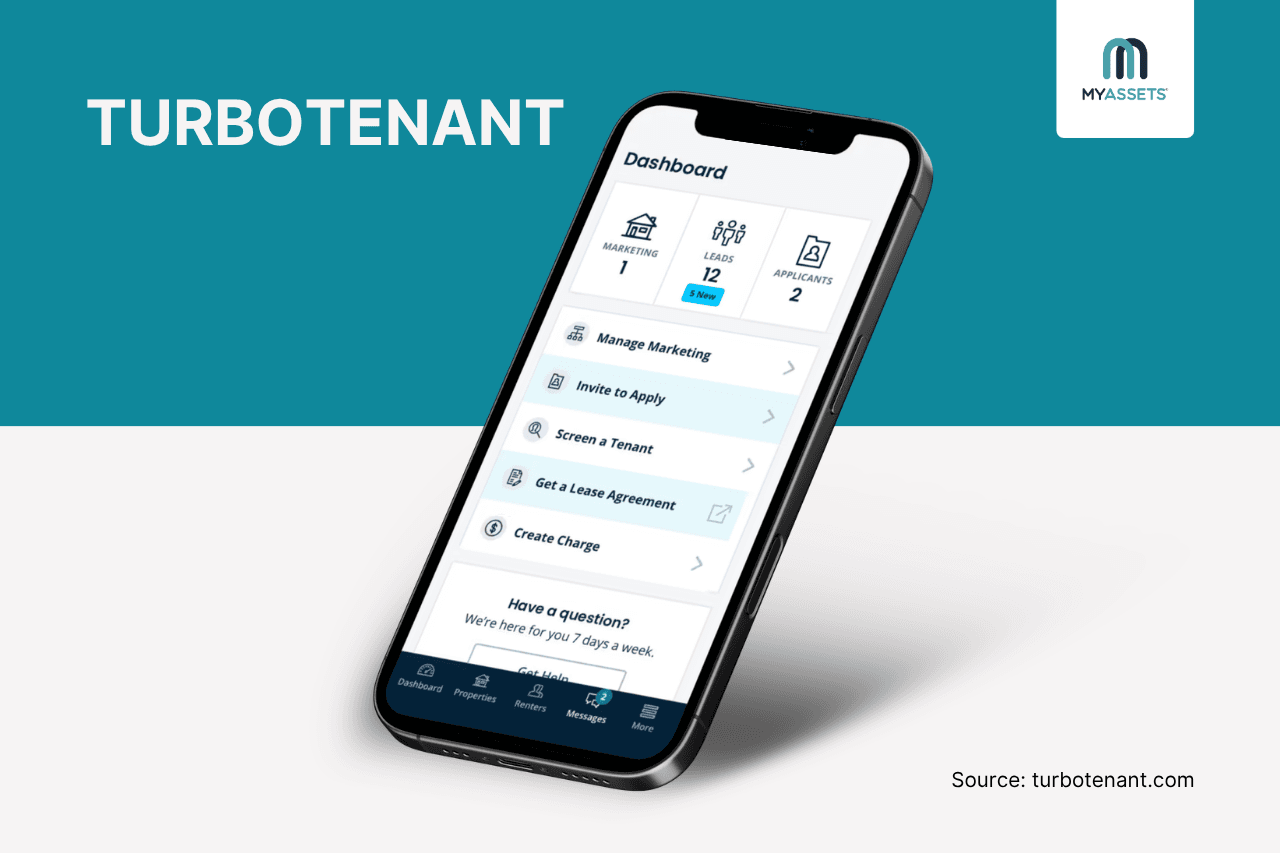
TurboTenant helps independent, do-it-yourself landlords manage the rental process in one place –covering tasks such as property marketing, tenant screening, lease management, and rent collection.
Pros
- Enables online rent payments while providing payment tracking, reminders, and autopay options.
- It distributes rental listings across multiple popular sites, such as Realtor.com, Rent.com, and Facebook Marketplace, from a single dashboard.
- Provides a tenant screening service through TransUnion, which checks applicants’ credit scores, criminal backgrounds, and eviction history.
Cons
- Applicants generally cover application and screening fees, while additional charges may apply to certain payment methods and renter services.
- Premium plans (Essentials and Pro) are billed upfront as a single annual payment, with no month-to-month billing option.
Free Version: Yes
Starting Price: $12.42/month
2. Innago – for maintenance requests and tenant communication
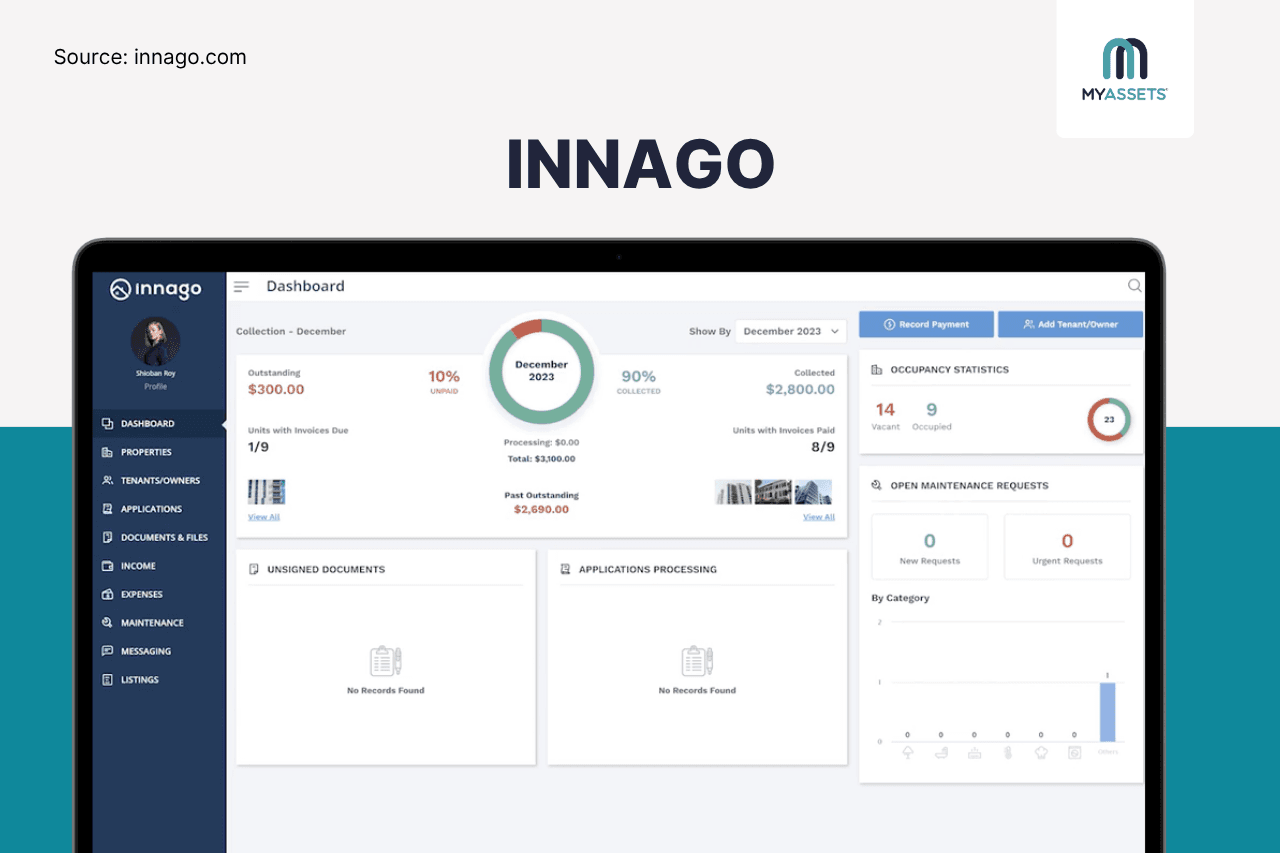
Innago is one of the best tenant management software options for small to mid-sized landlords, bringing key rental tasks such as lease management, maintenance requests, and tenant communication into one platform.
Pros
- Allows landlords to receive detailed maintenance requests with categories, descriptions, images, and videos, making it easier to assess and address issues.
- Helps landlords communicate with tenants, post community announcements, and manage multiple communication channels in one place.
- Lets landlords create lease templates, assign signers, and send leases to tenants for e-signing and online storage.
Cons
- Lacks advanced reporting and automation tools, such as trigger-based messages and complex annual rent increase workflows.
- Landlords pay no subscription fee, but tenants may incur $30-$35 screening costs and additional transaction or card processing fees, depending on the payment method.
Free Version: Yes
Starting Price: $0 for landlords, although fees may apply to certain tenant transactions and services.
3. Stessa – for automated accounting
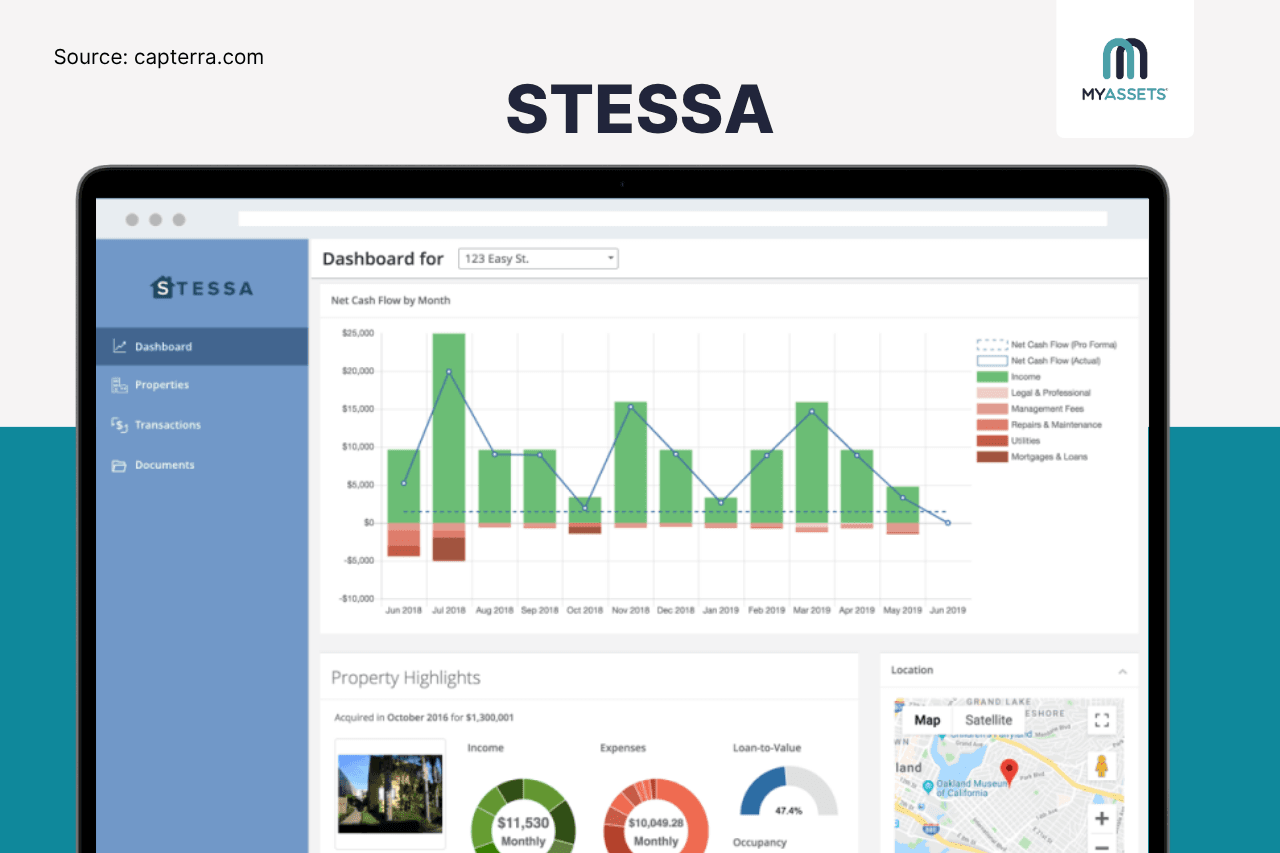
Need some help with bookkeeping rental properties? Beyond property management, Stessa stands out for its accounting and financial tracking tools for landlords. It helps categorise rental income and expenses, while its portfolio dashboard provides a portfolio overview of metrics such as net operating income, cash flow, expense ratio, and asset returns.
Pros
- Allows landlords to connect their bank and mortgage accounts to sync and categorise transactions.
- Uses smart-scan technology to capture paper receipts, extract information, and match them to relevant expense transactions.
- Provides detailed financial reports, including income statements, balance sheets, and rent rolls.
Cons
- Focuses mainly on accounting, with basic tools for managing day-to-day rental operations.
- Operates exclusively for rental properties located within the United States.
Free Version: Yes
Starting Price: $12/month
See Also: How To Be Successful In Managing Real Estate
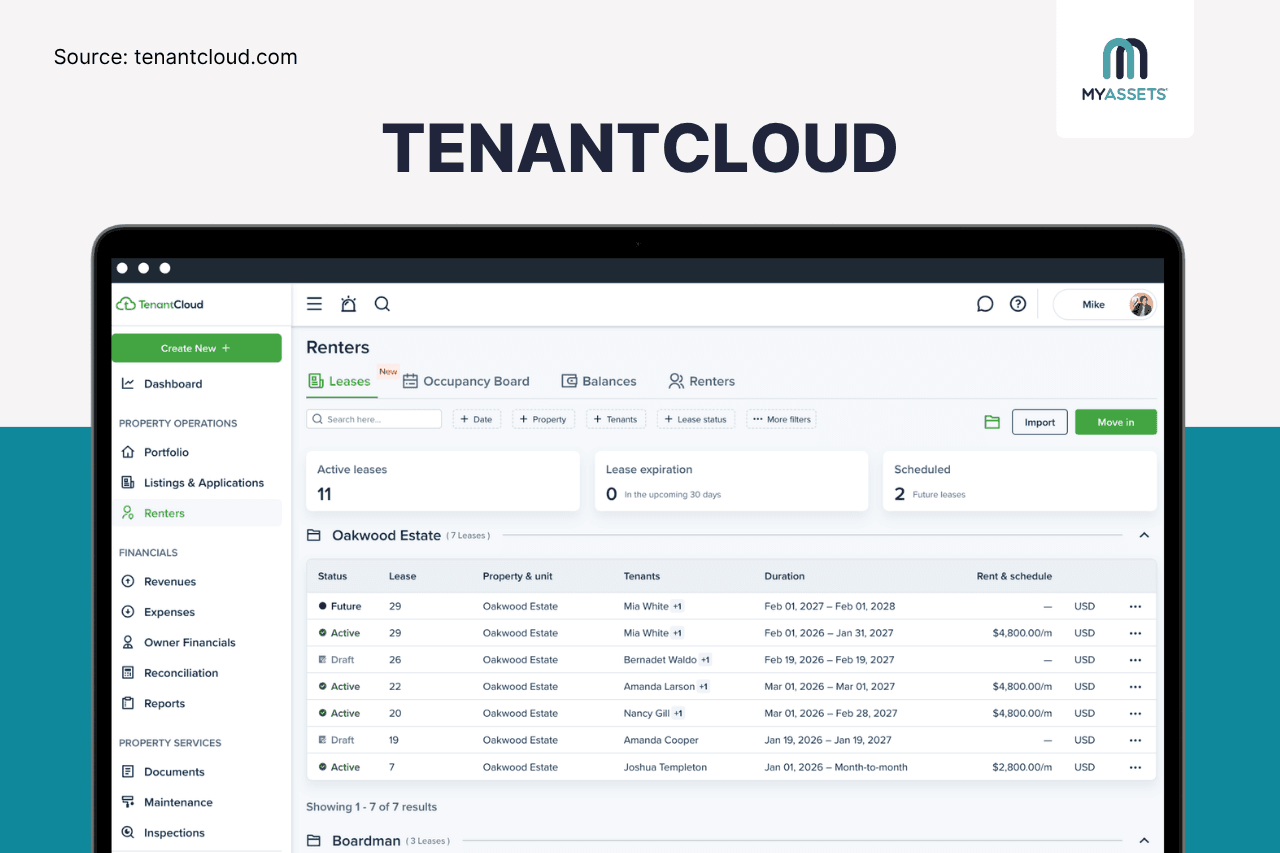
4. TenantCloud – for all-in-one rental property management
TenantCloud is an all-in-one property rental management software that centralises key rental operations in one platform. It helps landlords manage the rental lifecycle, from advertising vacancies and screening applicants to collecting rent, managing leases and handling maintenance requests.
Pros
- Lets landlords assign maintenance jobs to contractors, who can receive work requests, update job progress, communicate with landlords and tenants, and manage payments through their own portal.
- Provides dedicated portals for landlords and property managers, tenants, property owners, and service professionals, with tools tailored to each role.
- Uses rental-market data from RentRange to show rental rates, vacancy trends, and market demand.
Cons
- Entry-level plans do not include features such as the owner portal and bank reconciliation.
- Tenant screening reports are currently available for U.S. residents.
Free Version: No, but it offers a 14-day free trial.
Starting Price: $25/month
5. MyAssets – for tracking rental property assets alongside personal assets
Do you want to keep your personal assets and rental property assets together? MyAssets is an asset management solution that consolidates all forms of assets, including:
- Agreements
- Belongings
- Collectables
- Finances
- General Assets
- Real Estate
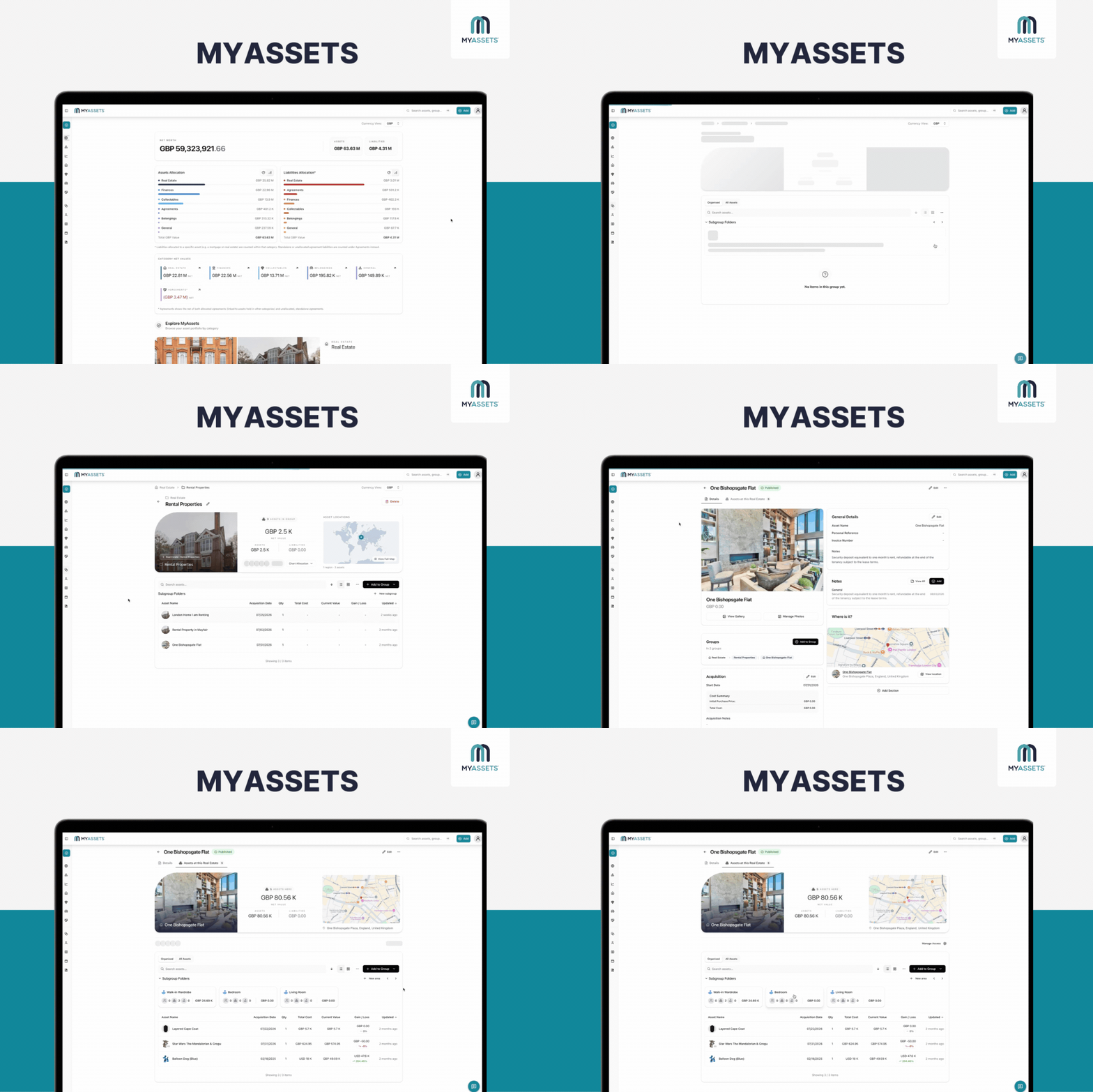
For landlords, this means keeping rental property profile, lease agreements, insurance policies, furniture, and other property belongings together, while also tracking personal assets such as bank accounts, investments, residential properties, and other valuables.
With MyAssets, everything is managed within one centralised system, instead of keeping rental and personal asset records separately.
Pros
- Allows landlords to record rental property details and catalogue belongings such as furniture, appliances, and other items contained within the property.
- Connects lease agreements to the associated property asset, keeping rental agreements and property records linked and organised in one place.
- Offers a ledger for recording rental property income and expenses, allowing landlords to add transaction details such as the date, amount, and description.
Cons
- Does not replace property management software for operational tasks such as tenant screening, rent collection, or maintenance request management.
- Requires more initial setup and ongoing maintenance to use its features fully.
Free Version: Yes (add up to 25 assets)
Starting Price: $25/month
Self-Managing Rental Properties with the Best Rental Management Software
Managing rental properties without a large team often requires landlords to handle everything from administrative tasks and maintenance to rent payments and financial records on their own. Rental property management software can help by automating these tasks and consolidating crucial rental information into a single platform.
The five platforms discussed in this article each approach rental management differently.
- TurboTenant and Innago focus on core landlord tasks such as tenant screening, lease agreements, rent collection, and maintenance.
- Stessa places greater emphasis on accounting and financial tracking.
- TenantCloud brings rental operations, tenant management, and financial tools together.
- MyAssets takes a broader asset management approach. Instead of focusing solely on day-to-day rental operations, it allows landlords to record rental properties along with related lease agreements, property belongings, and financial assets. This can make it useful for landlords who want to manage rental property records as part of their wider personal asset portfolio.
Ultimately, the best software depends on the tasks landlords need to manage and the level of rental-specific features they require. Comparing these functionalities can assist independent landlords in selecting a solution that supports their rental management needs.
Property Rental Management Software: Frequently Asked Questions
1. What is the best software for managing rental properties?
The right software depends on the landlord’s needs. TurboTenant and Innago cover core rental tasks, Stessa focuses on financial tracking, TenantCloud combines rental and tenant management, while MyAssets tracks rental properties alongside related agreements, belongings, and personal assets.
2. Can rental property software track property expenses?
Yes, rental property software can track property expenses. Depending on the platform, landlords can log and categorise expenses, monitor spending, and generate financial reports for their rental properties.
3. What should rental property management software include?
Key features to look for in rental property management software include automated rent collection, financial and accounting tools, maintenance tracking, and tenant communication portals.
MyAssets: Keeping Your Personal and Rental Property Assets in One Platform
A rental property may have its own records, including ownership details, mortgage or loan agreements, insurance policies and home furniture, while other personal assets such as bank accounts, investments, vehicles, jewellery, and collectables are tracked separately.
This raises the question: is there a better way to keep rental property and personal assets organised in one place?
Introducing MyAssets, an asset management platform that brings different asset categories together. For landlords, that means they can manage their rental property as part of the wider asset portfolio rather than as a standalone record.
Property details, lease agreements, belongings, income and expenses can be kept alongside other personal assets, giving landlords a more complete picture of what they own and manage.
A Dedicated Space for Every Asset
To make everything organised, MyAssets groups assets into dedicated categories for better management:
- General: add tangible assets to the platform without sorting them into existing categories.
- Finances: connect your bank accounts, monitor your investments, and track your financial assets.
- Real Estate: view the macro- and micro-level details of your owned and rented properties, including specific locations, associated assets, liabilities, and net value.
- Collectables: organise, track, and monitor the value of your collection across different collectable types.
- Belongings: track your belongings, such as furniture and appliances, and their locations.
- Agreements: organise and link loans, mortgages, rental leases, and insurance policies as Agreements on the platform.
Together, MyAssets create a structured view of everything owned and owed, from the overall portfolio down to individual details.
Keep Important Contacts Linked to Every Asset
Track the people connected to each asset with MyAssets’ Address Book. Contacts can be linked to specific assets, allowing landlords to see who owns, manages, or is otherwise associated with an asset.
For example, users can upload and connect technicians, plumbers, contractors, and other service providers to a rental property, keeping their contact details readily available for maintenance, repairs, and other property needs
By connecting contacts directly to assets, MyAssets helps create a record of each asset and the people involved in managing, maintaining, or supporting it.
Interested in knowing more? Explore MyAssets in detail for FREE.



