


Did you know that there are good financial habits that benefit your net worth? Over the past decade, investing in stocks and saving in cash delivered different outcomes in net worth growth.
This is supported by a study by James Symons-Hicks, stating that global equities have shown average returns of around 9% per year, while UK cash deposit accounts have grown by just about 0.9% annually.
Despite this gap, investing remains relatively uncommon, with only one-in-five UK households participating in the stock market. This isn’t simply a case of limited financial resources. Even among households with more than £10,000 in savings, 38% still keep their money entirely in cash rather than investing it.
As a result, many individuals, including those with substantial savings, are missing out on building their net worth by keeping money in low-yield cash accounts instead of investing in the stock market’s potential higher returns. This highlights a key financial reality: net worth is not just about how much money is earned or saved, but how effectively that money is put to work.
Since money does not grow on its own, developing good financial habits is integral to building net worth. These habits shape how one manages and grows their capital over time, turning idle savings into an active engine for growth.
This now raises an essential question: what are the most effective financial habits for building net worth?
This article defines what financial habits are, breaks down the core healthy financial habits that drive net worth growth, and also highlights a selection of financial calculators designed to translate these habits into measurable, real-world actions.
- What are Financial Habits?
- 5 Good Financial Habits to Grow Your Net Worth
- Track Net Worth
- Invest Consistently
- Evaluate Investment Performance
- Conduct Tax Planning
- Save for Retirement
- Turning Financial Habits Into Long-Term Wealth
- Financial Habits of the Wealthy: Frequently Asked Questions
What are Financial Habits?
Financial habits are the small, everyday choices individuals make that shape how money is managed and grown over time. These include everyday behaviours such as:
- Budgeting
- Managing Debt
- Saving Regularly
- Tracking Spending
While a single choice doesn't instantly change much, habits are routine practices that are consistently followed. Over time, these repeated actions compound, influencing financial discipline and contributing to their net worth.

5 Good Financial Habits to Grow Your Net Worth
When building net worth, it is equally important to avoid financial mistakes that quietly slow progress over time. Poor money decisions, inconsistent planning, and a lack of structure can all limit long-term growth.
This is where good financial habits come in. They help create consistency and build a more reliable path toward growing net worth over time. To find out more, here are a few good financial habits to develop:
1. Track Net Worth
Net worth is a key measure of one’s financial health, calculated as the difference between a person’s assets (what is owned) and liabilities (what is owed). It represents what remains after all financial obligations are deducted from total wealth.
While a bank balance only shows available cash, net worth aggregates all assets and liabilities into a single figure. This provides a holistic view of one’s financial life, making wealth monitoring a healthy financial habit. Below are other key benefits of tracking net worth:
- Detect Early Warning Sign: Identify when debt is growing faster than assets, helping individuals spot financial problems early
- Monitor Progress: Enables individuals to track progress toward financial goals, such as estimating how much net worth is needed to retire early based on their current financial position
- Improve Financial Decision-Making: Helps to understand how financial decisions, such as new debt or investment, affect overall financial position
Best Practices for Net Worth Tracking
Effective net worth tracking turns financial data into actionable insight. To support this, here are the best practices to follow:
- Separate Key Categories: Break down assets and liabilities to see what contributes most to changes in net worth
- Update Regularly: Perform checks and updates monthly or quarterly (particularly investments and property), to ensure asset values accurately reflect current market conditions
- Utilise Net Worth Tools: Use a net worth app or a net worth spreadsheet to help track and update assets and liabilities in one platform
Essentially, net worth tells the real story of financial health, showing what is left after all obligations are accounted for. By updating financial data regularly and leveraging net worth calculators, individuals can accurately assess their financial position and track progress more efficiently.
See Also: Spreadsheets Vs Wealth Apps: Which One Really Works For Monitoring Your Wealth
2. Invest Consistently
Did you know that people stay on track financially just by being consistent? In fact, the Aviva study found that 31% of people remain consistent with their financial goals when they automate money transfers into investments. In this way, individuals avoid the temptation of spending money elsewhere.
Beyond staying on track, another powerful advantage of consistent investing is compound interest. This allows individuals to earn returns not only on the original amount invested but also on the interest already earned over time.
In simpler terms, money grows on its own over time, with profits earning additional profits instead of just the original investment.
Tips for a Consistent Investment
To maximise the benefits of compounding, here are some practical tips for consistent investing:
- Automate Contributions: Use automatic transfers to invest regularly, removing the need for manual decisions or timing the market
- Reinvest Returns: Reinvesting dividends and interest, rather than withdrawing them, helps keep compounding working over time
- Stay Invested: Remain invested during market declines, as long-term trends indicate recovery. Selling too early can turn temporary losses into permanent ones
In essence, by investing consistently through automated contributions and reinvesting returns, individuals can fully harness the power of compounding, allowing their wealth to grow steadily and more effectively in the long run.
3. Evaluate Investment Performance
Investment choices that were right two years ago may no longer be the best options today. As financial goals, market conditions, and personal circumstances evolve, so too must one’s strategy.
This necessitates regular investment review to ensure individuals' investment portfolios remain aligned with their long-term objectives, while making strategic adjustments when necessary.
But the question is: how frequently should you review your investments?
According to Vanguard, reviewing investments once a year strikes the ideal balance:
- High enough to identify shifts in the market or drift in one’s asset allocation
- Infrequent enough to avoid short-term volatility and unnecessary transaction costs or taxes, which later results in emotional stress

Investment Review Checklist
Along with the calendar-based investment review, individuals should evaluate the following:
- Investment Return Calculation: Measures gain or loss, including price appreciation, dividends, and interest
- Performance vs. Benchmarks: Check if investments are keeping pace with comparable market indexes, or if a shift in approach may be needed
- Risk Assessment: Review volatility and potential downsides, while applying metrics like Sharpe Ratio (return per unit of risk) or Beta (market sensitivity), to determine the source of investment returns
Overall, combining an annual review with key measures such as returns, benchmark performance, and risk analysis helps individuals assess whether to stay the course or adjust their investment strategy.
Learn More: How To Know The Difference Between Traditional And Alternative Investments
4. Conduct Tax Planning
Strong portfolio returns do not always translate into equal wealth growth. Sometimes, taxes reduce the amount of money that investors actually keep. This effect is known as tax drag, the reduction in investment returns caused by taxes on investment income and realised gains.
For instance, an annual return of 7% drops to roughly 5.6% after a 20% capital gains tax. While this 1.4% difference may seem minor in a single year, the loss compounds over decades, leading to a substantial reduction in total wealth. This makes proactive tax planning one of the best financial habits for any long-term investor.
So, what is tax planning? As defined by Investopedia, tax planning is the process of reviewing one’s financial situation to minimise the amount of tax paid. It considers factors such as:
- Available Deductions
- Expenses
- Income Sources
- Investments
In essence, the goal is to reduce tax liability and make full use of the benefits and allowances provided under tax laws.
Tax Planning Strategies to Consider
To make tax planning more effective, here are some useful strategies to consider:
- Maximise Tax-Avantaged Accounts: Contribute to tax-efficient accounts such as a Cash Individual Savings Account (ISA) to grow savings in a tax-friendly way. Depending on the account, returns may grow tax-free or be withdrawn tax-free, improving after-tax returns and supporting long-term wealth-building efficiency
- Plan for Capital Gains Tax: Plan the timing of investment sales, as this affects capital gains tax. Extending holding periods or spreading sales across tax years can help lower tax exposure
- Utilise Gift Aid: Take advantage of Gift Aid on charitable donations to gain tax relief and boost contributions at no additional cost
Overall, while high returns matter, tax efficiency through tax planning is just as important for building wealth over time. By leveraging tax-advantaged accounts and managing capital gains timing, investors can enhance after-tax returns and retain more of their earnings.
5. Save for Retirement
Are you saving for your future? If not, building early and consistent retirement savings should be a key part of one’s retirement financial planning. In fact, this behaviour is already widely observed among Americans.
Vanguard research shows that even during periods of economic pressure and market volatility, retirement plan participants continued to make progress, with 45% increasing their deferral rates and overall balances rising by 10%.
This demonstrates that consistent saving behaviour, often supported by automatic contributions, helps individuals stay invested and continue building wealth over time, regardless of market conditions.

Retirement Saving Tips
Beyond setting up automatic transfers to retirement contributions, here are some additional tips to strengthen the habit of saving for retirement:
- Increase Savings Gradually: Increase contributions by 1% or 2% annually or following salary increases, allowing savings to grow without significantly affecting take-home pay
- Set Clear Goals: Identify a desired retirement age and a projected budget to give savings a clearer direction. Saving around 15% of income is often recommended to sustain a retirement lifestyle
- Maximise Match Contributions: When employer matching is available, employees should contribute at least the required amount to secure the full benefit, as anything less results in unclaimed extra savings
Nonetheless, saving for retirement is a good financial habit that supports greater independence later in life. By setting clear goals and increasing savings, individuals can strengthen long-term financial security and support steady retirement progress.
Turning Financial Habits Into Long-Term Wealth
Building a net worth isn't the result of a single lucky investment or a one-time windfall; it is the cumulative result of consistent, disciplined habits. By integrating good financial habits:
- Tracking net worth
- Investing regularly
- Evaluating Investment Performance
- Conducting Tax Planning
- Saving for Retirement
Individuals evolve from passive roles into active drivers of their future direction. Although market conditions may change, the core principle of wealth accumulation remains consistent: monitoring assets, automating growth, and protecting retained wealth.
Financial Habits of the Wealthy: Frequently Asked Questions
1. What are the habits of building wealth?
Among the healthy financial habits of building wealth are consistently saving and investing, tracking net worth, managing taxes efficiently, and assessing investment performance.
2. Why are financial habits important for long-term financial success?
Financial habits create consistency in how individuals save, grow, and manage wealth over time. They help ensure that wealth-building actions such as saving, investing, and budgeting become routine rather than occasional decisions.
3. What is the 50/30/20 rule in finance?
The 50-30-20 guideline recommends spending 50% on essentials, 30% on discretionary wants, and 20% on savings.
MyAssets: The Net Worth Calculator for Wealth Builders
Are you monitoring your cash, investments, credit cards, and personal loans? While tracking what you own and owe is a tedious financial habit, neglecting this process can be a costly mistake over time.
To solve this, many are turning to net worth tracking apps that reveal the value of an individual's total assets and liabilities. A notable example is MyAssets, a net worth calculator that helps users organise, track and manage their assets.
Cash at one bank, debt at another?
When money is spread across various banks and brokerages, it is easy to lose sight of the bigger picture. MyAssets addresses this by providing a 360-degree view of an individual's wealth, consolidating disparate data into a single platform.
It brings everything together:
- Bank accounts (checking and savings)
- Investment portfolios (stocks, bonds, and mutual funds)
- Properties (residential, rental, and commercial)
- Valuable assets (such as art and collectables)
Even liabilities are included —mortgages, loans, and credit card debts —because net worth isn’t just about assets. MyAssets provides a single source of truth, offering a complete, accurate picture of an individual’s financial health.
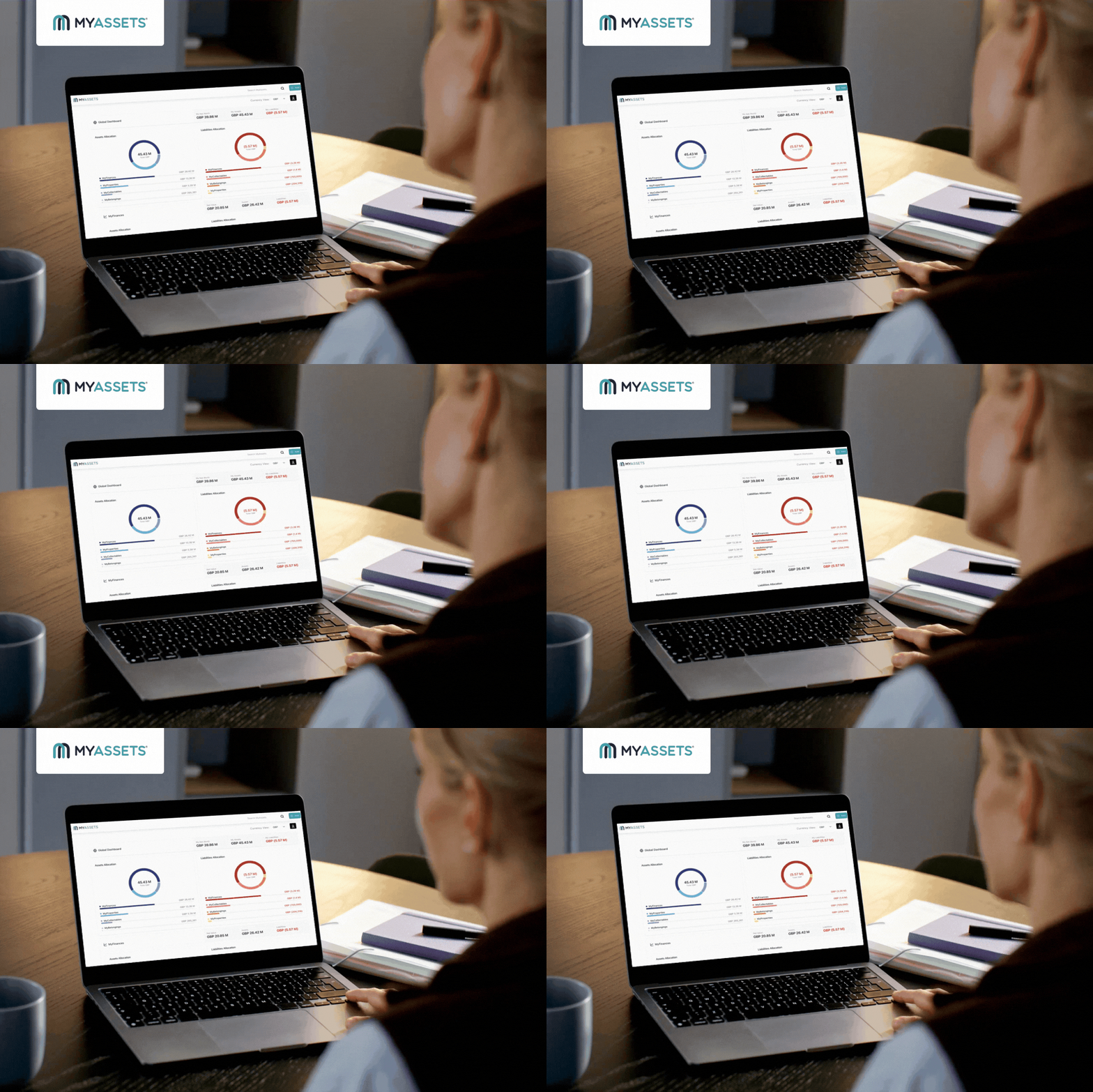
What’s more? All this information is neatly organised in a Global Dashboard, allowing users to see their entire financial picture at a glance. Raw numbers are transformed into intuitive graphs, and assets are clearly categorised, making it straightforward to understand where money is allocated, track progress, and make informed financial decisions.
Want to collaborate on money matters safely?
Managing wealth is rarely a solitary endeavour, yet sharing sensitive financial data often poses a significant security risk. MyAssets addresses this by providing individuals with full control over account permissions, with the Delegates feature allowing them to assign who can view, edit, delete, or create entries within their portfolio.
This granular control enables seamless collaboration without compromising total privacy. For example, an individual can grant:
- View-Only Access to a financial advisor to monitor investment performance and provide strategic guidance
- Edit Permissions to a spouse or partner to ensure household assets and shared liabilities are updated in real-time
In this way, MyAssets ensures that data remains protected when managing sensitive information with others.
Stop guessing and start knowing your assets’ true worth with MyAssets, free for 14 days.



