


Modern fintech has made it seamless to open multiple bank accounts; however, this convenience often comes at a hidden cost: financial fragmentation. When an individual holds a checking account at Starling Bank, a savings account at HSBC, and various investment portfolios elsewhere, their financial data becomes disconnected.
Without integration, financial figures become vague and harder to interpret, making it challenging to form a clear picture of overall finances. This lack of clarity aligns with Brainerd and Reyna’s Fuzzy-Trace Theory, which proposes that individuals process information using simplified mental representations known as "gist."
Thus, when financial data is spread across multiple accounts, these representations become less precise and more open to interpretation. As a result, individuals are more likely to rationalise spending decisions or misjudge their available resources as their finances are not viewed as a single, complete picture (Rixom et al.).
This leads to a practical question: Is there a way to view all financial accounts in one place?
Utilising a single app to track all bank accounts offers a solution by consolidating disparate information into a single, unified view. Instead of switching between multiple banking apps and statements, individuals can view their balances, transactions, and cash flow on a single dashboard. This clearer and more precise representation of financial activity reduces ambiguity and makes it easier to assess overall financial health at a glance.
To help you find that one app for all bank accounts, this article explores the key features to look for in a bank account tracker and highlights the best apps that bring all bank accounts together in one app.
- Why Track All Bank Accounts in One Place?
- Key Features to Look for in A Bank Account Tracker
- 10 Best Apps to Track All Bank Accounts Together
- Which Bank Account Tracking App Is Right for You?
- All Bank Accounts in One App: Frequently Asked Questions
Why Track All Bank Accounts in One Place?
A fragmented view of finances can make it difficult to understand where money is going and how much is actually available. This uncertainty often complicates financial planning and decision-making. Enter financial solutions designed to track all accounts in one place, offering benefits such as:
Providing Complete Financial Visibility
Personal funds are commonly held across multiple banking accounts: savings accounts for emergencies, credit cards for purchases, and investment accounts for long-term growth. Viewed separately, each account only shows partial financial information.
Financial aggregators solve this by consolidating financial information from different financial products, including:
- Cash
- Credit cash account
- Current account
- Investment
- Loan account
- Mortgage account
- Pensions
- Savings account
With complete visibility, individuals can see not only what they own but also what they owe, giving them a clear understanding of their true financial position.

Reducing Mental Accounting
According to Fuzzy-Trace Theory, when information is spread across multiple accounts, individuals rely on simplified or less precise mental representations of their finances. This can lead to mental accounting, where money is treated differently depending on where it is held rather than as a whole. As a result, individuals overestimate available funds or justify purchases that don’t align with their financial goals.
Luckily, an app that connects all bank accounts helps address this by bringing credit cards, checking accounts, and other financial accounts into a single dashboard. With a complete view of balances, transactions, and cash flow, individuals rely on accurate financial data rather than assumptions, leading to greater financial awareness and more informed decision-making.
See more: 5 Financial Habits That Are Good For Building Net Worth
Key Features to Look for in A Bank Account Tracker
There are several apps to view all bank accounts on one screen; however, the best ones are distinguished by key features that improve visibility, accuracy, and ease of financial management.
Below are the essential features to look for in a bank account tracker.
Net Worth Calculation
Apart from aggregating financial data, a full-scale bank tracking app automatically calculates net worth by accounting for both assets and liabilities. It adds up what an individual owns (i.e., savings, checking accounts, investments) and subtracts what they owe (i.e. loans, mortgages, and credit card debt).
The result is a net worth figure indicating whether an individual has a positive net worth (assets exceed liabilities) or a negative net worth (liabilities exceed assets).
Bank Syncing
Bank syncing is a feature that connects and updates bank account data within a financial app. It pulls information, such as balances and transactions, from financial institutions into the platform, removing the need for manual updates.

Reporting and Analytics
Reporting and analytics are features that transform complex financial data into easy-to-understand visuals. It presents information through charts, graphs, and other formats, making it easier to interpret trends, patterns, and overall financial performance at a glance.
10 Best Apps to Track All Bank Accounts Together
Are you looking for a way to connect all your bank accounts in one place? Below are apps that offer multiple account consolidation features, helping you track accounts, monitor spending, and maintain financial visibility.
1. Lumio
Lumio is a personal finance app designed to help users, especially couples, track shared expenses, manage bills, and work toward savings goals. It functions as a virtual joint account, allowing users to link separate financial accounts into a single dashboard, while maintaining control over what information is shared.

Pros
- Connects to existing bank accounts via UK-approved Open Banking technology, eliminating the need to share login details
- Tracks who paid for what and automatically calculates who owes whom, ensuring fair settlement without mental math
Cons
- Its ability to fully support shared financial goal tracking depends on both individuals actively using the app
- The app’s Open Banking and financial aggregation features are mainly optimised for UK banks and customers
Free Trial: No, but it offers a free plan Starting Price: £26.99/year
2. Emma
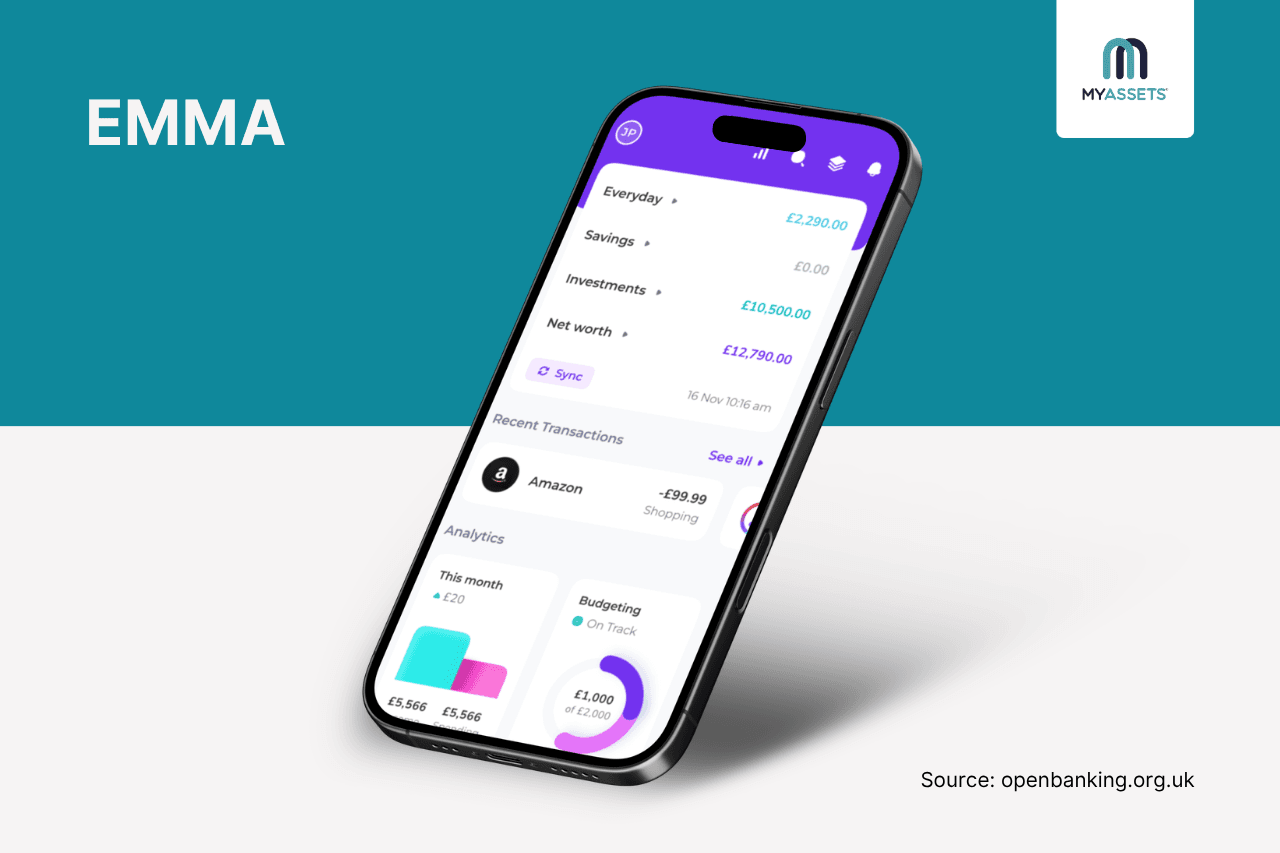
Emma is an app to connect all bank accounts, credit cards, and investments into a unified dashboard. This enables users to:- Categorise expenses
- Identify recurring subscriptions
- Monitor overall financial health
- Track spending
Pros
- Enables linking bank accounts and credit cards to access balances and transaction history in one place
- Helps detect invisible subscriptions so users can easily identify and cancel forgotten or unwanted payments
Cons
- App is available only on mobile (iOS and Android), with no desktop or web version
- The free account allows only a limited number of bank connections, typically two, and provides minimal analytical insights
Free Trial: Yes Starting Price: £41.99/year
3. MyAssets
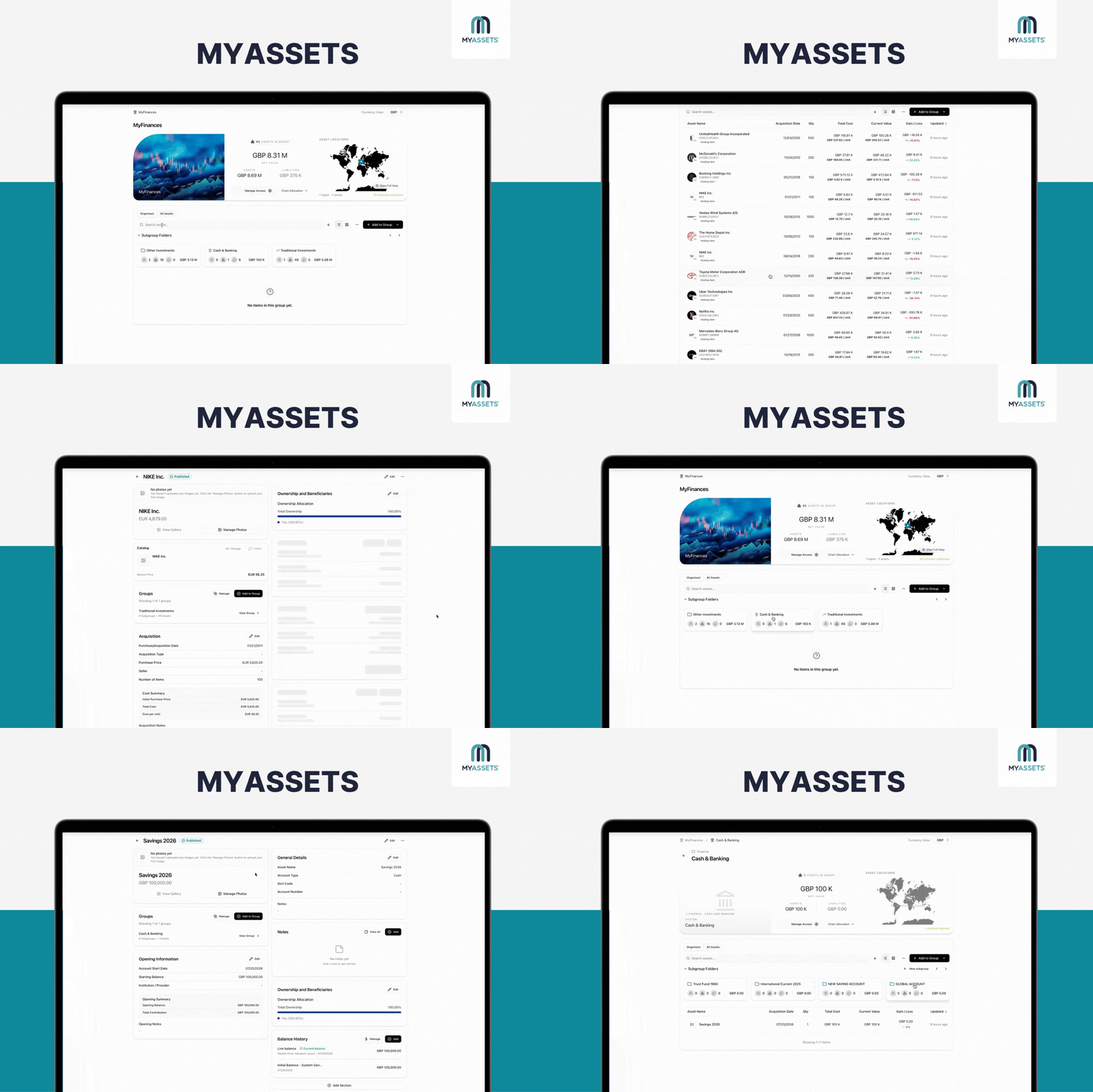
MyAssets is an asset management platform that allows users to monitor all financial accounts – from savings and current accounts to traditional investments, loans, and mortgages –all in one place.In one easy-to-understand dashboard, this app shows all bank accounts, grouped into cash and banking, traditional investments, and other investments, while providing detailed account information for each. Beyond bank details, MyAssets shows how net value is distributed across assets and liabilities through charts, giving users clearer insight into their financial position and structure.
Pros
- Links financial accounts to the assets they relate to, such as connecting a mortgage to a property or an insurance policy to an art collection
- Offers a holistic net worth calculation by incorporating financial accounts, tangible assets such as property, alternative investments like art and collectables, and the liabilities tied to them
- Supports secure bank integrations for automatic balance updates, with manual updates available and AES-256/TLS encryption protecting financial data
Cons
- It may be more comprehensive than necessary, as many features are designed for tracking a broader range of assets and liabilities beyond bank accounts
- Requires more setup and maintenance to fully benefit from the platform's asset management capabilities
Free Trial: No, but it offers a free plan Starting Price: $25/month
4. Capitally
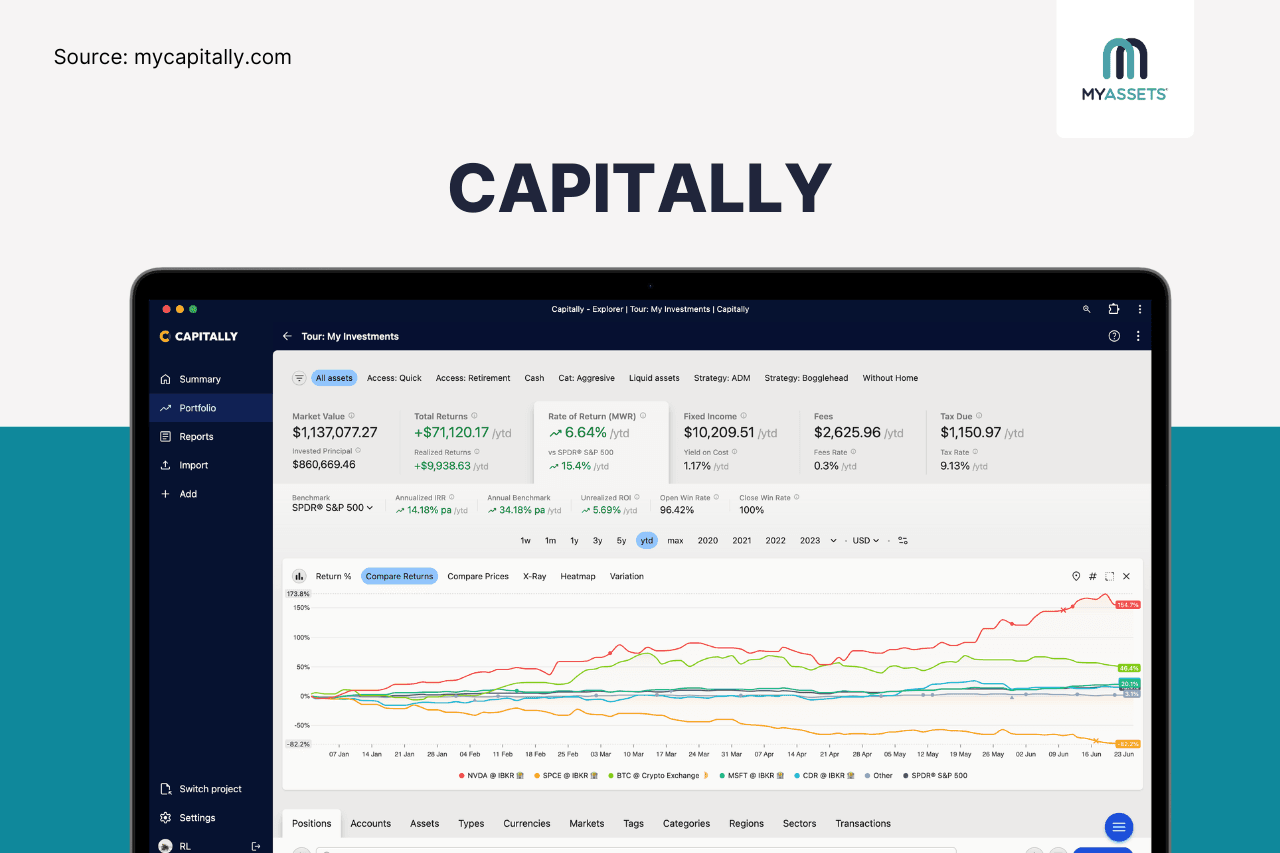
Capitally is a portfolio tracking platform that enables users to monitor and analyse a variety of assets, including bank accounts, stocks, real estate, and alternative investments such as art and collectables. By aggregating accounts and holdings into a single dashboard, Capitally delivers consolidated insights into portfolio allocation, performance, and overall net worth.
Pros
- Measures Money-Weighted Returns (MWR), Time-Weighted Returns (TWR), and Internal Rate of Return (IRR), while also splitting total returns into capital gains and currency-driven components
- Uses client-side, end-to-end encryption so that only the user can read their financial information
Cons
- Account updates rely on manual entry or CSV/Excel uploads and do not support read-only syncing with banks or brokers
- Under its zero-knowledge privacy model, losing the password means the portfolio data cannot be recovered
Free Trial: Yes - 14 days Starting Price: $9/month
5. Nauma
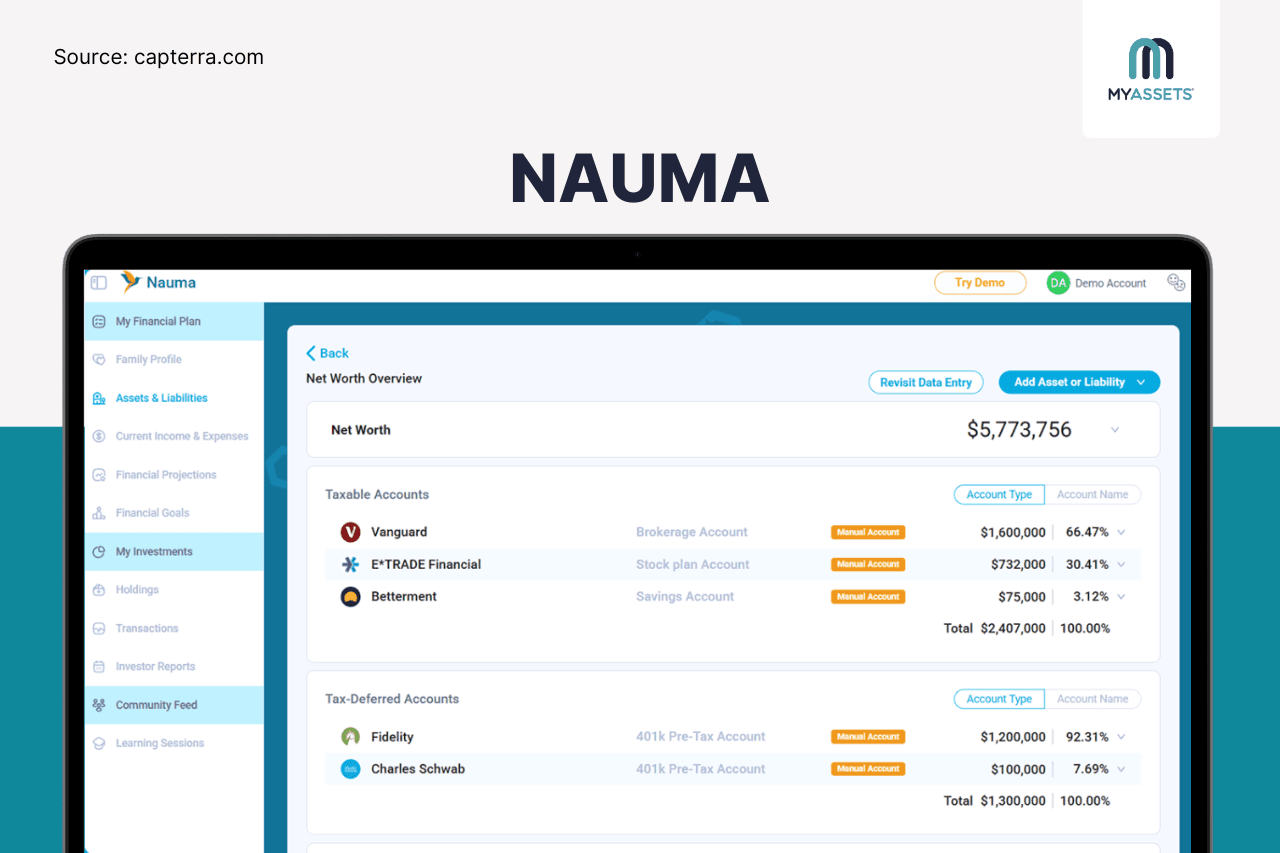
Nauma is a financial planning software designed to simplify complex financial situations through advanced forecasting tools. It allows users to model income, expenses, investments, taxes, and savings goals over time, helping them understand how different financial decisions may impact long-term outcomes.
Pros
- Consolidates investments, cash holdings, and retirement accounts from various providers to gain a unified perspective of the financial landscape
- Includes financial stress-testing, which simulates thousands of market scenarios to determine the likelihood of successful financial planning
Cons
- Focused on long-term wealth projection and financial strategy instead of daily expense tracking or envelope-based budgeting
- Under its zero-knowledge privacy model, losing the password means the portfolio data cannot be recovered
Free Trial: None Starting Price: $200/year
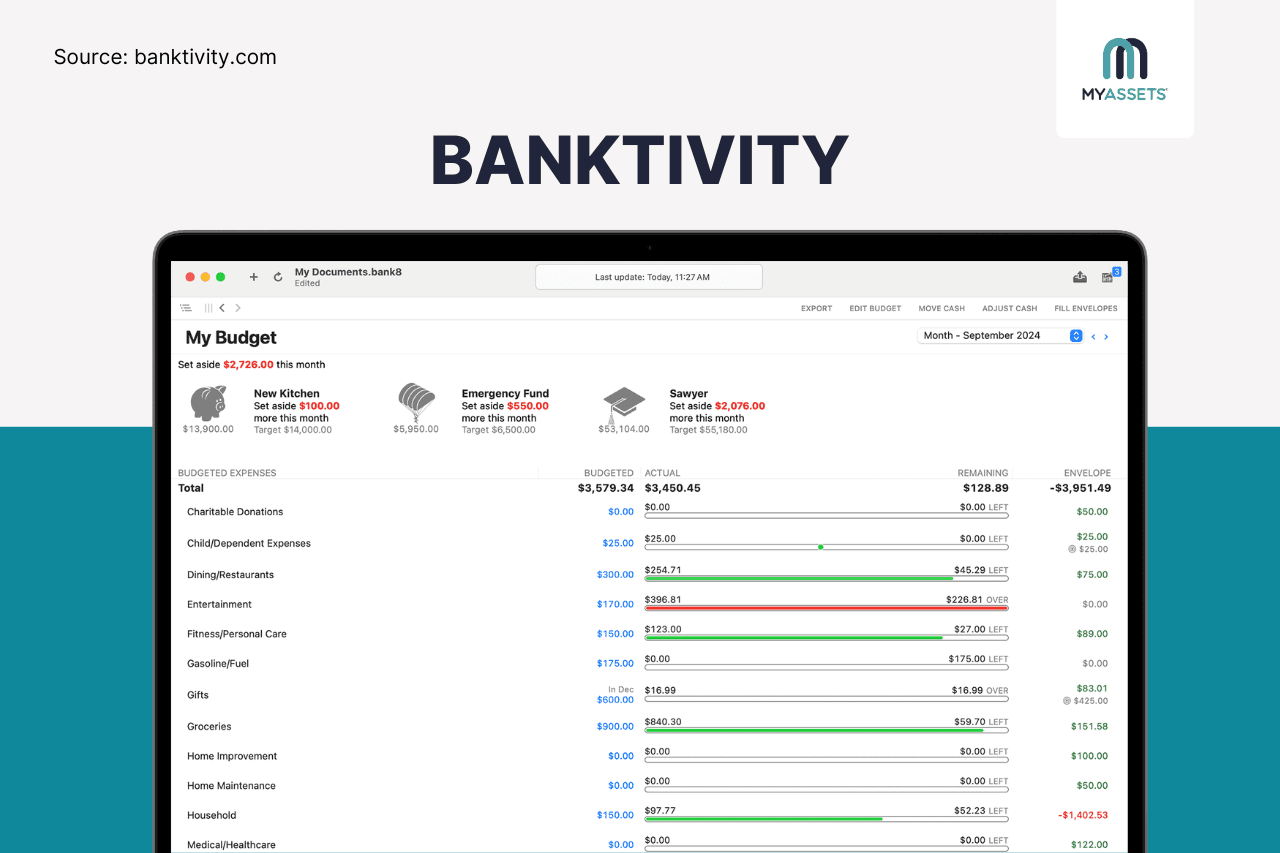
6. Banktivity
Banktivity is a comprehensive personal finance app that connects all financial accounts into one dashboard. This enables users to manage their bank accounts, track spending, create budgets, and monitor investments within one system.
Pros
- Connects to over 14,000 banks worldwide, which allows for the importing of the latest transactions, balances, and account updates into a unified dashboard
- Unlike many competitors that are browser-based, Banktivity is built natively for macOS and iOS, with strong integrations such as Apple Shortcuts and Handoff
Cons
- Accessible only on Apple devices
- Getting started may be challenging, especially when trying to understand its budgeting and goal-tracking features
Free Trial: Yes - 30 days Starting Price: $6.99/month
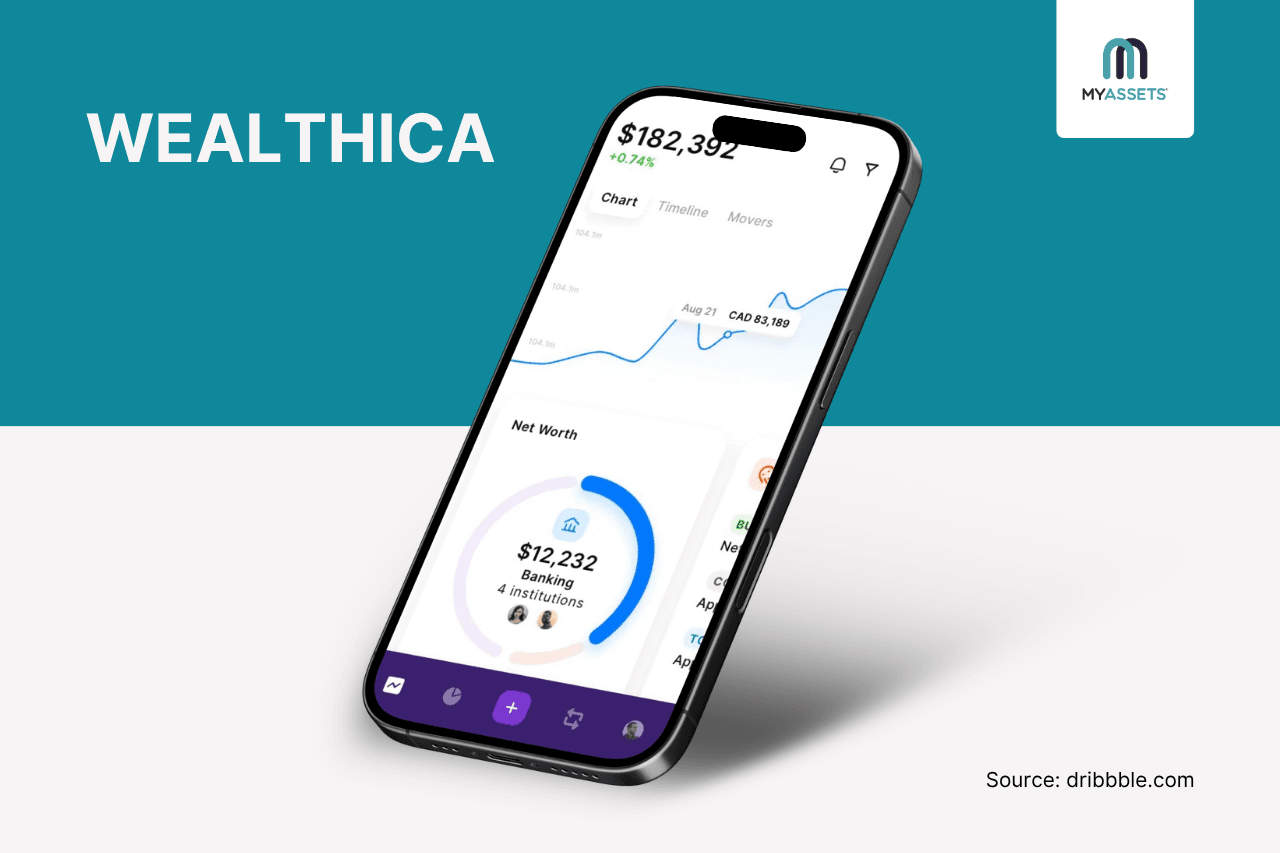
7. Wealthica
Wealthica is a financial aggregator designed to unify bank accounts, investments, and cryptocurrency accounts to give users a complete view of their net worth. It tracks how net worth changes over time and helps users monitor progress toward their financial goals.
Pros
- Connects to financial institutions daily to update balances, holdings, and transaction data
- Let users give financial advisors read-only access to accounts without sharing full login credentials
Cons
- Mainly built for the Canadian market, with only partial support for U.S. and global financial institutions
- Pricing can be confusing due to multiple tiers, feature limits, and optional paid “Power Ups” that must be activated separately
Free Trial: Yes - 14 days Starting Price: $75/year
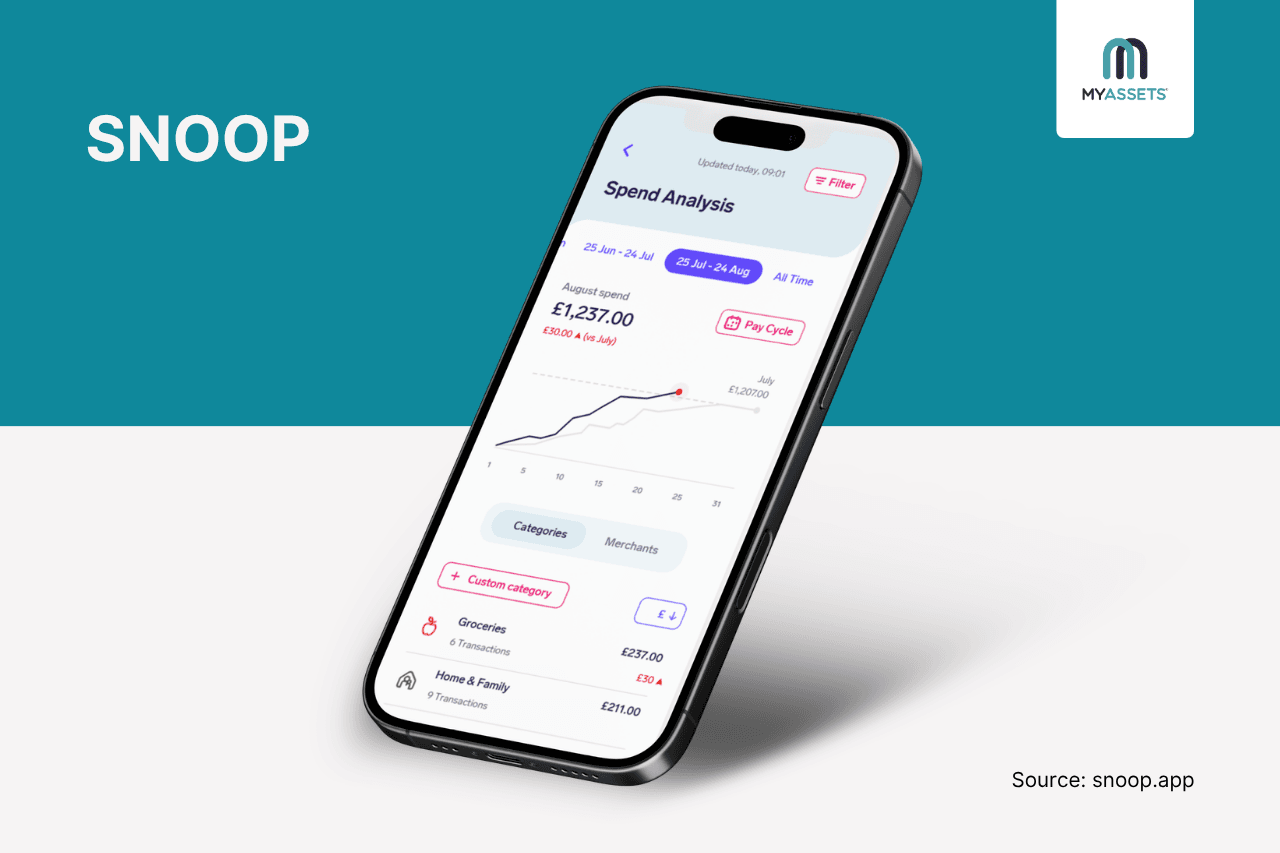
8. Snoop
Snoop is a money management app that helps users track their spending, manage budgets, and identify opportunities to save money. It connects to bank accounts and credit cards through Open Banking, allowing users to view financial information without sharing login credentials.
Pros
- Core features, including multiple account linking, basic budgeting, and financial alerts, are available at no cost
- Helps users save money by identifying better deals on broadband, energy, and insurance, while also highlighting unused subscriptions
Cons
- Only three accounts can be linked under the free tier
- Switching suggestions are drawn from Snoop’s partner network and may not always include the most competitive market rates
Free Trial: No, but offers a free tier Starting Price: £5.99/month
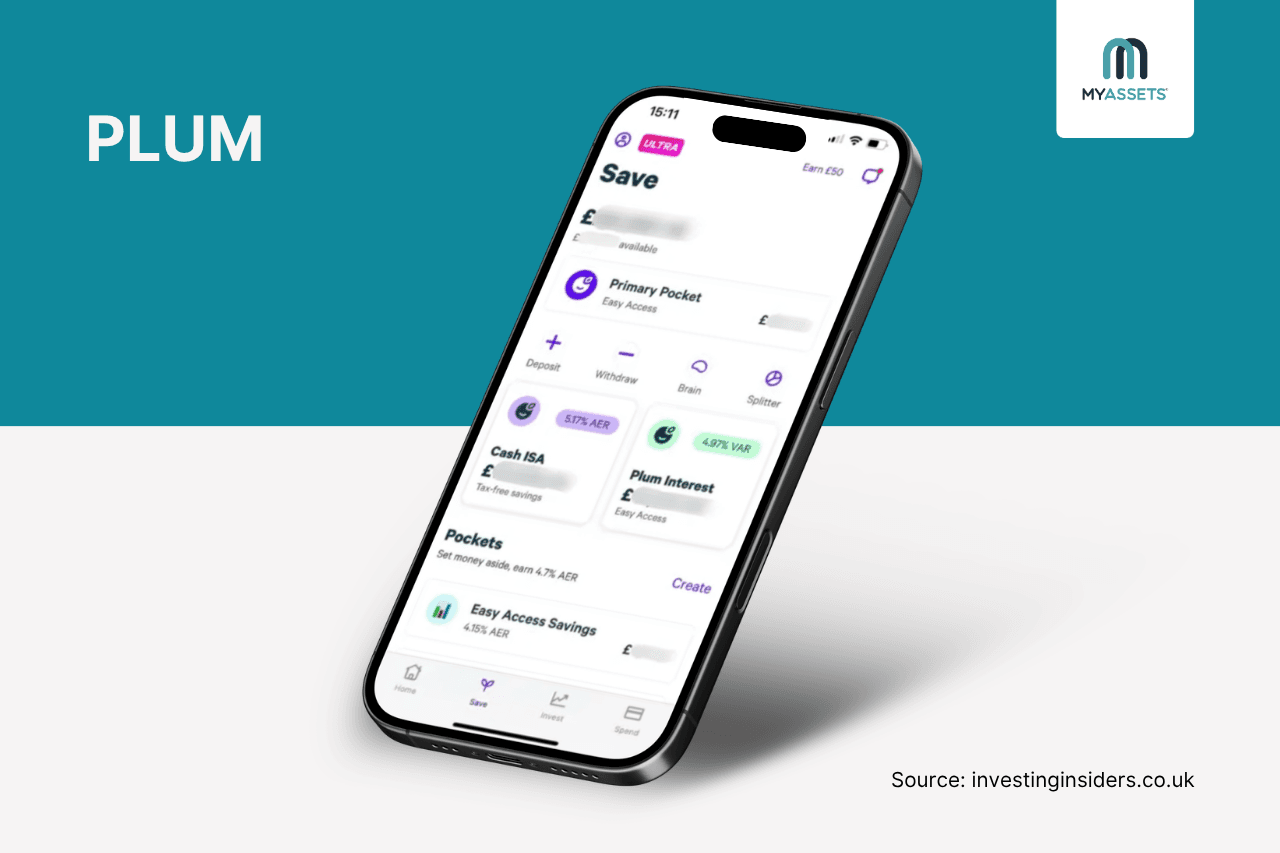
9. Plum
Plum is an AI-driven money management app that links to bank accounts via Open Banking, helping users save and invest by analysing their spending behaviour.
Pros
- Enables users to link bank accounts and credit cards, offering a single view of their finances and supporting major UK banks, including Halifax, Barclays, HSBC, and Starling
- Uses AI-driven insights to determine how much users can comfortably save and sets those amounts aside automatically
Cons
- Some feedback highlights slower response times and challenges in accessing live support
- Users investing through Plum may incur higher management and fund fees compared to using dedicated brokerage platforms directly
Free Trial: Yes - First month Starting Price: £3.99/month
10. Actual Budget
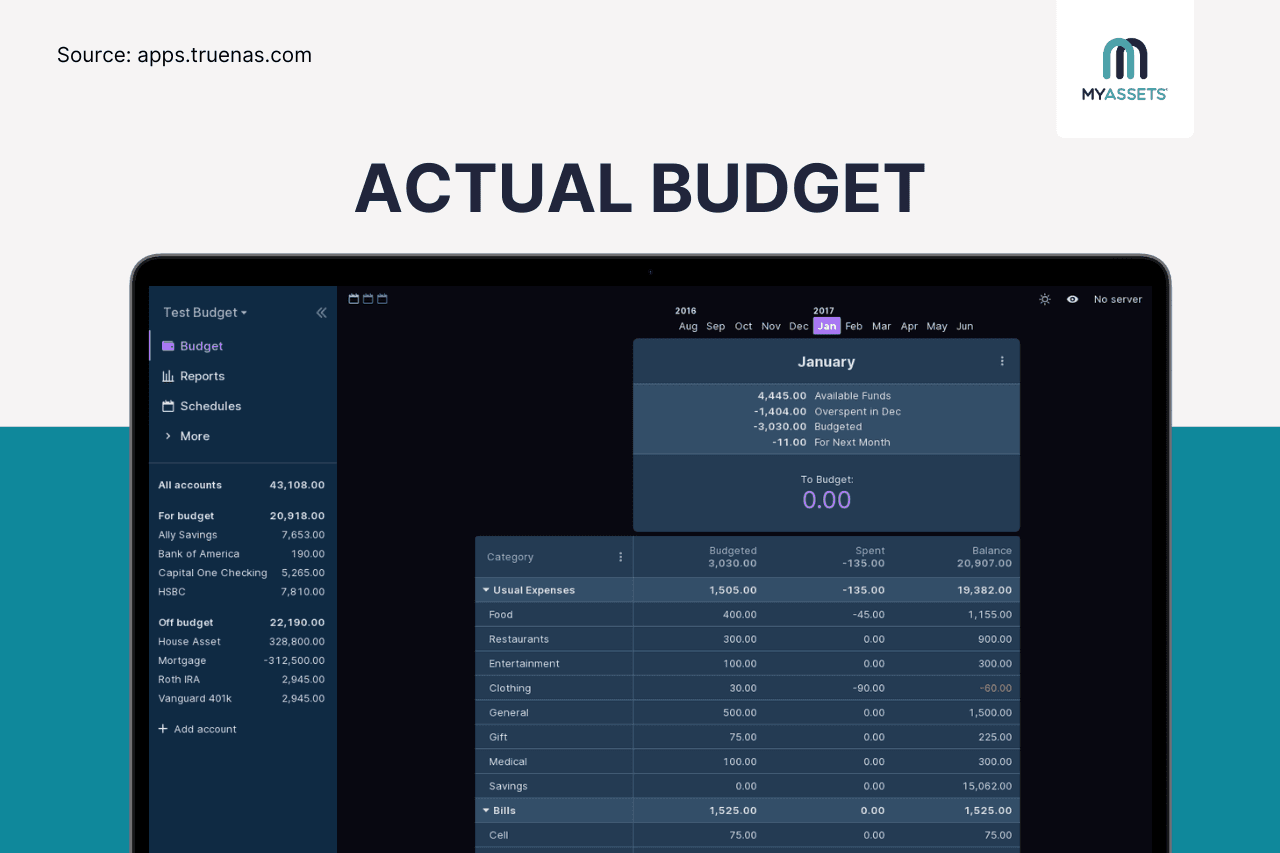
Actual Budget is a fast, privacy-focused personal finance app built on the envelope budgeting method. It operates locally-first, giving users full ownership and control of their financial data, while offering budgeting, transaction tracking, and custom reporting in a unified dashboard.
Pros
- Supports transaction importing via CSV and other formats, allowing users to manually add bank or spreadsheet data to keep budgets up to date
- Users can manage budgets entirely offline, with no internet access required
Cons
- It focuses on function rather than design, with a more basic visual design compared to paid apps
- While a mobile web version is supported, the service does not offer a native mobile app
Free Trial: None Starting Price: Free (self-hosted or local use), with optional paid costs for hosting or third-party bank sync services depending on setup
Which Bank Account Tracking App Is Right for You?
Tracking all bank accounts in one place is a simple but powerful step toward clearer financial visibility and reduced mental accounting. Instead of managing scattered information across multiple platforms, users gain a single, unified view of their finances, making it efficient to understand spending, cash flow, and overall financial health.From budgeting-focused tools to advanced net worth and investment trackers, the best app to manage all bank accounts in one place serves different financial needs and levels of complexity. Among these apps are:
- Lumio
- Emma
- MyAssets
- Capitally
- Nauma
- Banktivity
- Wealthica
- Snoop
- Plum
- Actual Budget
Nevertheless, whether the goal is simple expense tracking, automated savings, or comprehensive wealth management, there is a solution tailored to every user.
Ultimately, the best choice depends on individual financial goals, but the need is clear: consolidating financial data into a single platform is no longer just a convenience; it is a foundation for smarter, more informed financial decision-making.
All Bank Accounts in One App: Frequently Asked Questions
1. Can I see all my bank accounts in one place?
Yes, you can see all your bank accounts in one place by using financial apps that allows you to connect multiple accounts and consolidate them in one dashboard.
2. What is the best app to track all bank accounts?
The best app to track all bank accounts depends on your needs, but popular options include budgeting apps like Emma and Snoop, while MyAssets suits those looking to manage all assets in one place.
3. How to track all your finances?
The most basic way to track all your finances is using a spreadsheet, where you manually record bank account details, balances, expenses, and other financial information you want to monitor. However, for a more streamlined approach, you can use apps that connect to your bank accounts and automatically consolidate financial data into a single dashboard for real-time tracking.
MyAssets: Your All-in-One Financial Organiser for All Your Bank Accounts
Managing finances is challenging on its own, but having to gather information from various sources adds another layer of complexity. That is why an app that shows all bank accounts is vital, as it allows you to view all financial data in one place.
Introducing MyAssets, an asset management platform that goes beyond tracking bank account balances. It delivers a complete net worth overview by bringing all assets and liabilities into a single platform.
What’s more? MyAssets make personal finance management streamlined by allowing users to do the following:
- Connect bank accounts for automatic balance updates and syncing, or manually enter financial information to ensure complete record
- Track relevant due dates to stay on top of financial commitments and avoid missed payments or late fees
- Add delegates and assign permissions, allowing trusted individuals to view or edit portfolio entries as needed
With all financial information organised in one place, MyAssets makes it seamless to monitor wealth, manage all bank accounts, and gain a clearer understanding of overall financial position in one app.
Interested to know more? Get started with your free MyAssets account today.



