
Do you think you need millions in assets for your personal net worth to matter? Financial experts view net worth less as a status symbol and more as an indicator of financial health and progress.
As financial planner Brenda Hiscock explains, it’s not about “how many zeros” someone has, but whether their net worth reflects progress towards their financial goals.
Net worth value is calculated by adding up everything a person owns and subtracting their outstanding liabilities. The result offers a snapshot of their financial picture, showing the difference between what they own and what they owe. From there, individuals can assess their finances and decide what to do next.
The formula is simple. However, the list behind the number can be much longer. Assets and liabilities can quickly grow from property and savings to mortgages and other debts. But this doesn’t mean everything needs to be included from the start. A few key figures can be enough to get a useful starting point and a clearer idea of personal net worth.
To get started, this article explores the meaning of personal net worth, what to include, and how to find and track it using a net worth tracking app like MyAssets.
- How is Net Worth Defined?
- Why Should You Track Your Net Worth?
- What Does a Net Worth Include?: 6 Things You Can Use to Calculate It
- How to Know Your Personal Net Worth Using MyAssets
- Create a Free MyAssets Account
- Add Your Assets to MyAssets
- Add Your Liabilities to MyAssets
- See Your Personal Net Worth
- Keep Your Personal Net Worth in One View with MyAssets
- Find Net Worth: Frequently Asked Questions
How is Net Worth Defined?
According to Investopedia, the definition of personal net worth refers to the value of everything an individual owns (assets) after subtracting everything they owe (liabilities).
Using the net worth formula: Net Worth = Assets – Liabilities, the calculation results in one of two outcomes:
- Positive Net Worth - means that an individual owns more than they owe.
- Negative Net Worth - means that an individual owes more than they own.
At its core, net worth is what remains after all debts are cleared. A positive net worth indicates good financial health, while a negative net worth signals a need to reduce liabilities and rebuild the asset base.

Why Should You Track Your Net Worth?
While a personal net worth provides an objective measure of financial health, its value goes beyond simply knowing the number. Here’s why it matters:
Measure Net Worth Through Life’s Changes
According to the Office for National Statistics’ (ONS) Wealth and Assets Survey, household wealth generally increases through working life, peaks around retirement age, and then declines as wealth is drawn down:
- 16–24: around £15,200
- 25–34: around £109,800
- 35–44: around £209,600
- 45–54: around £301,900
- 55–64: around £496,500
- 65–74: around £502,500 (the peak)
- 75+: declines from the peak
Taken together, these figures highlight why tracking net worth matters: wealth changes throughout life and not necessarily at the same pace for everyone. Younger adults may focus on building their first assets, while later generations can bring mortgages, family expenses and retirement planning.
To keep track of these changes, Mountain and Jones recommend tracking net worth quarterly or annually to see whether financial circumstances are improving, declining or remaining stable.
Learn More: How to Track Your Net Worth Across Multiple Assets
Monitor Changes in Property Wealth
Did you know that property wealth makes up the largest share of household wealth? According to the ONS, property accounted for around 40% of household wealth between April 2020 and March 2022.
What Slower Property Price Growth Means for Net Worth
But what does this mean for personal net worth? Recent figures from Lloyds Bank show that the average UK property price was £299,253 in July, down £143 from June and only 0.1% higher than a year ago –the weakest annual growth since November 2023.
For property investors, slower price growth can impact their net worth. If a property value increases more slowly, stays flat or falls, it can limit wealth growth, even when everything else stays the same.

How Rising Mortgage Rates Affect Buying Power
On top of that, Lloyds Bank head of mortgages Amanda Bryden highlights rising mortgage rates as a major barrier for prospective buyers. Higher borrowing costs make homes less affordable, delaying first-time home buyers from building property wealth and leaving those who do buy with lower initial equity.
Tracking net worth makes this progress visible, as it helps see how home equity net worth changes as the mortgage is paid down.
Property Price Growth Varies by Region
While UK house-price growth has remained subdued, Northern Ireland recorded 7.4% annual house-price growth. This highlights the importance of tracking net worth, as regional market differences can cause property wealth to rise or fall at different rates.
Overall, property wealth can change for many reasons: from slowing prices and rising mortgage rates to regional market differences. Tracking net worth brings these factors together, helping individuals see how changes in property value and debt affect the wealth they actually own.
Keep Your Retirement Wealth on Track
The second-largest component of household wealth is private pension wealth, representing around 35%. It is also a significant source of wealth among the richest 10% of households, accounting for around 36% of their total wealth.
While pensions are a cornerstone of long-term financial security, their purchasing power faces a persistent threat: inflation.
The Impact of Inflation on Pension Wealth
UK inflation rose to 2.9% in the 12 months to July 2026, driven by an increase in the Ofgem energy price cap. As everyday essentials like food, electricity, and petrol become more expensive, the cost of living climbs –a burden already reported by 56% of adults in Great Britain, according to the ONS.
As a result, financial experts at Fidelity recommend these strategies to protect one’s retirement pot against the ravages of inflation:
- Invest in best-performing assets (i.e. shares)
- Save early and aggressively
- Target a meaningful pot size
To keep these efforts aligned with one’s goals, monitoring retirement net worth allows individuals to see the progress and combined impact of regular contributions, savings, investment returns and other assets on their overall wealth.
What Does a Net Worth Include?: 6 Things You Can Use to Calculate It
Net worth includes an individual’s assets and liabilities. While there may be several to account for, these six have the biggest impact and provide a good starting point for tracking.
Assets
Assets are valuable items that can be converted into cash at a later date and may generate income or increase in value over time.
Representing the “what you own” side of net worth, an asset’s current market or cash value helps measure its contribution to overall wealth.

To determine which assets to include in net worth, consider the following:
1. Property
Property refers to real estate assets, including the land an individual owns and any permanent structures built on or attached to it.
When determining net worth, the following property types can be included:
- Commercial Property: office buildings, retail shops, restaurants, hotels, and warehouses.
- Industrial Property: factories, manufacturing facilities, and distribution centres.
- Land: agricultural land, development land, vacant lots, ranches and farms.
- Residential Home: single-family homes, flats, condominiums, townhouses, and multi-family homes.
2. Savings
As defined by Investopedia, savings refers to the portion of income that an individual sets aside. Typically held as cash or in a low-risk savings account, savings are highly liquid assets that contribute to liquid net worth as they can be readily accessed for spending, emergencies, or other financial needs.
Common types of savings to include in net worth are:
- Certificates of Deposit
- Current account
- Physical Cash
- Regular Savings account
- Retirement Accounts (i.e. Cash Individual Savings Account)
3. Investments
Investments are assets or financial instruments purchased with the expectation that they will generate income and appreciate over time through market performance and compound returns. Common investment types include:
- Bonds: Government bonds and corporate bonds.
- Cash Equivalents: Money market funds, Treasury bills, and Commercial paper.
- Cryptocurrencies: Bitcoin (BTC), Ethereum (ETH), and other coins.
- Exchange-Traded Funds (ETFs): S&P 500 ETFs, FTSE 100 ETFs, and global equity ETFs.
- Stocks or Equities: shares in companies such as Apple, Microsoft, BP, or HSBC.
4. Pensions
A pension is a tax-efficient investment vehicle that allows individuals to build wealth during their working lives, with contributions invested for potential growth and future income in retirement.
The main types of pensions include:
- Personal or private pension
- State Pension
- Workplace pension
Liabilities
To get a complete and accurate financial picture, individuals must account for their liabilities. These are financial obligations they owe, which are deducted from their assets when calculating net worth.
As liabilities represent the “what you owe” side of net worth, recording their outstanding balances shows how much should be deducted from total assets.

Liabilities to include when calculating personal net worth are:
5. Mortgage
A mortgage is a loan used to purchase or refinance a home, land, or other real estate property. It is generally repaid over an agreed period through regular payment of principal and interest, with the property as collateral.
Although real estate property adds to the assets, the outstanding mortgage balance represents the amount still owed and therefore reduces the net worth of real estate.
The main types of mortgages include:
- Fixed-Rate Mortgages
- Interest-Only Mortgage
- Standard Variable Rate Mortgage
- Tracker Mortgage
6. Debts
Debt is money an individual has borrowed and is obligated to repay based on agreed terms, such as the interest rate, repayment period, and payment schedule. It can come from various forms of borrowing, including:
- Auto loan
- Credit card
- Personal loan
- Student loan
- Other loans
Discover More: 5 Best Apps for Tracking Debt and Monthly Payments
How to Know Your Personal Net Worth Using MyAssets
Once relevant assets and liabilities are identified, the next question is: how can you use these figures to find out your personal net worth?
Introducing MyAssets, an asset management platform that consolidates assets and liabilities, giving individuals the clarity they need to understand their net worth.
To explore MyAssets in detail, follow these steps:
Step 1: Create a Free MyAssets Account
Go to app.myassets.com/auth/signup/ and complete the required fields to create a MyAssets account. The required details include:
- Name
- Email Address
- Password
- Confirm Password
Once entered, follow the next steps:
- Select Sign Up.
- Go to the registered email address and select the verification link to verify the email.
- Enter verified email address and password on the sign-in page.
- Select Sign In.
Prefer to sign up with a social account? Select Sign up with Google or Sign up with Apple. Note that this option limits access to certain account security settings, such as changing the password or enabling two-factor authentication.
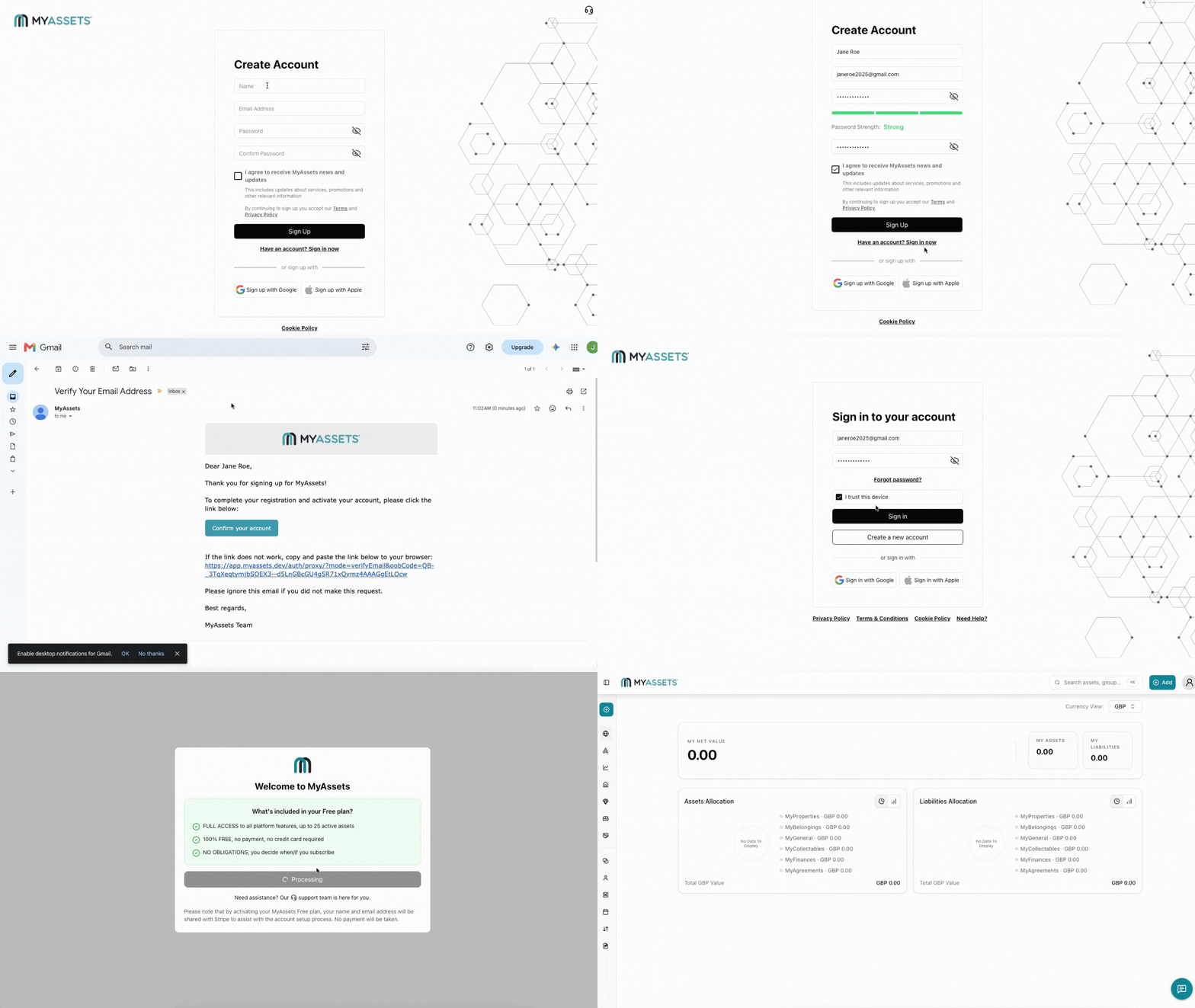
Step 2: Add Your Assets to MyAssets
With the free version of MyAssets, users can add up to 25 assets across all categories. To get started, select the Add button, then choose the relevant MyAssets category from the menu:
- MyFinances to add financial assets, including Cash & Banking, Traditional Investments, and Other Investments.
- MyProperties to add real estate properties that an individual owns, rents, or rents out to others.
- MyCollectables to add collectables, such as art, collector sneakers, watches and other collectables with personal or financial value.
- MyBelongings to add personal belongings, such as furniture, electronics, and other valuable possessions that may contribute to net worth
- General Assets to add assets that don’t fit an existing category, providing flexibility to organise or recategorise later.
- MyAgreements to add asset-based agreements for loans, leases and insurance policies.
After selecting a category, follow these additional steps:
- Enter the asset’s Primary Details.
- Select the Advanced Acquisition box to include additional asset details, such as the acquisition type, seller, discount, and acquisition costs.
- Select the relevant Additional Fields to capture more information about the asset.
- Select Create to add the asset to the portfolio.
In this way, MyAssets helps users organise their assets into categories and collate current balances and valuations for each asset.
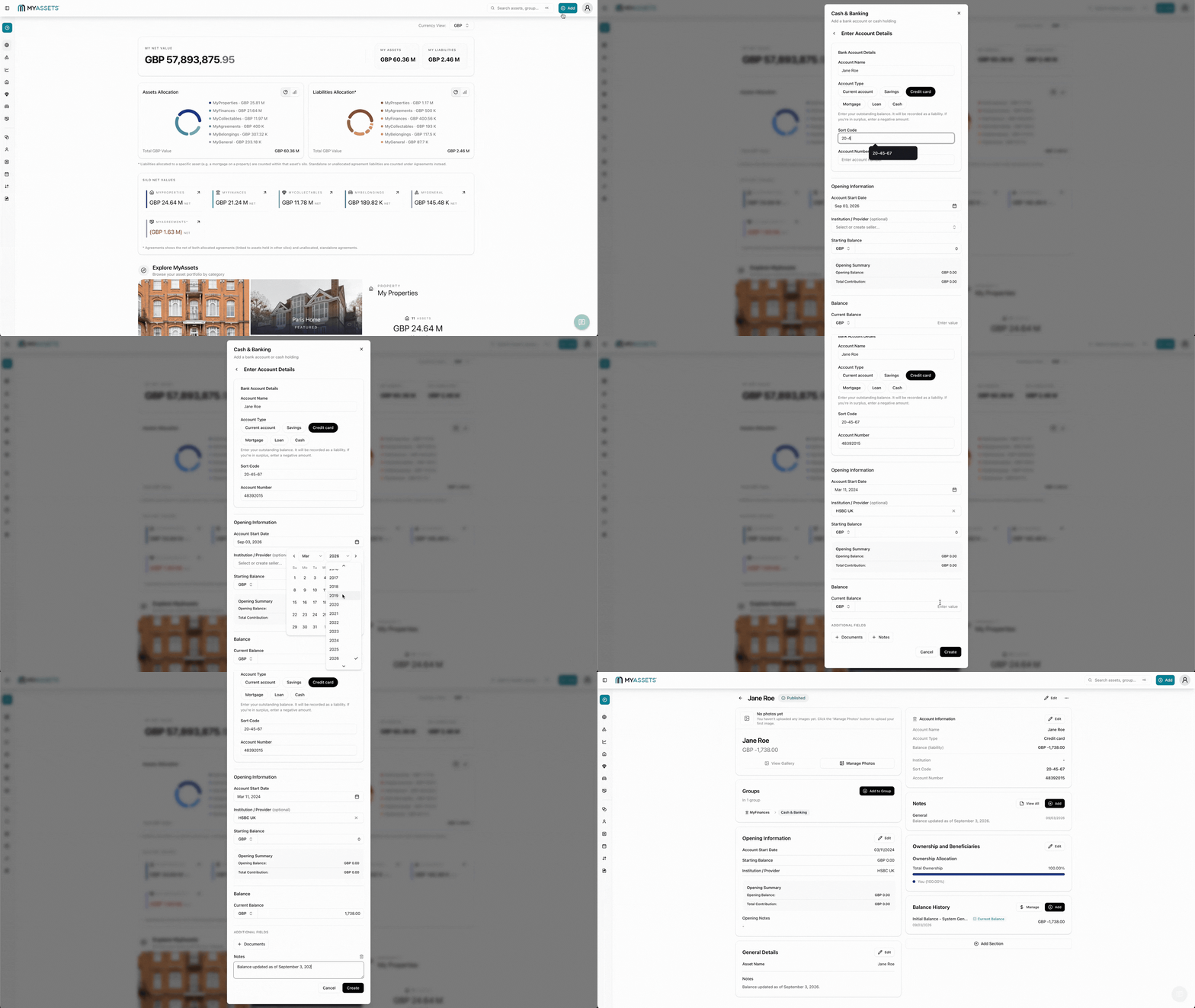
Step 3: Add Your Liabilities to MyAssets
After adding assets, add the liabilities that reduce personal net worth. In MyAssets, liabilities can be added in two ways: MyFinances and MyAgreements.
Add Liabilities via MyFinances
For liabilities under MyFinances, add outstanding credit card balances. Credit card debt falls under this category as it is a financial obligation linked to financial accounts managed through MyFinances.
Follow these steps to add liabilities via MyFinances:
- Select the Add button.
- Select the MyFinances icon from the menu.
- Select Cash & Banking.
- Select Enter Manually.
- Add Bank Account Details.
- Under the Account Type, select Credit Card.
- Add Opening Information.
- Add Balance.
- Select any of the applicable Additional Fields to add relevant information about the account.
- Select Create.
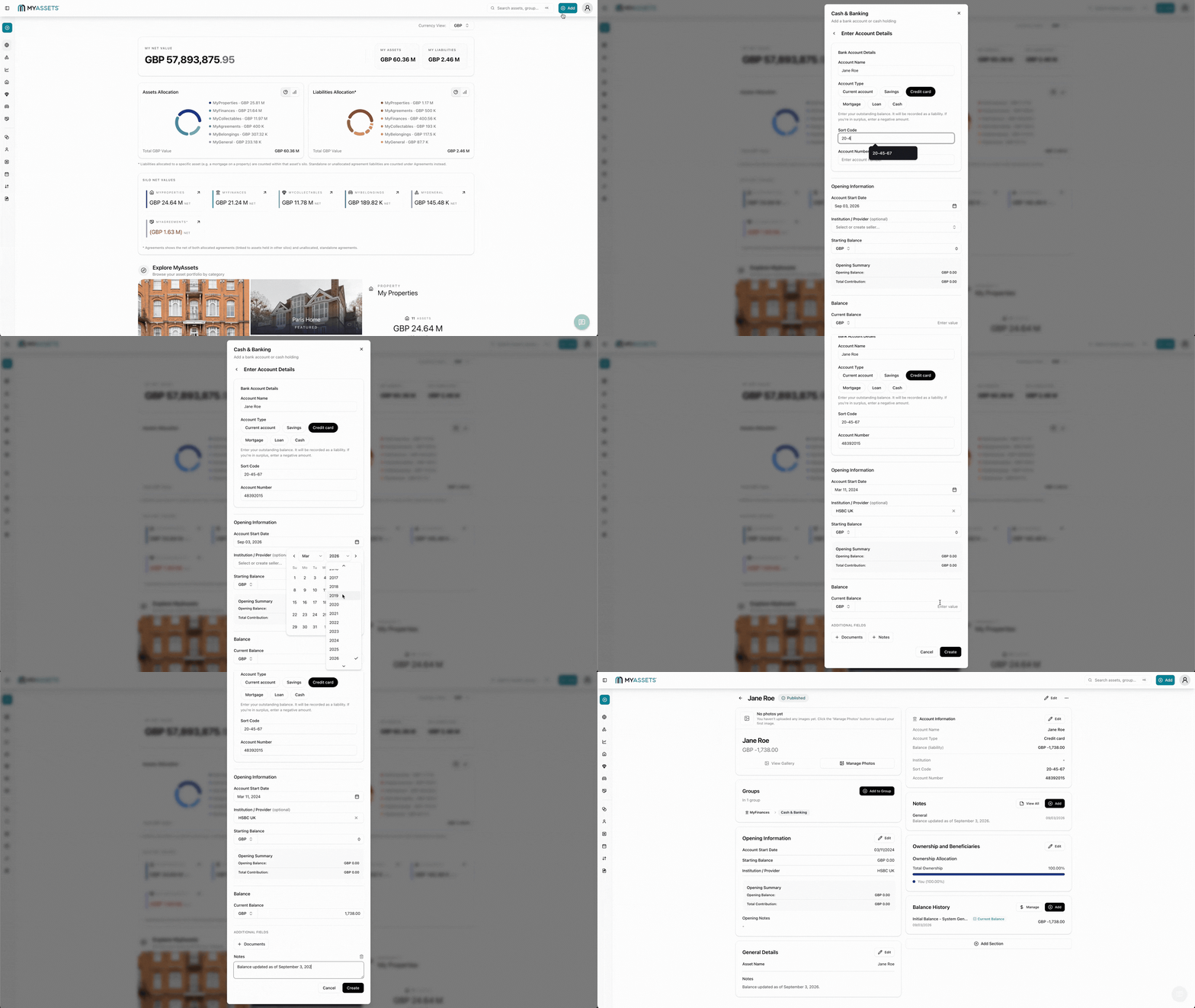
Add Liabilities via MyAgreements
Use MyAgreements to record liabilities, such as outstanding mortgages for owned properties, obligations related to renting out properties, and loans associated with other assets. Adding these liabilities via MyAgreements provides a clearer view of what is owed under each agreement and ensures they are reflected in calculating net worth.
Loan and mortgage agreements can be added using the same process. Follow these steps to get started:
- Select the Add button.
- Select the MyAgreements icon from the menu.
- Select Loan/Mortgage for the Agreement type.
- Fill the required fields, such as agreement title, effective date, original principal, and outstanding balance.
- Define this Agreement as a liability (I am the Borrower).
- Fill the optional fields to create a comprehensive record of the Agreement.
- Select any of the applicable Additional Fields to add relevant information about the agreement.
- Select Create Agreement.
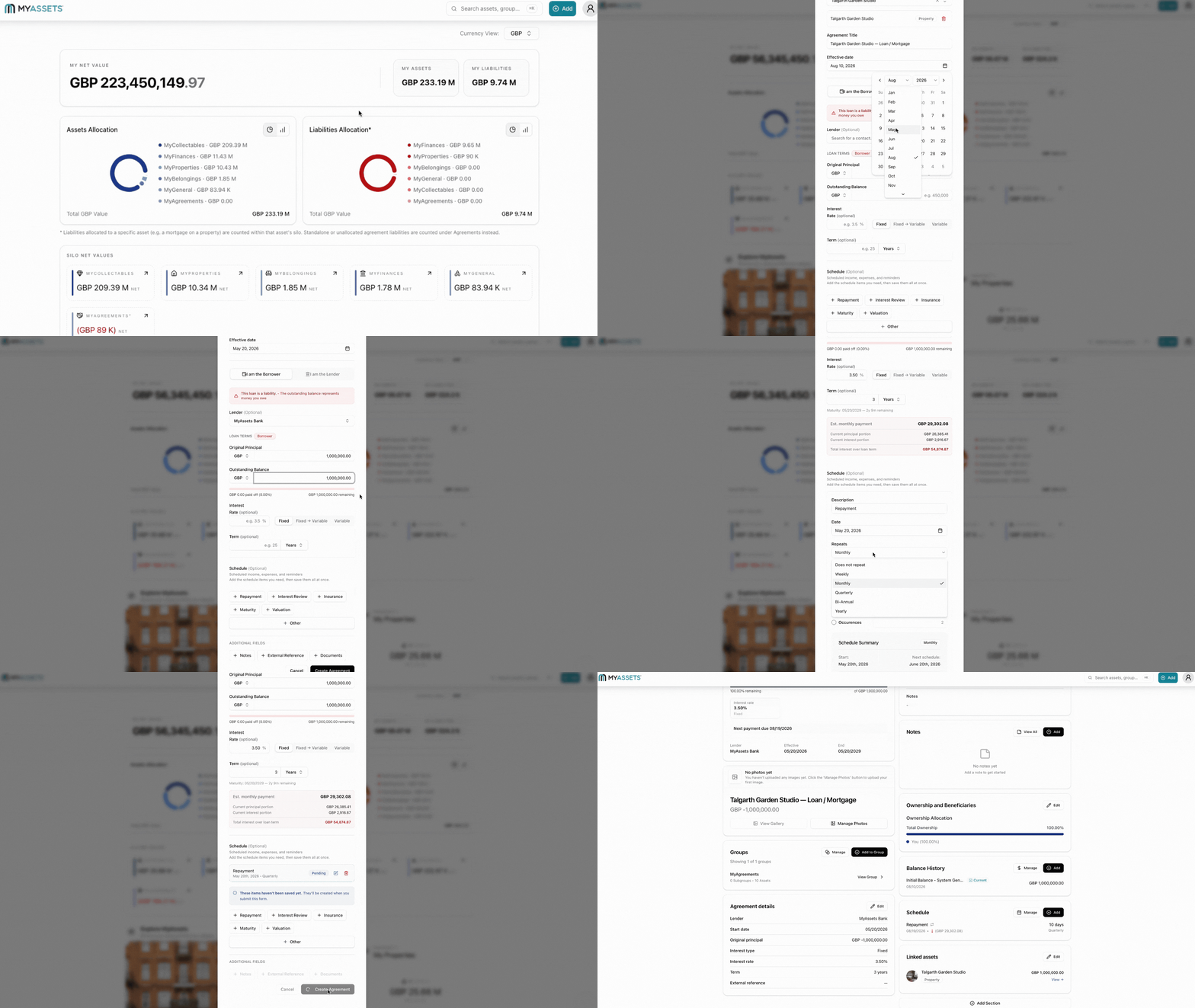
For those adding rental or lease agreement for property, follow this process:
- Select the Add button.
- Select the MyAgreements icon from the menu.
- Select Rental/Lease for the Agreement type.
- Fill the required fields, such as rental/lease title and effective date.
- Define the Agreement as a liability (I am Renting).
- Fill the optional fields to create a comprehensive record of the Agreement.
- Select any of the applicable Additional Fields to add relevant information about the agreement.
- Select Create Agreement.

Overall, MyAssets allows users to record the outstanding balance of each liability, helping them understand the amount owed and its impact on net worth. Recording the interest rate for each debt also provides insight into how borrowing costs can grow over time.
Step 4: See Your Personal Net Worth
There is no need to calculate net worth manually. Once users add their assets and liabilities, MyAssets automatically calculates their total net value and displays the result on the Global Dashboard. This shows a summary of assets, liabilities, and net value across all categories, helping users see their complete financial position in one place.
To interpret the net worth figure shown on the Global Dashboard, there are two possible outcomes:
- Positive net worth: indicates good financial stability as the individual owns more in assets than they owe in debt.
- Negative net worth: indicates a need to address outstanding debt and increase their financial position.
To keep personal net worth accurate, regularly update asset and liability values, as they can change over time due to market fluctuations, purchases, repayments, and other financial activities.
Keep Your Personal Net Worth in One View with MyAssets
Personal net worth provides more than a single figure. It shows the relationship between the wealth an individual has built and the financial obligations they still owe. Property, savings, investments and pensions can contribute to wealth, while mortgages and other debts reduce it.
Together, these factors provide a broader view of financial position and can show how any big or small changes throughout life, such as buying a home, growing investments or preparing for retirement, affect overall wealth.
MyAssets makes it efficient to value net worth by bringing assets and liabilities into one place. From adding different types of assets and debts to viewing the combined result in one dashboard, it provides a convenient way to monitor wealth and keep a clearer view of financial progress over time.
Find Net Worth: Frequently Asked Questions
1. Is pension included in net worth?
Yes, a pension is generally included in net worth because its accumulated value contributes to the individual’s total wealth.
2. How can I calculate my personal net worth?
Personal net worth can be calculated using the formula: Net Worth = Total Assets − Total Liabilities.
3. What net worth is considered wealthy in the UK?
Based on wealth distribution in the UK, a household net worth of £1.2 million or more places it among the wealthiest 10%, while a net worth exceeding £3.1 million to £3.6 million is needed to enter the top 1%.
MyAssets: Manage Everything You Own and Owe in One Place
Can you answer what your net worth is? While the formula for calculating net worth is simple, knowing the actual number is not always as easy. You may have assets spread across bank accounts, investments, properties and other holdings, while debts and financial obligations can sit elsewhere.
MyAssets brings everything together in one platform, giving you a complete view of your properties, finances, collectables and belongings –and your wealth as a whole.
A Dedicated Space for Every Asset
To make everything organised, MyAssets groups assets into dedicated categories for better management:
- General Assets: add tangible assets to the platform without having to sort them into the existing categories.
- MyFinances: connect your bank accounts, monitor your investments, and track your financial assets.
- MyProperties: view the macro- and micro-level details of your properties, including specific locations, associated assets, liabilities, and net value.
- MyCollectables: organise, track, and monitor the value of your collection across different collectable types.
- MyBelongings: keep track of your belongings, such as jewellery, furniture, cars, etc., as well as the locations of your items.
- MyAgreements: organise and link loans, mortgages, rental leases, and insurance policies as Agreements on the platform.
Together, MyAssets create a structured view of everything owned and owed, from the overall portfolio down to individual details.
Get More From Your Net Worth Data
Your net worth tells you where you stand —but reports can show you why. MyAssets' MyReports brings together detailed information on assets, liabilities and net value, helping users:
- Analyse their financial position.
- Track changes over time.
- See which areas are contributing most to their wealth.
Create a Shared View of Your Assets
Managing wealth is rarely a solitary endeavour, yet sharing sensitive financial data often poses security risks. With MyAssets’ Delegates features, you have control over account permissions.
The permissions for Delegates include:
- View: allows Delegates to view assets.
- Edit: allows Delegates to edit and view assets.
- Admin: allows Delegates to view, edit, and delete assets.
In this way, MyAssets ensures that data remains protected when managing sensitive information with others.
Ready to bring your assets together? Explore the full MyAssets platform and add up to 25 assets for FREE.